The desire for a more defined, structured face is one of the most consistent themes in aesthetic consultation. Patients describe it in different ways. A sharper jawline. More projected cheekbones. A cleaner profile. Better balance between the upper and lower face. The underlying goal is the same across almost all of them. They want their face to look more defined and more proportionate, and they want to achieve it without surgery.
Non-surgical face contouring has grown enormously as a clinical category because the treatments available today genuinely deliver on this goal to a degree that would not have been possible a decade ago. But the gap between what non-surgical contouring can achieve and what patients sometimes expect it to achieve is still wide enough to cause real disappointment when the expectation is not managed honestly before treatment begins.
This article covers what the main non-surgical contouring approaches actually do to the face, what they achieve best, and where their limits are.
Why Facial Contour Changes in the First Place
Understanding what non-surgical contouring is trying to restore or enhance requires understanding why facial definition changes over time and why some faces lack the definition their owner wants in the first place.
For patients in their twenties and thirties seeking more definition than they naturally have, the primary goal is enhancement of features that are present but less pronounced than they would like. The jawline is well defined but not sharply so. The cheekbones are visible but not prominent. The chin is balanced but could project more. In these cases, contouring is additive. It is enhancing a feature rather than restoring one.
For patients in their late thirties and beyond, the picture is more complex. Age-related bone resorption reduces the skeletal scaffold that gives the face its structural definition. The jaw narrows slightly. The cheekbones lose their prominence as the maxilla resorbs. Fat compartments that once sat in well-defined pockets deflate and descend. The skin covering these structures has less support and begins to follow gravity. The face loses the contour it once had not because a single dramatic change occurred but because multiple gradual processes have accumulated across the same structures over years.
Non-surgical contouring in this group is both restorative and enhancing. It is replacing lost structural support while also sometimes adding definition that improves on the pre-ageing baseline.
The distinction between these two presentations matters because the treatment approach, the realistic outcome, and the appropriate combination of techniques differ between them. A thorough consultation identifies which applies to a specific patient before any treatment is planned.
Dermal Filler for Facial Contouring
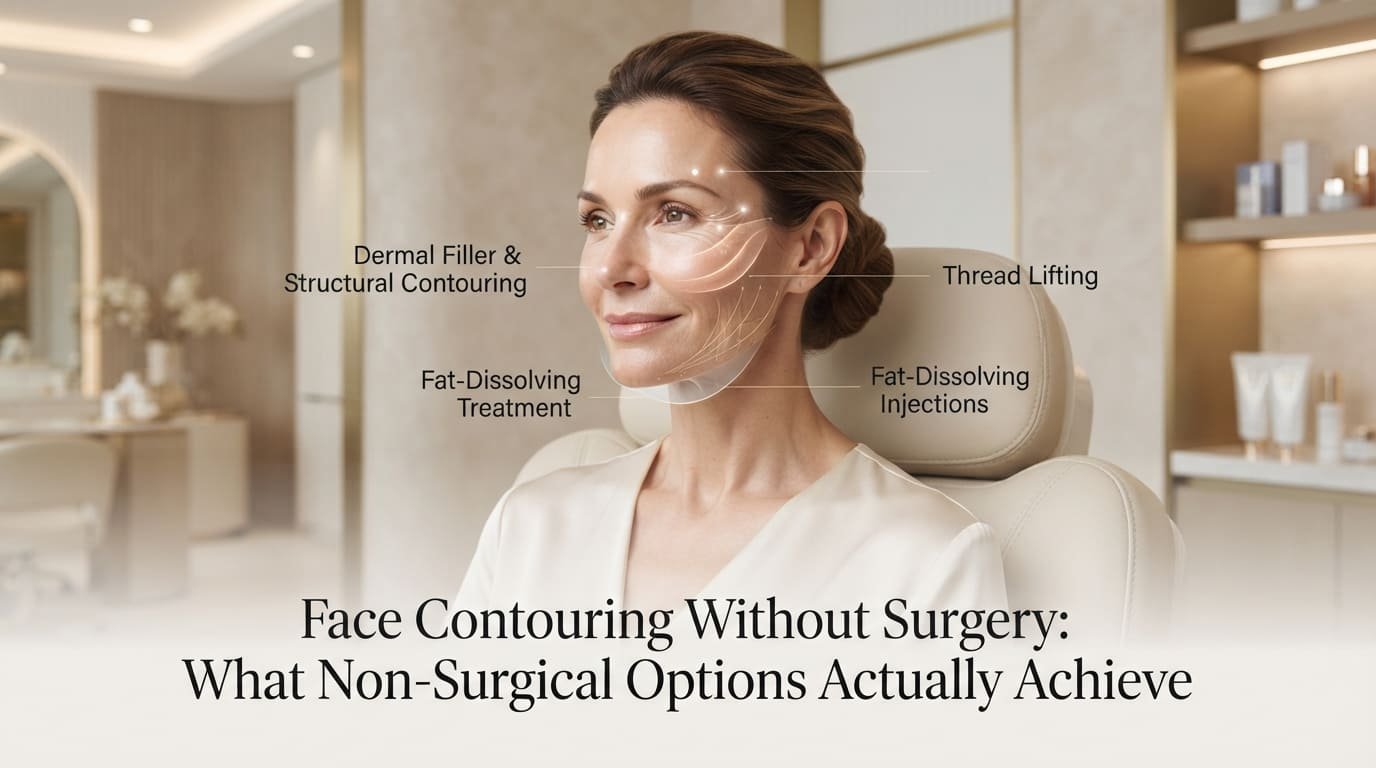
Dermal filler is the most versatile and widely used tool in non-surgical facial contouring. Precisely placed hyaluronic acid filler provides immediate structural support, volume, and definition in the areas where it is needed. The result is visible from the appointment and settles over two to four weeks as initial swelling resolves.
The jawline is among the most commonly requested contouring areas and one where well-placed filler produces results that are consistently satisfying. Filler placed along the mandible creates a defined structural edge that sharpens the profile and improves the distinction between the jaw and the neck. Placed at the chin point, it can improve projection and balance the relationship between the lower face and the rest of the face. For patients with early jowling, jawline filler placed to extend and define the jaw margin makes the jowl less visually prominent by creating a reference point that outcompetes the descended tissue for visual attention.
The cheeks are the second most common contouring area. Volume placed in the mid-cheek restores the projection and lift that gives the upper face its youthful structure. It also has a secondary effect on the lower face. Supporting the midface reduces the gravitational load on the tissues below it, which means well-placed cheek filler can contribute to jawline definition and jowl reduction without anything being placed in the lower face at all.
The temples are a frequently overlooked contouring area. Volume loss in the temples creates a hollowed appearance that makes the upper face look narrower than it should, and that draws visual attention to the forehead. Restoring temple volume improves the overall framing of the face and contributes to the balanced, three-dimensional look that well-planned contouring produces.
The nose is an area where dermal filler can make meaningful improvements to profile and symmetry without surgery. Filler placed on the nasal bridge can straighten the appearance of a dorsal hump. Placed at the tip, it can improve projection and definition. Non-surgical rhinoplasty with filler has a high level of patient satisfaction for appropriate candidates.
The reversibility of HA filler is a significant safety advantage in all contouring applications. If a result is not as expected, hyaluronidase dissolves the filler quickly and the area can be reassessed. This reversibility makes HA filler the most appropriate first-line treatment for patients who are new to facial contouring and who want to assess their response before committing to longer-lasting options.
Radiesse for Structural Contouring
Radiesse is a calcium hydroxylapatite filler that provides both immediate structure and progressive collagen stimulation over the months following treatment. For contouring applications specifically, the firmer consistency of Radiesse compared to most HA fillers is a clinical advantage. It provides more robust structural support in areas like the jawline and chin where a firmer scaffold delivers a more defined result than softer HA products.
The collagen-stimulating mechanism of Radiesse means the structural benefit develops progressively over three to four months as new collagen is laid down around the CaHA microspheres. This produces a result that improves over time rather than simply sitting at the level of the immediate volumising effect.
For patients who want the most structurally robust contouring result available without surgery, and who are willing to accept that the treatment is not reversible in the same way HA filler is, Radiesse provides a level of definition and longevity that many HA products do not match in structural areas. This is discussed in more detail in a dedicated article comparing Radiesse with standard dermal filler.
Thread Lifting for Contour and Lift
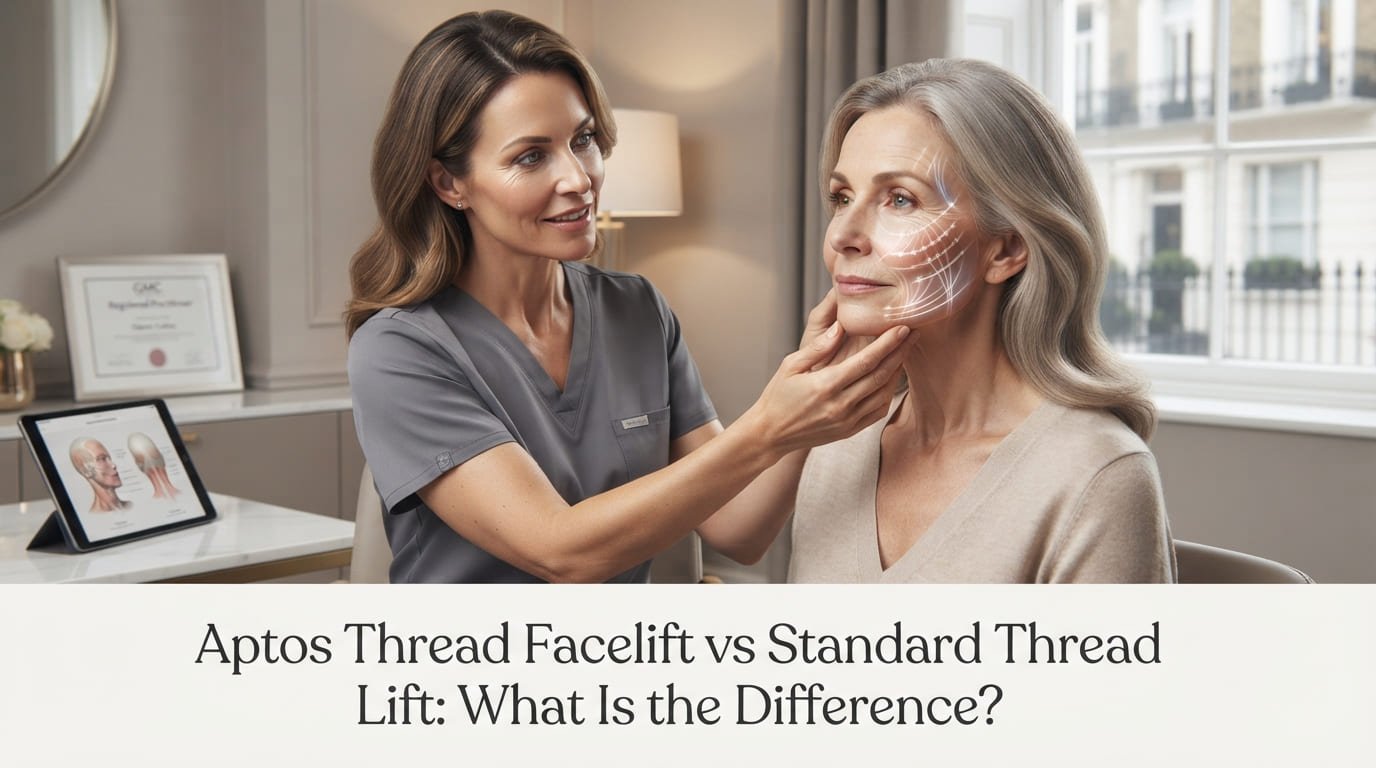
Thread lifting addresses a different dimension of facial contour from filler. Where filler adds structure and volume, threads physically reposition soft tissue that has descended from its original position.
The contribution of thread lifting to facial contouring is most significant in the midface and lower face. Threads placed to lift the midface improve cheekbone definition by repositioning the descended fat compartments back toward the prominence of the zygoma. Threads placed along the jawline reduce jowling by lifting and securing the soft tissue above the jaw margin, restoring a cleaner lower face contour that filler alone may not fully achieve in more advanced presentations.
Aptos threads, with their multidirectional barb design and hyaluronic acid coating, provide the strongest and longest-lasting mechanical lift available in the thread category and are discussed in a dedicated comparison article. The choice between thread types depends on the degree of descent, the patient's goals, and how long they want the result to last.
Thread lifting works alongside filler in contouring programmes rather than competing with it. Threads lift what has descended. Filler supports areas where volume loss has reduced the structural framework. Together they address the two primary contributors to facial contour loss in ageing patients in a way that neither achieves alone.
Fat Dissolving Injections for Contour Definition
Fat dissolving injections using deoxycholic acid contribute to facial contouring specifically by reducing localised fat deposits that soften or obscure natural bone structure.
The most clinically significant application for contouring purposes is the submental area beneath the chin. A double chin obscures the distinction between the face and the neck and eliminates the clean profile that good jawline definition depends on. Reducing this fat pocket through a course of deoxycholic acid injections restores the profile contour in a way that no amount of jawline filler can compensate for while the fat itself remains.
Small fat deposits along the lower jowl area can also contribute to a loss of lower face definition that fat-dissolving treatment addresses. The clinical assessment of whether descended soft tissue or localised fat is the primary contributor to a specific contouring concern determines whether fat dissolving, thread lifting, or filler is the most appropriate first step.
Anti-Wrinkle Injections in Contouring
Anti-wrinkle injections have a specific and underappreciated role in non-surgical facial contouring that goes beyond simply softening dynamic lines.
The masseter muscles are the large jaw muscles responsible for chewing. In some patients, these muscles are significantly developed, either through habitual jaw clenching and bruxism or simply through natural muscle bulk. Prominent masseter muscles give the lower face a wide, square appearance at the jaw angle that reduces the definition of the jawline and makes the face look less refined in profile. Anti-wrinkle injections placed into the masseter muscles reduce their bulk over several months, gradually slimming the lower face and creating a more tapered, contoured jaw shape. This is called masseter reduction or jaw slimming, and it is one of the most consistently satisfying contouring treatments available for patients with this specific concern.
The platysma muscle runs down the front of the neck and can contribute to banding and softening of the neck-jawline transition as it becomes more prominent with age. Anti-wrinkle injections placed into the platysmal bands can restore the neck-jaw angle and contribute to lower face definition. This technique is sometimes called the Nefertiti lift.
What Non-Surgical Contouring Cannot Achieve
This section matters as much as everything above it, because the most important conversation in a contouring consultation is the one about what a patient's specific face genuinely needs and whether non-surgical treatment can fully deliver it.
Non-surgical contouring cannot remove or reposition excess skin. When skin laxity has advanced to the point where there is a significant amount of redundant skin along the lower face and neck, injectables and threads can improve the appearance meaningfully but cannot replicate what surgical skin excision achieves. Patients at this stage who are assessed honestly at consultation are the ones most likely to be satisfied with their outcome because they know what the treatment is and is not addressing.
Non-surgical contouring cannot replace bone that has resorbed. It can provide a structural substitute in the form of filler or Radiesse that performs a similar function to the missing skeletal support, but the underlying bone change continues regardless of treatment. This is why progressive maintenance of a non-surgical contouring programme over time is part of managing a face that is continuing to age, rather than a one-time correction that holds indefinitely.
Non-surgical contouring is most effective when the degree of change being addressed is proportionate to what injectable and thread-based interventions can realistically deliver. The practitioner who tells you this clearly at consultation, who is willing to refer you for a surgical opinion if that is genuinely what your face needs, and who plans a programme around what you actually need rather than what they happen to offer, is the one whose clinical judgement is worth trusting.
Building a Non-Surgical Contouring Plan
The most effective contouring outcomes come from programmes that combine the relevant treatments in a logical sequence rather than using any single treatment in isolation.
A typical contouring programme for a patient in their forties with mild to moderate laxity, some volume loss in the midface, and a loss of jawline definition might combine Radiesse or structural HA filler along the jawline and chin for definition, cheek filler to restore midface support, masseter anti-wrinkle injections to slim the jaw angle if relevant, fat dissolving treatment for any submental fat contributing to chin-neck blur, and Aptos or PDO thread lifting if soft tissue descent is a dominant component of the presentation.
Each element addresses a specific contributor to the overall appearance. Each one is chosen based on what the face actually shows at assessment rather than on a standard package applied regardless of individual presentation.
This kind of clinical thinking produces results that look natural because they address what the face genuinely needs rather than applying a uniform treatment approach to every patient who arrives asking for contouring.
Frequently Asked Questions
How many treatments do I need before I see a contouring result?
Some treatments produce visible results from the first appointment, particularly filler and thread lifting. Others like masseter reduction and fat dissolving develop progressively over weeks to months. A planned contouring programme is typically assessed at three to six months from starting to see the full result of the combined approach.
Is non-surgical contouring painful?
The different treatments involved carry different levels of discomfort. Injectable treatments are performed with topical numbing cream and are well tolerated by most patients. Thread procedures are performed under local anaesthetic. A thorough consultation will cover the treatment experience for each element of your specific programme.
How long do non-surgical contouring results last?
This varies significantly by treatment. HA filler in structural areas typically lasts 12 to 18 months. Radiesse lasts up to 18 months or more. Thread lifting results typically last 12 to 24 months depending on the thread type. Masseter reduction typically lasts 4 to 6 months before repeat treatment is needed. Fat dissolving results are permanent in terms of the cells destroyed, though remaining cells can still expand with weight gain. A maintenance plan is discussed at consultation based on which treatments form part of your programme.
What is the most important factor in getting a good contouring result?
The quality of the clinical assessment before treatment. A result that looks natural and proportionate comes from a practitioner who understands your face structurally, identifies the specific contributors to the appearance you want to change, and builds a programme around those specific findings. The treatments themselves are the tools. The assessment is what determines whether they are used in the right places for the right reasons.
Can I start with just one treatment and add others later?
Yes, and this is often a sensible approach. Starting with the highest-impact single treatment for your specific concern, assessing the result properly, and then deciding whether additional elements add meaningful value is a logical and financially manageable way to build toward a complete result.
If you would like an honest assessment of what non-surgical contouring can achieve for your face and what combination of treatments would be most appropriate for your specific goals, book a consultation at our Littlehampton or Hove clinic.
Book a Consultation in Littlehampton or Book a Consultation in Hove