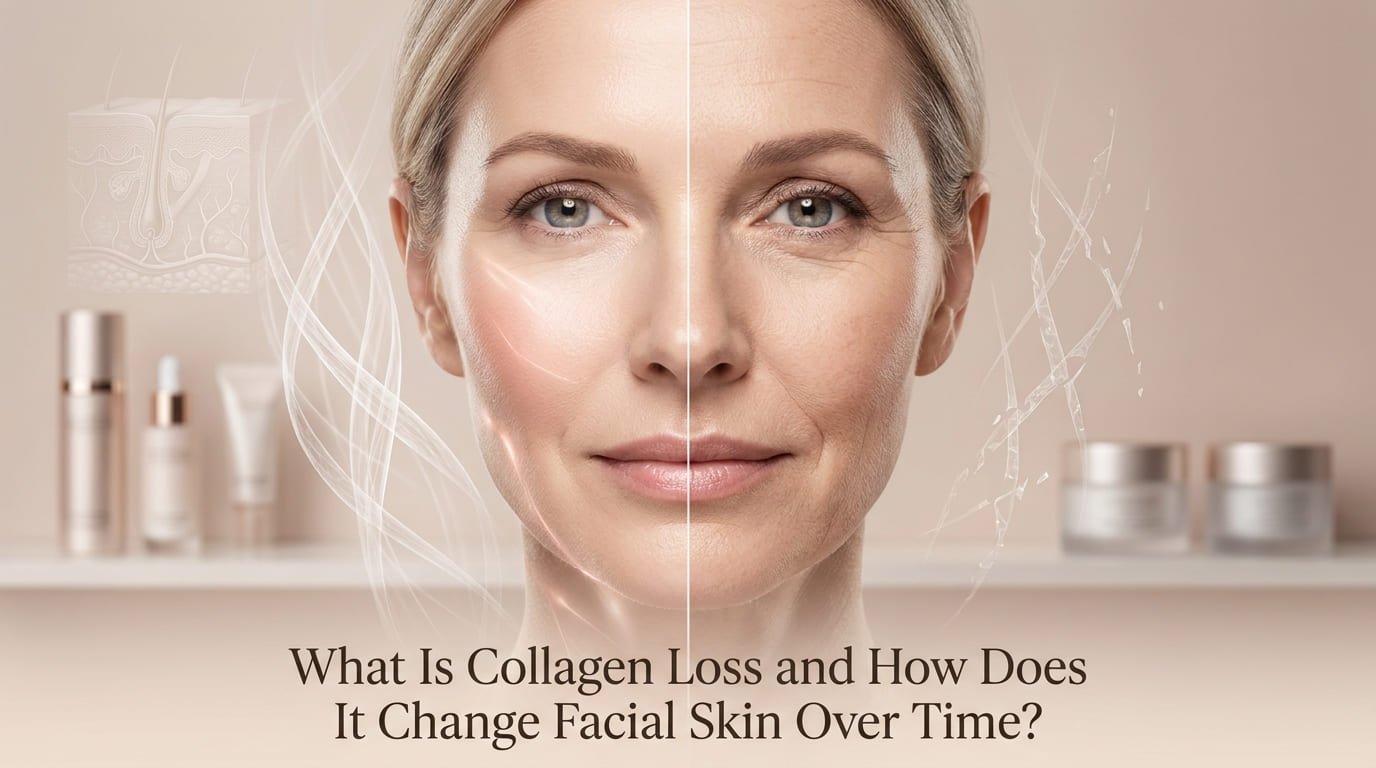
Collagen is one of the main proteins responsible for keeping facial skin firm, supported, and resilient. It forms part of the skin's internal structure, helping it maintain its shape while allowing it to move naturally. When collagen levels begin to decline, the changes are not always obvious at first. Skin may gradually feel less firm, fine lines can become more noticeable, and areas that once looked naturally full may start to lose some of their support.
These changes are a normal part of ageing. However, collagen loss does not happen at the same rate in everyone. Genetics, sun exposure, lifestyle habits, hormonal changes and the natural ageing process can all influence how the skin changes over time.
Understanding what collagen does and why it declines can make it easier to recognise changes in facial skin. It also helps explain why treatments such as Profhilo, skin boosters and other skin rejuvenation approaches are sometimes considered as part of a wider skin health plan.
At Angel White Aesthetics, skin treatment recommendations should begin with an understanding of the individual's skin, concerns and goals. There is no single treatment that suits everyone, and improving skin quality is often about choosing an appropriate approach rather than trying to reverse every sign of ageing.
What Causes Collagen Loss in the Skin?
Collagen is a structural protein found throughout the body, including the skin, bones, tendons and connective tissues. In facial skin, it is particularly important because it helps the dermis maintain its strength and structure.
The dermis is the layer beneath the outer surface of the skin. It contains collagen fibres, elastin, blood vessels and specialised cells called fibroblasts. These fibroblasts help produce collagen and other components of the skin's supporting structure.
Elastin has a different role. It allows the skin to stretch and return towards its original shape. Collagen provides much of the firmness and strength, while elastin contributes to flexibility.
Both are important. A change in either can affect how the skin looks and feels.
Collagen loss occurs when the body produces less collagen or when existing collagen breaks down faster than it can be replaced. Over time, the structure becomes less organised. Fibres can become thinner, fragmented and less effective at supporting the skin.
This is not simply a matter of having fewer collagen fibres. Their quality and arrangement also change as the skin ages.
PMC+2
Why Does Collagen Decline With Age?
Collagen production naturally changes throughout adult life. The process is gradual, although some people notice visible changes earlier than others.
Several factors contribute to this decline.
1. Natural ageing
As the body ages, fibroblast activity changes. These cells become less effective at maintaining the skin's supporting structure, and collagen production gradually reduces.
At the same time, enzymes involved in breaking down collagen can become more active. This creates an imbalance between the formation of new collagen and the breakdown of existing fibres.
The result is a gradual reduction in the strength and organisation of the dermis.
2. Sun exposure
Sun exposure is one of the most important external influences on visible skin ageing.
Ultraviolet radiation can penetrate the skin and trigger processes that damage collagen and elastin. It also increases the activity of enzymes that break down these structural proteins.
The effects build up over time. Someone who spends years in the sun without adequate protection may develop more visible wrinkles, uneven texture and skin laxity than someone with similar natural ageing but less accumulated sun damage.
This is why sun protection matters even when the weather is cloudy. UV exposure is not limited to hot summer days.
DermNet®+2
3. Smoking
Smoking exposes the body to chemicals and oxidative stress that can affect normal skin function. It is associated with increased collagen breakdown and changes to the skin's ability to repair itself.
Over time, this may contribute to a duller appearance, more pronounced lines and reduced skin elasticity.
Avoiding smoking supports general health as well as skin health.
4. Hormonal changes
Hormones influence several processes involved in skin structure and hydration.
Oestrogen, for example, plays a role in maintaining skin thickness, moisture and collagen. Changes in oestrogen levels during the menopause transition can be associated with noticeable changes in skin quality.
Some women experience increased dryness, reduced firmness and more visible fine lines during this period. The extent varies, and these changes are not identical for everyone.
5. Lifestyle and environmental factors
Poor sleep, ongoing stress, an unbalanced diet and high levels of environmental pollution can influence skin health.
These factors do not affect everyone in the same way, and they should not be treated as the sole explanation for collagen loss. However, they can contribute to the overall environment in which the skin functions and repairs itself.
A balanced diet, adequate sleep, regular physical activity and avoiding smoking are sensible foundations for general wellbeing and long-term skin care.
How Does Collagen Loss Change Facial Skin Over Time?
Collagen loss rarely appears as one sudden change. It usually develops gradually, affecting different areas of the face in different ways.
Some people first notice fine lines around their eyes. Others become more aware of changes in their cheeks, jawline or neck.
Here are some of the common changes associated with declining collagen support.
Fine lines become more noticeable
Fine lines are often among the earliest visible signs of skin ageing.
They may appear around the eyes, forehead and mouth. At first, they can be more noticeable when smiling, squinting or making other facial expressions. With time, some lines become visible even when the face is relaxed.
Collagen loss is one contributing factor, but facial movement, sun exposure, skin hydration and genetics also influence how lines develop.
Skin feels less firm
Healthy collagen helps the dermis maintain its structure. As collagen fibres become less dense and organised, the skin may gradually lose some of its firmness.
The cheeks, lower face and areas around the mouth can become more affected by these changes.
Skin may not feel as resilient as it once did. It can also take longer to return to its original shape after being stretched or compressed.
Reduced elasticity and early sagging
Collagen and elastin work together to support the skin. When their structure changes, the skin may become less elastic.
This can contribute to a gradual loss of definition around the jawline and lower cheeks. Some people notice early jowling or a softer appearance around the sides of the face.
However, facial sagging is not caused by collagen loss alone. Changes in facial fat compartments, ligaments, bone structure and skin thickness also influence how the face changes with age.
This distinction matters when considering treatment. A concern caused mainly by volume loss may need a different approach from one related to skin texture or elasticity.
Thinner-looking skin
As the dermis changes, skin may appear thinner and more delicate.
Fine lines can become more visible, particularly around the eyes and mouth, where the skin is naturally thinner. Some people also notice that their skin looks less smooth or has a slightly crepey texture.
These changes can be influenced by sun damage, hormonal changes and natural ageing, rather than collagen levels alone.
Changes in facial volume and definition
Collagen provides structural support, but it does not create all of the volume in the face.
Facial fullness also depends on fat pads, connective tissue, muscle and underlying bone structure. As these areas change over time, the cheeks may look less full and the transition between the lower face and jawline may become more noticeable.
This is why restoring skin quality and restoring lost facial volume are two different treatment goals.
Skin texture may look less smooth
Ageing skin can develop a less even texture. Fine lines, dryness and accumulated sun damage may make the surface look rougher or less refined.
Collagen fragmentation contributes to changes within the dermis, but surface texture can also be affected by dead skin cell build-up, pigmentation, enlarged pores and reduced hydration.
A proper assessment helps identify which factors are most relevant.
Does Collagen Loss Start at a Certain Age?
There is no exact age when collagen loss begins. The process is gradual and varies between individuals.
Collagen production and skin structure change throughout adulthood. Some people notice early signs in their late twenties or thirties, while others may not become concerned about visible changes until later.
Genetics, sun exposure, smoking, hormonal changes and general health all influence the pace and appearance of skin ageing.
It is also important not to treat age as the only indicator of skin condition. Two people of the same age can have quite different skin quality because their skin has experienced different environmental and lifestyle influences.
Rather than focusing on a particular birthday, it is more useful to pay attention to changes in firmness, texture, hydration and elasticity.
Can Collagen Loss Be Prevented?
Natural ageing cannot be stopped, and no skincare routine or aesthetic treatment can preserve youthful collagen levels indefinitely. However, certain habits can help protect the skin from avoidable damage and support its overall condition.
Use daily sun protection
Broad-spectrum sunscreen helps protect against UVA and UVB radiation. Choose a suitable SPF and apply it as directed, particularly when spending time outdoors.
Reapplication is important during prolonged outdoor exposure. Hats, shade and protective clothing can also reduce direct sun exposure.
Follow a consistent skincare routine
A simple routine is often more useful than regularly changing products.
Gentle cleansing, moisturising and daily sun protection provide a practical foundation. Ingredients such as retinoids may help improve some signs of photoageing by influencing skin cell activity and collagen-related processes.
However, retinoids can irritate the skin, especially when introduced too quickly. They are not suitable for everyone, and anyone who is pregnant or planning pregnancy should seek appropriate medical advice before using retinoid products.
Support skin health through lifestyle choices
A varied diet containing adequate protein, vitamins and minerals supports normal body function, including the processes involved in maintaining connective tissue.
Avoiding smoking and limiting excessive alcohol intake are also sensible choices. Consistent sleep and stress management can support general wellbeing.
These measures are not a guaranteed way to increase facial collagen, but they help create healthier conditions for the skin.
Which Aesthetic Treatments Are Used to Address Collagen-Related Skin Changes?
When changes in skin quality become more noticeable, some people explore professional aesthetic treatments.
The most suitable option depends on the concern being addressed. Dehydration, fine lines, crepey texture, volume loss and skin laxity are not interchangeable problems. A treatment that improves hydration may not provide the same effect as one intended to restore facial volume.
At Angel White Aesthetics, different skin treatments may be considered following an individual consultation.
Profhilo
Profhilo is an injectable hyaluronic acid treatment used to improve skin hydration and quality. It is often discussed by people concerned about crepey texture, fine lines and reduced skin firmness.
It is not a dermal filler designed to create significant facial volume or reshape facial features. Its purpose and expected results are different.
The suitability of Profhilo depends on skin condition, treatment goals and individual medical history.
Skin boosters
Skin boosters are injectable treatments designed to improve aspects of skin quality, particularly hydration and texture.
They may be considered when skin looks dull, feels dehydrated or has fine lines associated with reduced skin quality. Different products have different formulations, so the expected effects and treatment plans can vary.
A consultation is important to establish whether a skin booster is appropriate for the concern.
Polynucleotides
Polynucleotide treatments are used in aesthetic practice as an approach to skin quality and tissue support. They are often discussed for delicate areas, including the under-eye region, where thin or crepey-looking skin can be a concern.
They are not intended to replace lost facial volume in the same way as a volumising filler. Their potential benefits, limitations and suitability should be discussed with a qualified practitioner.
Mesotherapy and biorevitalisation
Mesotherapy and biorevitalisation are treatment approaches that may be used to support skin hydration and improve the appearance of skin quality.
The ingredients, techniques and protocols can differ. It is important to understand exactly which product is being used and what it is intended to achieve before proceeding.
Dermal fillers
Dermal fillers have a different role from treatments focused mainly on skin quality.
They may be considered when the main concern is a loss of facial volume or definition in areas such as the cheeks, chin or jawline. They do not simply replace collagen throughout the skin.
A careful assessment is needed because adding volume is not always the right response to changes associated with ageing.
Angel White Aesthetics lists Profhilo, skin boosters, polynucleotides, mesotherapy, biorevitalisation and other aesthetic options. The clinic's treatment guidance also distinguishes between concerns such as dehydration, crepey skin, fine lines and facial volume loss.
Angel White+1
Is Collagen Stimulation the Same as Replacing Lost Collagen?
Not exactly.
Some aesthetic treatments are described as collagen-stimulating because they are intended to encourage biological processes associated with collagen production. This does not mean they directly replace all the collagen that has been lost.
The skin's response depends on several factors, including age, existing skin condition, treatment type and individual biology.
Results may be gradual rather than immediate. Improvements are generally assessed in terms of visible skin quality, texture or firmness, not as a measurable restoration of the skin's original collagen content.
It is also important to be realistic about what injectable treatments can achieve. They cannot stop natural ageing, completely remove wrinkles or guarantee that skin will return to how it looked years earlier.
A good treatment plan should explain the expected benefits, possible side effects, limitations and alternatives before any procedure takes place.
When Should You Consider a Professional Skin Assessment?
You do not need to wait until wrinkles or sagging become pronounced before seeking advice about skin quality.
A professional assessment may be useful if you have noticed persistent dryness, fine lines, crepey texture, reduced firmness or changes in the appearance of your cheeks and lower face.
It is equally important to understand what is causing the concern. Not every visible sign of ageing is a collagen problem, and not every person needs an injectable treatment.
During a consultation, a practitioner can review your skin condition, medical history, previous treatments and expectations. They can then discuss whether a treatment is appropriate or whether a simpler skincare approach may be more suitable.
Angel White Aesthetics offers skin treatments in Littlehampton and Hove, with options selected according to individual concerns and suitability.
Understanding Collagen Loss Is the First Step Towards Better Skin Decisions
Collagen loss is a natural part of ageing, but its visible effects are influenced by much more than age alone. Sun exposure, lifestyle, hormones, genetics and changes in the skin's supporting structures all play a part.
Over time, reduced collagen support can contribute to fine lines, less firm skin, changes in elasticity and a softer facial appearance. These changes develop gradually, and they do not affect everyone in the same way.
Protecting the skin from excessive sun exposure, following a consistent skincare routine and making sensible lifestyle choices can help support long-term skin health. For people considering aesthetic treatments, understanding the difference between hydration, skin quality, collagen stimulation and volume restoration is equally important.
At Angel White Aesthetics, a consultation-led approach can help identify which concerns are most relevant and whether treatments such as Profhilo, skin boosters, polynucleotides or other options may be suitable.
The aim should be healthy-looking skin and realistic improvements, with a treatment plan based on individual needs rather than age alone.