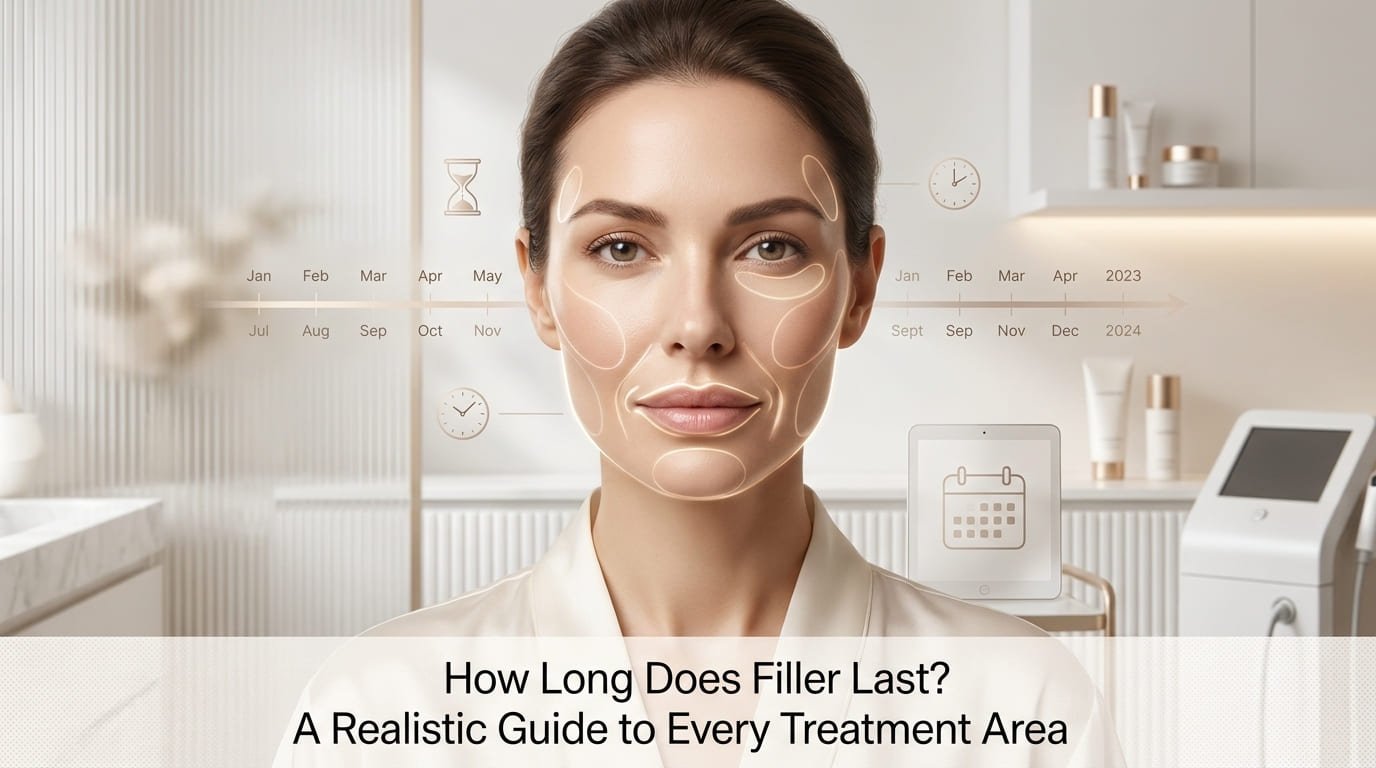
How long filler lasts is one of the questions patients ask most consistently and one that gets the most generic answers. Six to twelve months is the standard response across most clinic websites and most aesthetics articles. It is not wrong, but it tells you very little that is useful when you are planning your treatment, budgeting for maintenance, or trying to understand why your last filler seemed to fade faster than someone else's.
The honest answer is more nuanced than a single number. How long filler lasts depends on which area was treated, what product was used, how much was placed, your individual metabolism, your lifestyle habits, and several other factors that vary between patients in ways that produce genuinely different timelines. Understanding the area-by-area differences and the factors that affect longevity within each area gives you the practical knowledge that a generic answer does not.
Why Filler Longevity Varies Between Areas
Before covering each treatment area specifically, it helps to understand why the same product placed in different areas of the face lasts for different periods.
Hyaluronic acid filler is metabolised by the body through a combination of enzymatic breakdown and mechanical forces acting on the product in the tissue. The enzymatic process is relatively consistent between areas. The mechanical component is not. Areas where the underlying muscles are constantly active, where there is significant movement through normal daily activity, or where the tissue is thinner and provides less structural support for the filler all experience faster mechanical breakdown of the product than areas where it sits in more stable, less mobile tissue.
The volume placed also affects longevity in a specific way. Larger volumes of filler placed in areas capable of supporting them create a more stable depot of product that takes longer to fully metabolise than a small, precise placement in a more constrained area. This is one of the reasons cheek filler generally lasts longer than lip filler even when the same product is used.
The product itself matters significantly. Thicker, more highly cross-linked HA products designed for structural support metabolise more slowly than softer, more lightly cross-linked products designed for delicate areas. The matching of product consistency to treatment area is a clinical decision that a good practitioner makes at the treatment planning stage and that directly affects how long the result holds.
Lips: Six to Twelve Months
Lip filler has the shortest longevity of any common filler treatment area. Most patients find their lip filler lasts between six and twelve months before the result has faded enough to warrant a maintenance treatment. Some patients at the faster end of this range notice significant fading at four to five months. Others at the slower end find results holding well at twelve months or slightly beyond.
The reasons for this relatively short duration are specific. The lips are one of the most metabolically active areas of the face because of the constant movement involved in speaking, eating, drinking, and all normal facial expressions. The orbicularis oris muscle surrounding the mouth contracts hundreds of times per day, and the mechanical force this places on filler in the lip tissue is significantly greater than in less mobile areas.
Lip skin is also thinner than skin in most other filler treatment areas and supports the product differently. First-time lip filler patients often find their initial result lasts at the shorter end of the range. As the treatment is repeated over time and the lips build some familiarity with the product in the tissue, many patients find subsequent treatments lasting progressively longer. This is a consistent clinical observation rather than a guarantee, but it is worth knowing before a first appointment.
Nasolabial Folds: Six to Twelve Months
The nasolabial folds, which are the lines running from the sides of the nose to the corners of the mouth, are another area of significant movement from the muscles of facial expression. Every smile, every animated conversation, and every change in expression involves the tissue in this area. Filler placed here is subject to considerable mechanical activity.
Most patients find nasolabial fold filler lasting in a similar range to lip filler, between six and twelve months, though the larger volume typically placed in the folds compared to the precision placement in lips sometimes extends the result toward the longer end of this range.
The depth of the nasolabial fold before treatment also affects how long the result appears to last. A very deep fold treated to a partial improvement looks like it has faded when the remaining depth becomes more prominent again as the product reduces, even though the absolute amount of product may not have changed dramatically. Managing expectations around the natural reassertion of the fold over time is part of the honest conversation a good consultation includes.
Marionette Lines: Eight to Fourteen Months
Marionette lines, which run vertically from the corners of the mouth toward the chin, involve significant expression movement but slightly less repetitive mechanical force than the nasolabial area because they sit slightly further from the primary muscular action of the perioral region. They also typically require a slightly more structured product than the nasolabial folds.
Most patients find marionette line filler lasting in the eight to fourteen month range. The combination of treatment area movement and the anatomy of the lower face produces somewhat more durable results here than in the lips while still being shorter than the most stable facial areas.
Cheeks: Twelve to Twenty-Four Months
Cheek filler is consistently one of the longest-lasting filler treatments. The midface is an area of relative muscular stability compared to the perioral region. The cheek fat compartments where filler is placed are not subject to the kind of constant repetitive mechanical force that the lip and perioral area experience. The larger volumes typically placed in cheek treatment also create more substantial depots of product that take longer to fully metabolise.
Most patients find cheek filler lasting between twelve and eighteen months. Some patients, particularly those who have had cheek filler several times before and whose tissue has become accustomed to the product, find results lasting toward twenty-four months or beyond. First-time cheek filler patients typically sit at the shorter end of this range.
The specific depth of product placement in the cheeks also affects longevity. Filler placed deep against the periosteum in the more structural midface layers is in a less metabolically active environment than filler placed in the more superficial fat compartments and generally holds longer. This is a clinical decision the practitioner makes based on the specific indication being treated.
Jawline and Chin: Twelve to Eighteen Months
The jawline and chin are areas where a firmer, more structured product is typically used than in softer tissue areas, and this contributes to a more durable result than areas treated with lighter products. The mandible itself provides a stable structural reference for the filler, and the relatively limited movement of the tissue in this region compared to the perioral area supports a longer duration.
Most patients find jawline and chin filler lasting between twelve and eighteen months. The chin specifically often holds at the longer end of this range because the tissue is less mobile and the volume placed is precise. Jawline filler in patients who also grind their teeth or clench their jaw significantly may metabolise faster because the masseteric activity creates mechanical forces that transmit through the lower face tissue.
Tear Troughs: Six to Twelve Months
Tear trough filler has a shorter longevity relative to its treatment area stability because the product used in this area is typically a very soft, lightly cross-linked HA appropriate for the thin, delicate periorbital skin. Lighter products metabolise faster than structural products regardless of the area they are placed in, and the thin skin of the under-eye area supports the product differently from the thicker tissue of the midface.
Most patients find tear trough filler lasting in the six to twelve month range, with significant individual variation depending on how their skin in this specific area responds and how quickly they personally metabolise lighter HA products. Some patients also find the result in this area more sensitive to lifestyle factors like fluid retention and sleep quality than results in other areas.
Temples: Twelve to Eighteen Months
Temple filler addresses volume loss in the temporal fossa that creates a hollowed appearance around the upper face. The temporal region is relatively stable in terms of movement compared to the lower face, and the product used is typically a mid-range HA appropriate for the anatomy of this area. Most patients find temple filler lasts between twelve and eighteen months, with some variation depending on the volume placed and the individual's metabolic rate.
Radiesse: Up to Eighteen to Twenty-Four Months
Radiesse is a different product category from hyaluronic acid filler. Its calcium hydroxylapatite microsphere mechanism produces both immediate volume and progressive collagen stimulation that continues after the gel carrier has been metabolised. The result has a different longevity profile from HA filler as a consequence.
The immediate volumising effect from the Radiesse gel carrier is typically visible for around six to twelve months. The collagen stimulation that follows produces an improvement in tissue quality that persists beyond this initial phase and extends the overall duration of clinically meaningful benefit to eighteen to twenty-four months in many patients. The result does not disappear suddenly at the point where the product has been metabolised. It fades gradually as the stimulated collagen naturally turns over, and the tissue in the treated area is genuinely improved rather than simply returning to its exact pre-treatment state.
The Individual Factors That Affect Everyone's Timeline
Beyond the area-specific differences, several individual factors consistently influence how long filler lasts across all treatment areas.
Metabolism is the most discussed factor and the one with the most genuine impact. People with faster metabolisms process hyaluronic acid more quickly than those with slower ones. This is a biological variable rather than a lifestyle choice, though exercise frequency and intensity contribute to overall metabolic rate in ways that may marginally accelerate product breakdown in very active patients.
Sun exposure is a direct driver of faster HA breakdown. UV radiation degrades hyaluronic acid in the skin by stimulating the enzymes that naturally break it down. Patients who apply SPF daily and protect their skin from UV exposure consistently report their filler lasting longer than those who do not. This is one of the clearest clinical arguments for daily SPF use that exists and it applies directly to protecting the investment made in filler treatment.
Smoking accelerates skin ageing broadly and contributes to faster breakdown of structural proteins in the tissue, which creates a less supportive environment for filler and may shorten its apparent duration.
Significant weight fluctuation affects filler longevity in complex ways. Weight gain can alter the tissue environment around placed filler. Significant weight loss can reduce the tissue volume that provides context for the filler result, making it look different rather than simply faded.
Previous filler history matters. Patients who have had filler in an area before often find subsequent treatments lasting longer than their first. The tissue in areas that have been treated before has some familiarity with the product, and the structural collagen stimulation from previous treatments creates a more supportive environment for new product.
The practitioner's technique directly affects longevity in ways that patients rarely consider. Filler placed precisely at the appropriate depth for the specific indication lasts longer and behaves more predictably than filler placed at the wrong depth, where the tissue environment is less suited to supporting the product and where mechanical forces on it may be different from intended.
How to Know When Your Filler Is Fading
The fading of filler is gradual rather than sudden, and recognising it requires knowing what your settled result looks and feels like rather than what you looked like before treatment.
Most patients find it easiest to assess maintenance needs by comparing their current appearance to photographs taken at their two-week review appointment when the result was fully settled. Rather than comparing to pre-treatment photographs, which creates the risk of deciding that treatment has fully faded before it actually has, comparing to the settled result gives you a meaningful clinical reference point.
When the improvement from your filler has reduced to a level where you feel you would like to refresh or maintain it, booking a maintenance appointment is appropriate. For most patients, this falls within the timelines described above. The practitioner at your maintenance appointment will assess what is still present in the tissue before planning any additional product, to ensure that filler is maintained at appropriate levels rather than accumulated beyond what the anatomy supports.
Frequently Asked Questions
Does exercising a lot make filler wear off faster?
Vigorous exercise may marginally increase the rate at which HA filler is metabolised through its effect on overall metabolic rate and local tissue circulation. The practical impact is unlikely to be dramatic in most patients but is worth knowing if you are highly active and have found your results fading faster than average.
Can I make my filler last longer?
Consistent daily SPF use is the most evidence-supported way to extend filler longevity. Avoiding extreme heat, including saunas and hot yoga, in the weeks after treatment and maintaining consistent hydration all support the tissue environment in which the filler sits. These habits will not double the duration of your result, but they do consistently extend it compared to ignoring them.
If I stop getting filler, will I look worse than before?
No. Hyaluronic acid filler returns you to your pre-treatment baseline as it metabolises rather than leaving you worse off than before you started. Some patients worry that stopping filler will cause their face to look more aged, but this concern reflects a comparison to their treated appearance rather than to their pre-treatment one. Your face returns to where it was before treatment, not to a state it was never in.
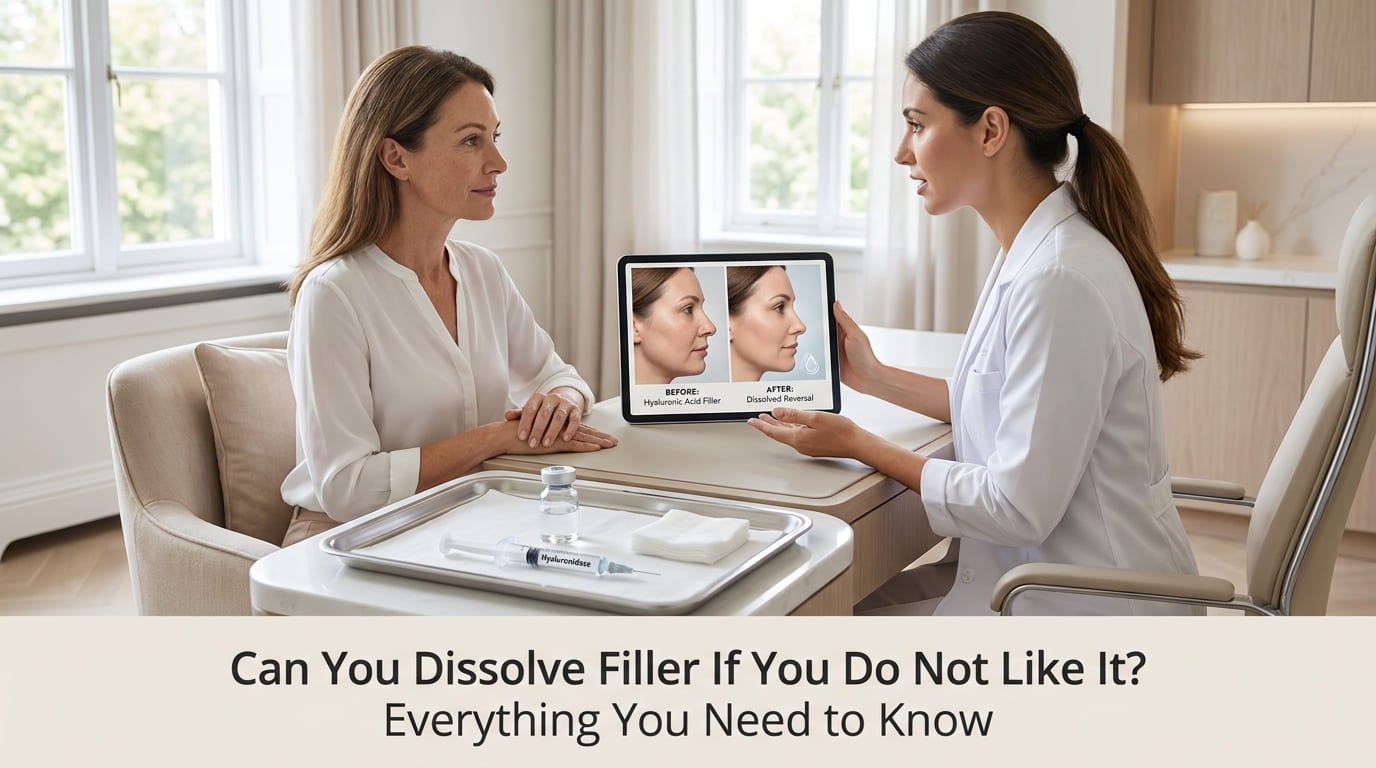
Is it possible to have filler dissolved before it has fully worn off?
Yes. Hyaluronidase dissolves hyaluronic acid filler at any stage of the product's life in the tissue. This is relevant both for aesthetic adjustments and for emergency management of complications. A result that has not fully worn off can be dissolved and reassessed at any point.
Why did my friend's cheek filler last so much longer than mine?
Individual metabolic variation, product choice, volume placed, placement depth, and lifestyle factors all contribute. Comparing your timeline to another patient's is interesting but not clinically meaningful because the variables involved differ between individuals in ways that make direct comparison unreliable.
If you have questions about how long a specific filler treatment would realistically last for you, or want to discuss your maintenance schedule based on your individual response history, book a consultation at our Littlehampton or Hove clinic.
Book a Consultation in Littlehampton or Book a Consultation in Hove