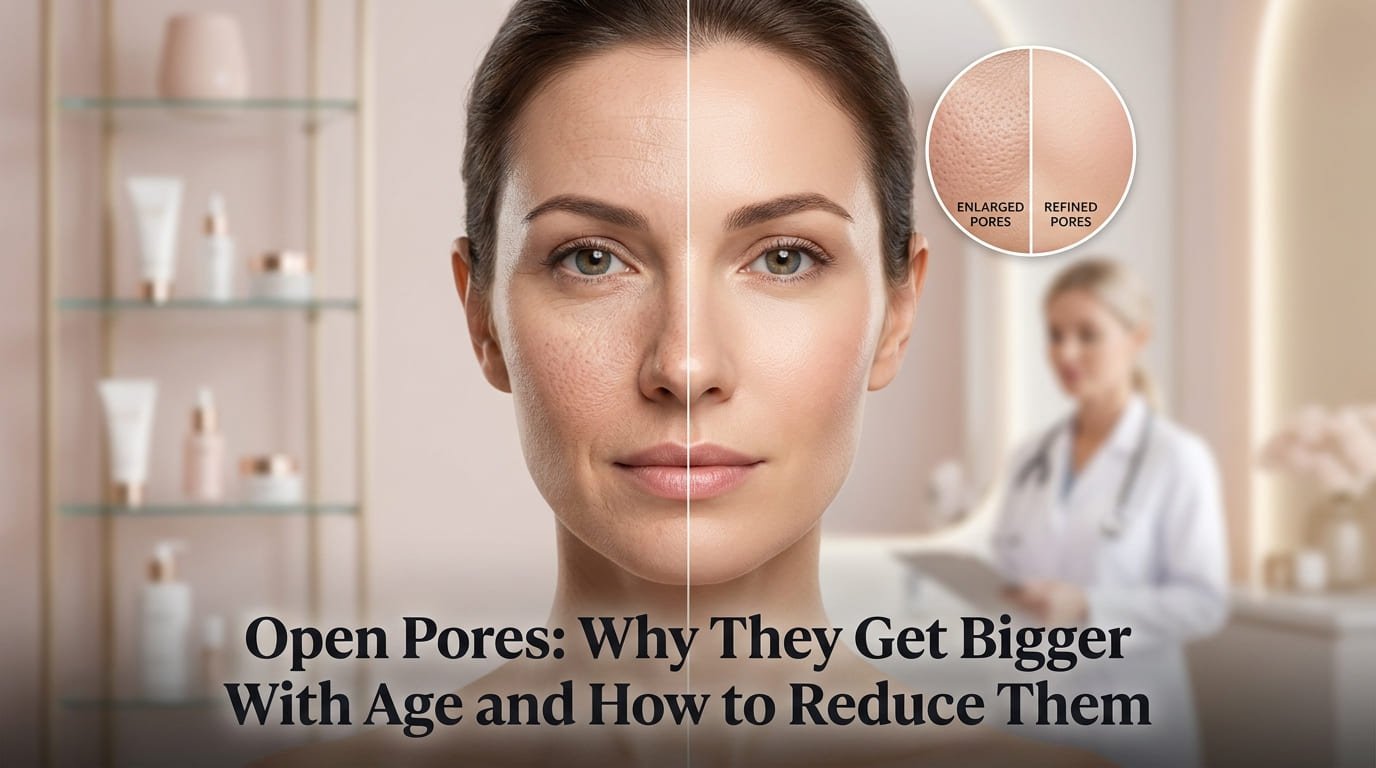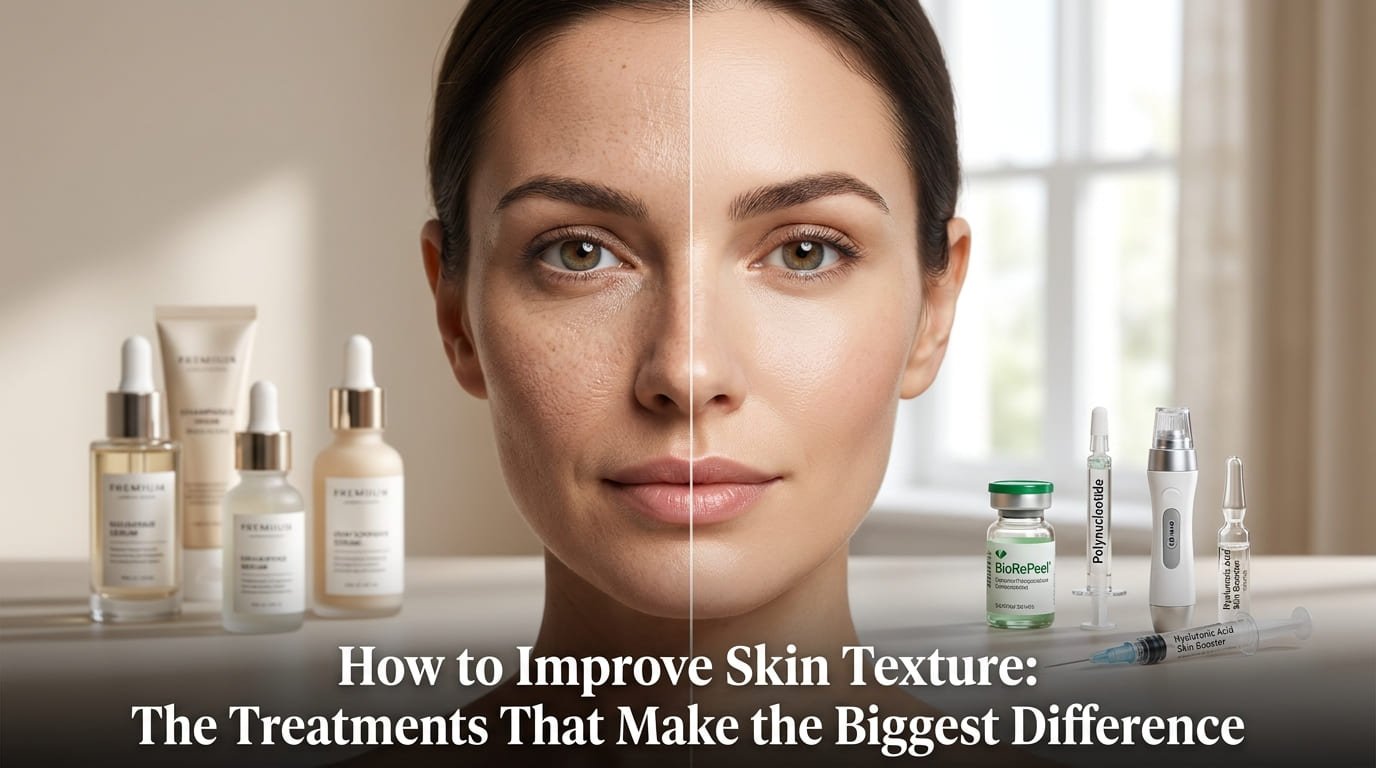
Skin texture is one of those concerns that is genuinely difficult to describe but immediately recognisable when you look at it. Rough patches, uneven surface, enlarged or visible pores, a dullness that does not go away with hydration, fine crepey lines that are not deep wrinkles but are not smooth skin either. Patients describe it in different ways but what they are pointing to is the same thing. Skin that no longer looks or feels as smooth and even as it once did.
It is also one of the most commonly searched skin concerns and one of the most frustrating to treat with skincare products alone. Not because skincare cannot contribute anything, but because the factors driving poor skin texture in most patients operate at a depth that topical products cannot reliably reach. Understanding what is actually causing the texture change in your skin determines which treatments will genuinely move the needle and which will produce only marginal improvement.
What Skin Texture Actually Refers To and Why It Changes
Smooth skin texture reflects a skin surface where the dead cell layer is regularly renewed, the pores are clear and minimally visible, the dermis below is well-structured with adequate collagen and elastin, and the hydration balance within the tissue is maintained.
When any of these factors is disrupted, skin texture changes in characteristic ways.
Inadequate cellular turnover is one of the most common causes of poor texture. Dead skin cells accumulate on the surface when the natural rate of cell shedding slows, which happens progressively with age. The stratum corneum, the outermost layer of dead cells that the skin continually produces and sheds, becomes thicker and less uniform when shedding is irregular. The result is a surface that reflects light unevenly, looks dull, and feels rough to the touch. This is the type of texture concern that responds most readily to exfoliation-based treatments.
Enlarged and congested pores contribute significantly to visible texture irregularity. Pores do not literally grow larger but they become more visible when their walls are weakened by collagen loss in the surrounding dermis, when they are stretched by accumulated sebum and comedones, or when the collagen and elastin network that keeps the pore walls taut deteriorates with age. Enlarged pores produce a crater-like texture that is particularly visible in direct lighting.
Acne scarring, both the atrophic depressions of healed inflammatory acne and the post-inflammatory pigmentation that follows breakouts, creates textural irregularity that is resistant to topical treatment because it reflects structural changes in the dermis rather than surface accumulation. This is covered in detail in the dedicated acne scarring article on this blog.
Dehydration contributes to surface texture by making fine lines and creases more visible and by reducing the smooth, plump quality of well hydrated skin. Dehydrated skin reflects light less evenly and the surface looks and feels rough even when the dermis beneath it is structurally sound.
Photoageing from cumulative UV exposure drives collagen and elastin degradation in the dermis and accelerates the cellular turnover slowdown that causes surface accumulation. It also directly damages the melanocytes in the skin, producing the pigment irregularities that contribute to uneven tone as a component of overall texture change.
Most patients presenting with skin texture concerns have several of these factors contributing simultaneously rather than a single isolated cause. This is the basis for why the most effective approach addresses multiple mechanisms rather than applying a single treatment to what appears to be a single problem.
BioRePeel for Skin Texture
BioRePeel is the treatment that most directly addresses the surface component of skin texture change. The biphasic TCA and lipid formulation delivers controlled exfoliation of the upper skin layers while simultaneously nourishing and supporting the skin barrier through the treatment.
The TCA component accelerates the removal of accumulated dead cells and superficial pigment, clearing the congested stratum corneum and creating a smoother, more even surface. The salicylic acid element penetrates pore openings and clears sebaceous congestion that contributes to enlarged pore appearance. The amino acid complex provides biosynthetic building blocks for collagen synthesis in the upper dermis during the treatment itself.
The result of a single BioRePeel session for most patients is visibly improved surface smoothness and radiance within five to seven days as the cellular renewal process completes. The improvement from a course of four to six sessions is substantially greater than a single session because the cumulative cellular renewal and collagen stimulation effects compound across treatments.
BioRePeel is particularly well suited to patients whose primary texture concern is surface congestion, accumulated dullness, enlarged pores, and post-inflammatory pigmentation marks. It is less specifically targeted at the deeper dermal structural causes of texture change, which is where the injectable treatments described below contribute most meaningfully.
The combination of BioRePeel for the surface and injectable treatments for the dermis is the most consistently effective approach to comprehensive skin texture improvement because each element addresses a layer of the problem that the other cannot reach.
Polynucleotides for Skin Texture
Polynucleotides address skin texture from a fundamentally different direction from BioRePeel. Where BioRePeel works on the surface and upper dermal layers through exfoliation and surface renewal, polynucleotides work in the deeper dermis through the PDRN regenerative mechanism.
The fibroblast stimulation driven by the adenosine A2A receptor pathway produces new collagen and elastin in the treated tissue. New collagen restores the structural density that determines pore wall tightness, skin firmness, and the overall quality of the dermal architecture that makes the surface look smooth rather than irregular. As this collagen accumulates across a course of treatment, the skin becomes measurably firmer, pore appearance reduces, and the fine textural irregularities that reflect collagen-depleted dermis gradually improve.
The anti-inflammatory dimension of PDRN is also specifically relevant to skin texture. Chronic low-grade inflammation in the dermis, whether from cumulative UV exposure, acne-prone skin biology, or environmental stress, contributes to ongoing collagen degradation through the same matrix metalloproteinase pathway described in the sagging skin article on this blog. PDRN's inhibition of inflammatory cytokines reduces this degradative stimulus and allows the collagen synthesis driven by the same treatment to accumulate more effectively.
For patients whose texture concern reflects genuine dermal structural decline rather than primarily a surface accumulation problem, polynucleotides typically produce a more complete and more lasting improvement than surface exfoliation treatments alone. For patients with both components, the combination of polynucleotides and BioRePeel addresses the full depth of the concern in a way that neither treatment alone achieves.
Mesotherapy for Skin Texture
Mesotherapy delivers a comprehensive active ingredient environment directly to the dermis through multiple micro-injections. The multi-component cocktail, typically including HA, vitamins, amino acids, minerals, and antioxidants, addresses skin texture through a different mechanism from both BioRePeel and polynucleotides.
The vitamin complex in a well-formulated mesotherapy product contributes antioxidant protection that reduces the ongoing oxidative damage driving photoageing-related texture deterioration. Vitamin C delivered intradermally at concentrations that topical application cannot reliably achieve inhibits melanin production through the tyrosinase pathway, which addresses the pigmentation component of texture unevenness. The amino acid supply supports fibroblast collagen synthesis at the building block level.
Mesotherapy for texture improvement is well suited to patients with multiple concurrent skin quality concerns including dullness, dehydration, uneven tone, and fine surface irregularity, because the multi-targeted delivery addresses all of these elements simultaneously. Patients who feel their skin lacks vitality across several dimensions rather than having one dominant specific concern often find mesotherapy a more natural fit than a treatment focused on a single mechanism.
Mesotherapy also suits patients who are looking for a regular maintenance treatment that provides consistent nutritional support to the dermis between more intensive sessions of other treatments. Monthly mesotherapy during a broader skin quality programme sustains the cellular environment in a way that helps the results of BioRePeel and polynucleotide sessions hold better between appointments.
Skin Boosters for Skin Texture
Skin boosters address the hydration component of skin texture through the most direct mechanism available. Hyaluronic acid delivered through micro-injections into the dermis attracts and retains water in the tissue, improving the plumpness and smoothness of the skin surface in a way that topical HA products cannot replicate at the dermal level.
For patients whose primary texture concern is fine surface dryness and a lack of plumpness rather than congestion, scarring, or structural collagen decline, skin boosters often produce the fastest and most immediately satisfying improvement because the hydration response is relatively rapid compared to the collagen-building effects of polynucleotides or mesotherapy.
Skin boosters also provide mild collagen stimulation through the CD44 receptor pathway and contribute to improved cellular turnover through the hydrated tissue environment. These effects are meaningful but secondary compared to treatments specifically designed to drive collagen synthesis.
The most practical role for skin boosters in a skin texture programme is as a maintenance and surface quality treatment used between more intensive appointments with BioRePeel, polynucleotides, or mesotherapy. The consistent hydration they provide supports the cellular environment that makes all other treatment results hold better and last longer.
Building a Treatment Plan for Skin Texture
The most effective approach to skin texture improvement uses more than one treatment from those described above because the causes of poor skin texture operate at multiple depths and through multiple mechanisms simultaneously.
A plan for moderate skin texture concerns typically combines BioRePeel for surface renewal and congestion clearance with polynucleotides for dermal structural improvement, supported by mesotherapy or skin booster sessions as a maintenance and nutritional support element. This combination addresses the surface, the dermis, and the cellular nutritional environment in a coordinated way that produces results no single treatment achieves alone.
The sequencing typically begins with BioRePeel to clear the surface and establish a better cellular renewal baseline, followed by the introduction of polynucleotides once the surface is responding well. Mesotherapy or skin boosters are layered in as the programme develops to sustain the cellular environment between the more regenerative treatments.
The timeline for meaningful texture improvement from a well-planned combination programme is typically eight to twelve weeks. Surface improvements from BioRePeel are visible within the first two to four weeks. Dermal structural improvements from polynucleotides build over the subsequent two to three months. The most significant visible change in overall skin texture is typically apparent at three months from starting a combination programme.
What Skincare Contributes Alongside Clinic Treatment
Topical skincare cannot produce the same degree of texture improvement as clinic treatments that deliver active ingredients to the dermis directly. But it makes a genuine contribution as a supporting element and certain topical ingredients are genuinely important alongside clinic treatment.
Retinoids are the most evidence-supported topical choice for skin texture improvement. A consistently used retinoid appropriate for the skin type accelerates cellular turnover, drives additional collagen synthesis at the superficial dermal level, and contributes to the ongoing management of pore congestion. Retinoids used consistently throughout a clinic treatment programme add a meaningful topical dimension to the dermal work being done in clinic.
SPF applied every morning protects the cellular renewal work done by BioRePeel and the structural tissue improvements built by polynucleotides and mesotherapy from ongoing UV degradation. Every session of clinic treatment that is not followed by consistent daily SPF is losing some of its effect to ongoing photoageing. This is not a minor consideration. It is the most impactful home care decision for any patient in a skin texture improvement programme.
A gentle, non-stripping cleanser and a well-formulated moisturiser maintain the skin barrier between treatment sessions and allow active ingredients, both those delivered in clinic and those applied topically, to work in a healthy barrier environment rather than a compromised one.
Frequently Asked Questions
How long does it take to see texture improvement?
Surface texture improvements from BioRePeel are typically visible within five to seven days of the first session. Deeper dermal improvements from polynucleotides and mesotherapy build over eight to twelve weeks from starting a course. The most complete improvement in a combination programme is usually apparent at around three months.
Can skin texture be permanently improved?
The improvements from a well-delivered treatment programme are lasting but require maintenance to sustain. Without periodic maintenance, the skin returns toward its pre-treatment baseline as the cellular renewal stimulus and dermal nutritional support from clinic treatment fade. Most patients maintain with monthly BioRePeel and periodic polynucleotide or mesotherapy sessions.
Is skin texture improvement possible if I have active acne?
Treatment planning for skin texture alongside active acne needs care because certain treatments that exfoliate or stimulate the skin can worsen active breakouts if applied in the wrong context. A consultation that takes active acne into account is essential before beginning any texture treatment programme. For patients with post-acne texture, the dedicated acne scarring article on this blog covers the most appropriate approach.
Will BioRePeel make my skin worse before it gets better?
Some patients experience a brief period of fine surface flaking in the two to five days after BioRePeel treatment as the cellular renewal process progresses. This is not the skin looking worse but the old cell layer shedding to reveal the improved surface beneath. By day five to seven the improvement is visible. Picking or rubbing during this phase interrupts the natural process.
Can I combine all these treatments in a single programme?
Yes. A well-planned programme combining BioRePeel, polynucleotides, and mesotherapy or skin boosters addresses texture improvement comprehensively and the treatments genuinely complement each other rather than competing. Your practitioner will plan the appropriate sequencing and timing based on your specific skin assessment.
I have been using expensive skincare for years, but my texture has not improved. Why?
The structural causes of skin texture, including collagen loss, enlarged pores from weakened pore walls, and dermal dehydration, operate at a depth that most topical products cannot reliably penetrate at therapeutic concentrations. Clinic treatments that deliver active substances directly to the dermis achieve what topical application cannot regardless of product quality or price.
If you want to understand what is causing your skin texture concerns and build a treatment plan that addresses the specific mechanisms involved, book a consultation at our Littlehampton or Hove clinic.
Book a Consultation in Littlehampton or Book a Consultation in Hove