If you have spent any time looking into skin treatments recently, you will have come across polynucleotides. They are everywhere right now. Social media, aesthetics clinics, skincare forums. The name gets mentioned constantly, and the results people share are genuinely impressive.
But the treatment itself is not always well explained. Most of what circulates online is either too vague to be useful or too technical to make sense of without a biology degree. The result is a lot of people asking what polynucleotides actually are, how they actually work, and whether the results are as real as they look.
The answers to all three are worth knowing before you book anything.
What Polynucleotides Actually Are
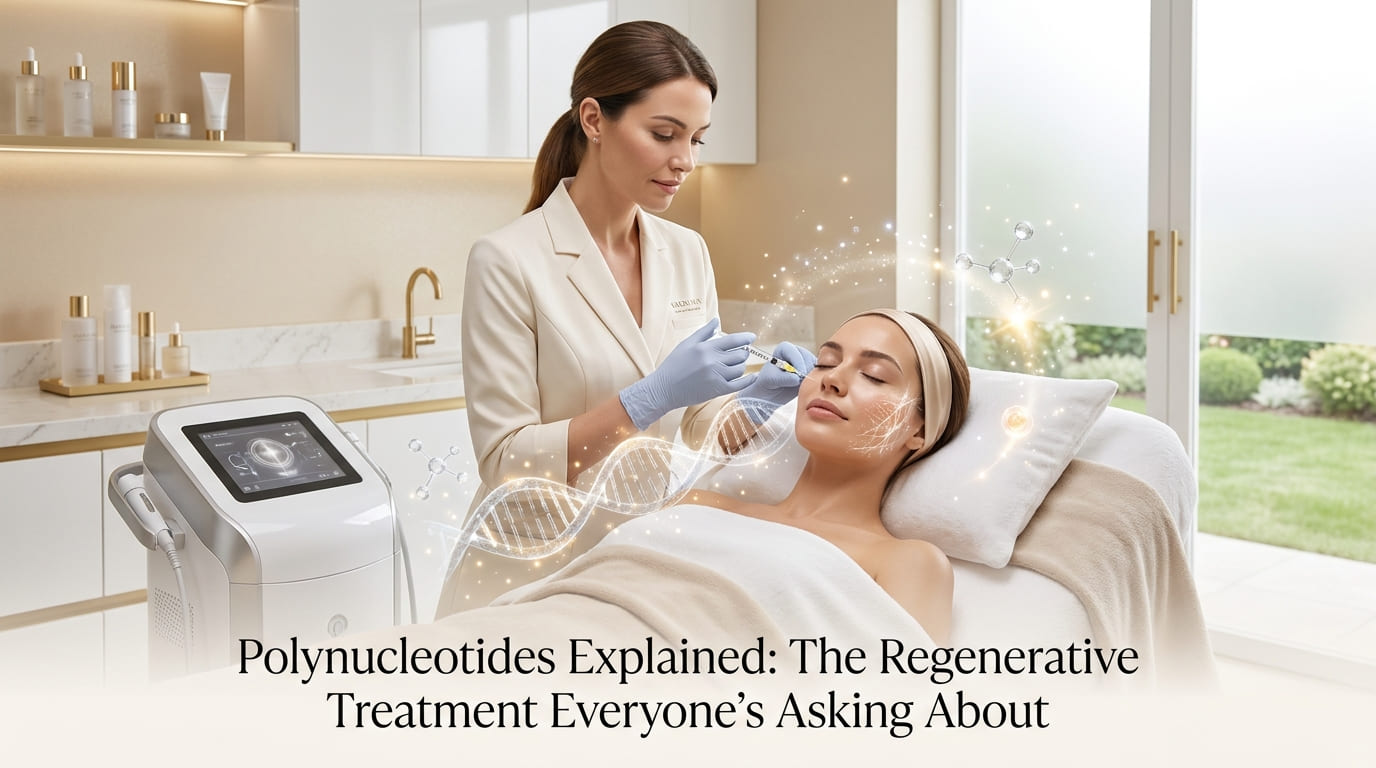
Polynucleotides are long-chain molecules made up of nucleotides, which are the building blocks of DNA. The polynucleotide products used in aesthetic treatments are derived from purified salmon or trout DNA, processed to a very high standard of purity for medical use.
Before that detail puts anyone off, it is worth knowing this technology has been used in medicine for decades, originally in wound healing and tissue repair, long before it made its way into aesthetic practice. The purification process removes proteins that could cause allergic reactions, leaving behind only the DNA fragments that drive the regenerative effect.
When injected into the skin, polynucleotides do not sit passively the way a filler does. They actively stimulate fibroblasts, which are the cells in your skin responsible for producing collagen and elastin. More fibroblast activity means more collagen production. More collagen production means genuinely improved skin quality over time, not just surface hydration.
This is why polynucleotides are described as a regenerative treatment rather than a filler or a booster. The mechanism is fundamentally different from anything that simply adds volume or provides temporary hydration.
How Polynucleotides Differ From Other Injectable Treatments
This is the question that comes up most at consultation, and it deserves a clear answer.
Profhilo and skin boosters both use hyaluronic acid to hydrate the skin and, in Profhilo's case, to stimulate some collagen production through a bio-remodelling effect. They work well and have a strong track record. But the primary mechanism is hydration first, with collagen stimulation as a secondary benefit.
Polynucleotides work the other way around. The primary mechanism is cellular regeneration. They signal fibroblasts to produce more collagen and elastin directly. The hydration improvement that patients notice is a result of that improved cellular environment, not the starting point of it.
Dermal filler does something different again. Filler adds physical volume and structure. It changes shape. Polynucleotides do not change shape at all. They improve the quality and condition of the tissue from within.
Understanding this difference matters because it shapes what polynucleotides are genuinely the right choice for, and what they are not designed to do.
What Polynucleotides Are Best Used For
The treatment has a genuinely broad range of appropriate indications, which is part of why it has grown in popularity so quickly.
Skin quality concerns are the core use case. If your skin looks tired, thin, dull, or aged in texture rather than in shape, polynucleotides address the underlying biology of that deterioration rather than masking it. The improvement comes from the skin actually regenerating more effectively, which is a different kind of result from anything that simply fills or hydrates temporarily.
The under-eye area is one of the most popular treatment zones. Thin, crepey skin under the eyes, dark circles caused by poor circulation or skin thinning, and a hollowed appearance that does not respond well to filler are all concerns where polynucleotides have shown strong results. The regenerative effect on delicate thin skin in this area is something few other treatments can replicate as safely.
Skin laxity on the face, neck, and décolletage responds well to polynucleotide treatment, particularly in patients who want genuine tissue improvement rather than volume correction. The treatment supports the skin's own repair mechanisms rather than introducing a foreign substance that holds a shape.
Acne scarring is another area where polynucleotides have demonstrated meaningful results. The fibroblast stimulation supports remodelling of scar tissue over time, gradually improving texture and reducing the visual depth of scarring with a course of treatment.
Hair loss, particularly in early-stage thinning and conditions affecting scalp health, is a growing use of polynucleotides. The same regenerative mechanism that improves skin tissue applies to the scalp environment, supporting follicle health and stimulating growth over a course of sessions.
What a Course of Treatment Looks Like
Polynucleotides are not a single-session treatment. Results build progressively as the cellular regeneration process accumulates over time.
A standard course is typically three sessions, spaced two to four weeks apart. Most patients begin to notice a change in skin quality after the second session, with the most visible improvement coming in the weeks following the third. The building effect is part of how the treatment works. Expecting dramatic immediate change after one session misunderstands the mechanism.
After the initial course, maintenance sessions are usually recommended every four to six months to sustain the regenerative environment the treatment creates. Many patients who complete a course and see strong results choose to maintain with a single annual or biannual session rather than repeating a full course each time.
The treatment itself involves a series of fine injections across the target area. Mild redness and small injection point marks are common immediately after and typically settle within 24 to 48 hours. The downtime is minimal for most patients.
How Long Results Last
This is a more nuanced answer than it sounds because polynucleotide results are not a substance sitting in your skin waiting to be metabolised. They are the result of genuine biological change in your skin tissue.
The collagen and elastin your skin produces as a result of treatment does not disappear the moment the polynucleotide molecules are absorbed. The structural improvement in the tissue persists. What fades over time is the active regenerative stimulus, which is why maintenance sessions are recommended to keep the process going.
Most patients find results from a full course are visible for six months to a year. With consistent maintenance the improvement compounds over time, meaning patients who stay with the treatment often see progressively better baseline skin quality across two or three years, not a static result that wears off and returns to baseline.
Who Is a Good Candidate
Polynucleotides suit a wide range of patients, which is genuinely one of their strengths.
Patients in their late twenties and thirties dealing with early skin quality decline, loss of glow, or fine textural changes are excellent candidates. The treatment supports the skin's own repair before significant structural changes have taken hold.
Patients in their forties and fifties who want genuine tissue improvement alongside or instead of volume correction find polynucleotides a valuable addition to a treatment plan. The regenerative effect addresses the underlying tissue quality in a way that makes other treatments work better alongside them.
Patients who have had repeated filler treatments and want to shift focus toward improving tissue quality rather than adding more volume are increasingly turning to polynucleotides as a deliberate change in approach.
The treatment is not suitable for patients who are pregnant or breastfeeding, those with certain autoimmune conditions, or those with a known allergy to fish or seafood products. A thorough consultation and medical history review is essential before treatment.
Polynucleotides Alongside Other Treatments
Polynucleotides work well in combination with other treatments, which is why they are increasingly part of planned treatment programmes rather than standalone appointments.
Combined with Profhilo, the two treatments address both deep hydration and cellular regeneration simultaneously. Used alongside anti-wrinkle injections, polynucleotides improve the quality of the skin in areas where wrinkles are being managed. Paired with skin boosters, they provide the regenerative foundation that gives the surface hydration effect somewhere meaningful to build on.
The key with any combination approach is having a practitioner who understands the timeline and interaction between treatments and can build a plan that makes clinical sense rather than simply doing everything at once.
Frequently Asked Questions
Are polynucleotides the same as PRP treatment?
No. PRP uses platelets drawn from your own blood to stimulate healing. Polynucleotides use purified DNA fragments derived from salmon or trout. Both are regenerative treatments, but the mechanism and the source material are different.
Is there a risk of allergic reaction given the salmon-derived source?
The purification process removes proteins that typically cause allergic responses. Allergy to polynucleotide products is rare, but a fish or seafood allergy is a contraindication that must be disclosed at consultation.
How soon will I see a difference?
Most patients notice an initial improvement in hydration and glow within two to three weeks of the first session. The structural regenerative results build more gradually across the full course.
Can polynucleotides replace filler?
They serve a different purpose. Polynucleotides improve tissue quality and do not add volume or structural shape. Where volume loss is the concern, filler remains the appropriate treatment. Many patients benefit from both for different reasons.
Is the treatment painful?
The injections are fine gauge, and most patients find the treatment very manageable. Topical numbing cream can be applied beforehand if preferred.
Interested in polynucleotide treatment or want to find out whether it is the right choice for your skin concerns? Book a consultation at our Littlehampton or Hove clinic, and we will assess your skin properly before recommending anything.
Book a Consultation in Littlehampton or Book a Consultation in Hove