You wake up puffy, apply concealer, and still see the same tired-looking bulge beneath your eyes. The reason is simple: concealer can alter colour and soften shadows, but it cannot move retained fluid. When persistent under-eye puffiness is mainly caused by sluggish drainage, a targeted puffy eyes lymphatic drainage treatment may address the swelling rather than merely disguising it.
However, not every under-eye bag is a lymphatic problem. Chronic eye puffiness may be linked to allergies, sleep, salt or alcohol intake, irritation, genetics, skin laxity, prominent fat pads, festoons, or medical conditions. Effective treatment begins by identifying what is creating the volume.
Why Do You Wake Up Puffy?
The skin around the eyes is thin, and the loose tissue beneath it can show small changes in fluid quickly. Overnight, lying flat can make facial fluid redistribution more noticeable. Poor sleep, allergies, crying, dehydration, alcohol, salty meals, hormonal changes and eye rubbing may make morning eye bags look worse. Facial swelling on waking can sometimes reflect ordinary overnight fluid retention, although persistent or painful swelling needs assessment.
The medical term for swelling around the eye is periorbital oedema. Mild fluid-related puffiness is often soft, fluctuates throughout the day and may improve after movement or a cool compress. Fixed bags that look similar morning and evening are more likely to involve lower-eyelid fat pads, skin laxity or the eyelid-cheek junction.
It helps to distinguish four concerns:
- Fluid-related puffiness: soft, variable and often worse after waking.
- Structural eye bags: more constant and commonly associated with anatomy, ageing or genetics.
- Dark circles: discolouration, visible vessels or shadows.
- Tear-trough hollows: a groove that casts a shadow and can exaggerate nearby bags.
Why Concealer Cannot Treat Under-Eye Swelling
Concealer is useful when the main concern is pigmentation, redness or shadowing. Strategic brightening can make the eye area appear fresher, but makeup stays on the skin’s surface. It does not change fluid-retention physiology, support cervical drainage or flatten a physical protrusion.
Heavy coverage can even emphasise puffy under-eyes by collecting in fine lines or creating a bright, flat area beneath a three-dimensional bag. For fluid-led swelling, lymphatic decongestion is more relevant because it focuses on superficial fluid movement. For structural bags, neither concealer nor manual drainage can reposition fat or remove excess skin.
Where Does Under-Eye Lymphatic Fluid Actually Go?
The lymphatic system helps return surplus fluid from tissues to the circulation. Tiny lymphatic capillaries collect extracellular fluid, which moves through larger vessels and lymph nodes before rejoining the bloodstream.
Eyelid drainage is more complex than the popular instruction to “sweep everything to the ears.” Human lymphoscintigraphy found that eyelid drainage frequently reaches the preauricular region in front of the ear. Other anatomical research describes pathways from parts of the lower eyelid towards submandibular nodes beneath the jaw. Fluid then continues through deeper cervical lymph nodes in the neck before returning to the venous circulation.
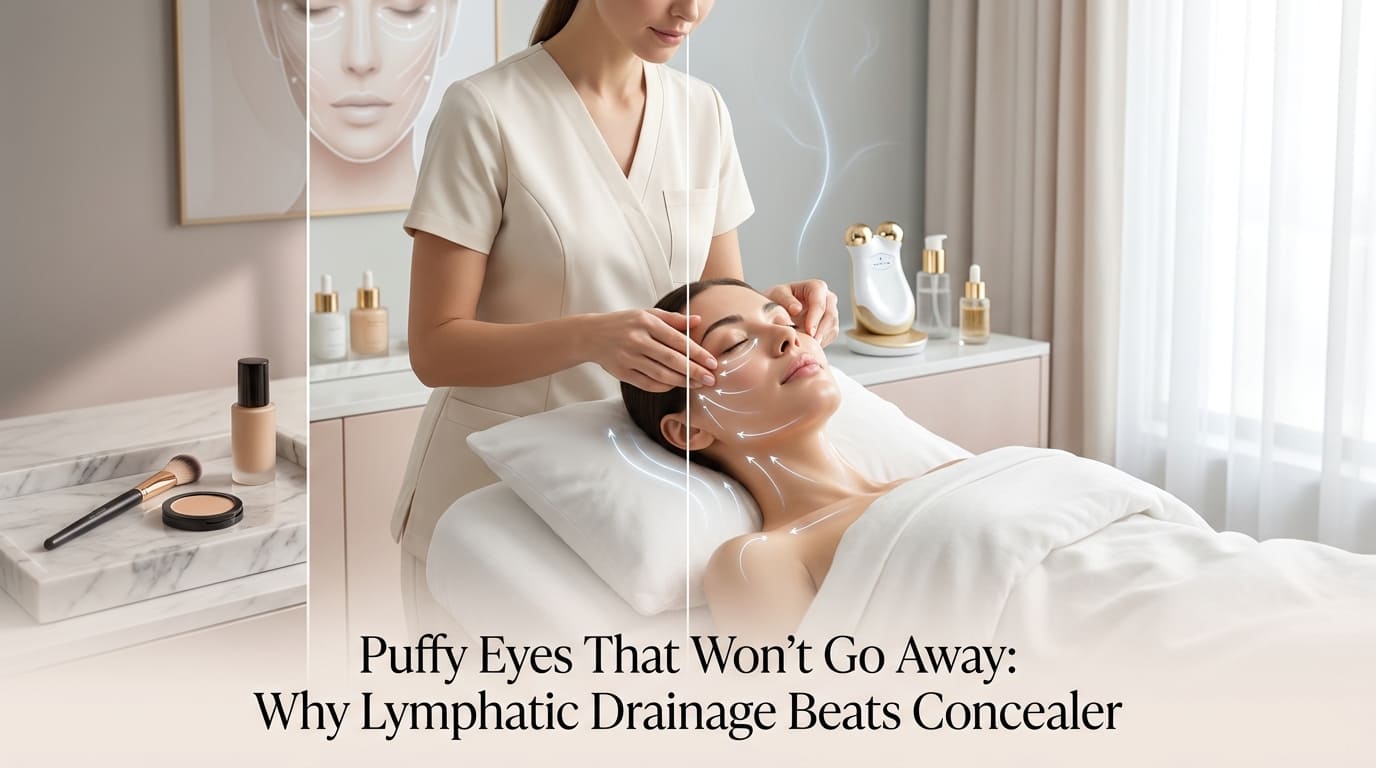
This is why professional manual lymph drainage for the face is not simply an under-eye rub. A properly sequenced treatment may prepare drainage areas around the neck before using light, directional skin movements across the face and periorbital area. Pressure should be gentle because superficial lymphatic vessels sit close to the skin; aggressive rubbing may irritate the delicate eye contour.
How Under-Eye Lymphatic Massage May Help
Manual lymphatic drainage is a specialised, light-touch technique intended to support fluid movement along anatomical pathways. Unlike deep facial massage, it should not involve forceful kneading, pain or heavy pressure around the eye socket.
For a suitable client, under-eye lymphatic massage may reduce the appearance of soft fluid-related puffiness, make morning swelling less noticeable and create a fresher-looking transition between the lower eyelid and cheek. It can also complement hydration, consistent sleep, allergy management and reduced sodium intake.
The evidence for manual lymphatic drainage is strongest in recognised lymphoedema care. Research specifically examining everyday cosmetic under-eye puffiness is limited, so results should be described as individual and often temporary—not as a permanent cure or “detox.”
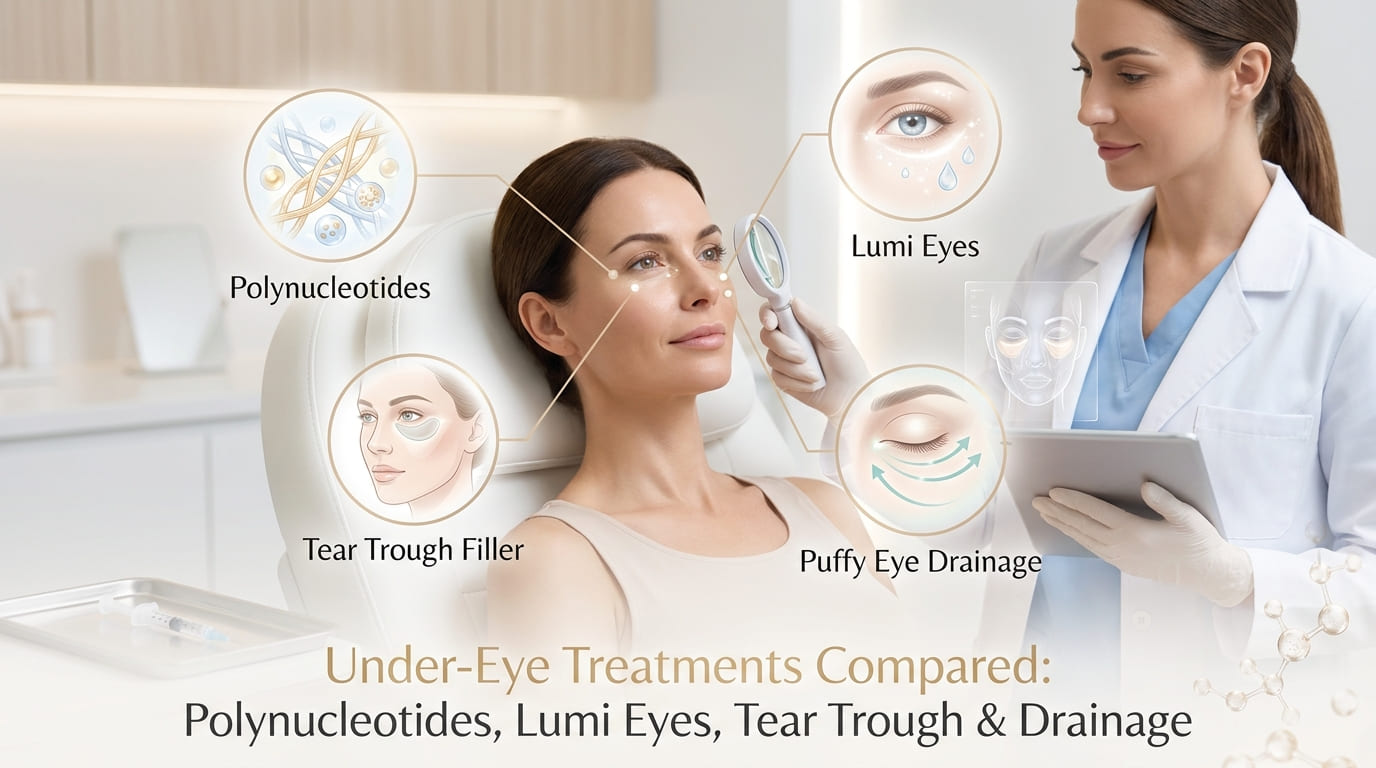
Manual Drainage vs Injectable Treatment for Puffy Eyes
Manual drainage and injectables address different concerns:
- Manual drainage may suit soft, variable puffiness linked to retained fluid.
- Skin-quality treatments may be discussed for thin, crepey, dehydrated or dull under-eye skin.
- Volume-based treatment may sometimes be considered when hollowness contributes to shadowing, but it is not automatically suitable for someone prone to swelling.
- Surgical assessment may be more appropriate for prominent fat pads, significant loose skin or fixed lower-eyelid bags.
At Angel White Aesthetics, consultation helps distinguish puffiness from pigmentation, hollowness, skin-quality changes and structural bags. This supports an individual plan rather than treating every tired-looking eye in the same way.
Puffy Eyes Lymphatic Drainage in Sussex
Angel White offers Puffy Eyes Drainage at its Littlehampton and Hove clinics. The service is positioned as targeted, consultation-led care for under-eye puffiness and tired-looking eyes. Current treatment pages list a 45-minute appointment and a guide price of £150.
Founder Irina Prikulis has more than 14 years of experience in patient care and clinical leadership, with a stated interest in facial anatomy, advanced cosmetology and aesthetic medicine. Angel White’s founder-led, consultation-first approach emphasises assessment, safe technique, natural-looking outcomes and personalised treatment planning.
A typical assessment considers whether swelling is fluid-led, structural, inflammatory or mixed. It may also review allergies, sleep, diet, skincare, previous treatments and the pattern of puffiness throughout the day. Treatment can then be planned around gentle cervical drainage, facial lymphatic pathways, controlled periorbital work and practical aftercare.
How Long Do Lymphatic Drainage Results Last?
There is no fixed duration. Some people notice that fluid-led puffiness looks reduced soon after treatment, while others experience a subtler change. Improvement may last from part of a day to several days, depending on the cause and whether triggers return.
A salty meal, alcohol, poor sleep, an allergy flare, crying, dehydration, or sleeping flat may cause puffiness to recur. Regular treatment may support maintenance for suitable clients, but it cannot permanently alter genetics, fat pads, loose skin, or festoons.
Supporting Your Results at Home
Support your results by sleeping with your head slightly elevated, staying hydrated, limiting excessive salt and alcohol, managing diagnosed allergies, removing makeup gently, and using a cool, clean compress. Avoid applying ice directly to the skin or copying forceful social-media massage techniques around the eyes.
These measures can help manage temporary fluid retention, but they do not replace professional assessment when the swelling is persistent, or its cause is unclear.
When Puffy Eyes Need Medical Assessment
Cosmetic drainage is not the right starting point for sudden, painful, hot, red, one-sided or rapidly worsening swelling. Seek medical advice when puffiness affects vision, occurs after an injury, accompanies discharge or fever, causes significant eye pain, or persists without an obvious cosmetic explanation.
NHS guidance recommends assessment when eyelid problems worsen, last a long time, become painful or involve visual changes.
The Takeaway
Lymphatic drainage beats concealer only when retained fluid is a meaningful part of the problem. Concealer changes colour; manual lymph drainage aims to support superficial fluid movement. Neither can correct every cause of chronic eye puffiness.
Precise assessment of under-eye anatomy turns a trending treatment into responsible non-invasive aesthetics. For lymphatic drainage for puffy eyes in Sussex, Angel White Aesthetics offers consultation-led appointments in Littlehampton and Hove to determine whether drainage, skin support, another treatment, or medical referral is the most appropriate next step.
FAQs
1. How do you drain lymphatic fluid from under your eyes?
Use extremely light movements from the inner under-eye area towards the temples, then continue towards the preauricular and neck drainage regions. Because eyelid anatomy is delicate and individual, professional assessment is safer than forceful massage copied from social media.
2. Does lymphatic drainage really help puffy eyes?
It may help when puffiness is soft, temporary, and related to retained tissue fluid. It cannot remove prominent fat pads, tighten significantly loose skin, correct pigmentation, or permanently treat festoons, so determining the cause is essential before treatment.
3. Why are my eyes puffy every morning?
Morning puffiness may reflect overnight fluid redistribution, sleeping flat, allergies, poor sleep, alcohol, dehydration, or a high-sodium meal. Puffiness that remains fixed throughout the day may involve structural eye bags rather than temporary lymphatic congestion alone.
4. How long do lymphatic drainage results last for puffy eyes?
Results vary with the cause of swelling and personal triggers. A fresher appearance may last from several hours to several days, but salt, alcohol, allergies, crying, poor sleep, and dehydration can cause fluid-related puffiness to return.
5. Is manual lymphatic drainage better than filler for puffy eyes?
Neither is universally better because they address different concerns. Manual drainage targets suitable fluid-related swelling, while filler is sometimes considered for hollowness or support. Filler may be unsuitable when oedema is present, making a detailed anatomical assessment essential.
6. Can lymphatic drainage permanently remove under-eye bags?
No. Manual lymph drainage may temporarily reduce fluid-related swelling, but it does not permanently change genetics, displaced orbital fat, skin laxity or festoons. Fixed under-eye bags may require skin treatment, structural support, surgical assessment or another tailored approach.