One of the most common things patients say after their first skin booster session is that they are not sure anything happened. The appointment was straightforward. The injections were fine. But the skin looks broadly the same, and they are wondering whether the treatment worked.
It worked. What skin boosters do, and crucially when they do it, is simply different from what most people picture when they imagine an injectable treatment result. This is not a treatment where you leave the clinic looking noticeably different. It is a treatment where your skin changes gradually, builds over sessions, and produces a quality of result that becomes clear when you compare photographs rather than when you look in the mirror immediately after the appointment.
Understanding this timeline before you start a course changes the entire experience. It stops the anxiety of wondering why nothing has happened yet. It tells you when to actually assess your results. And it explains why some of what you will notice at different points in the treatment is expected and normal rather than a sign of a problem.
Why Skin Booster Results Take Time
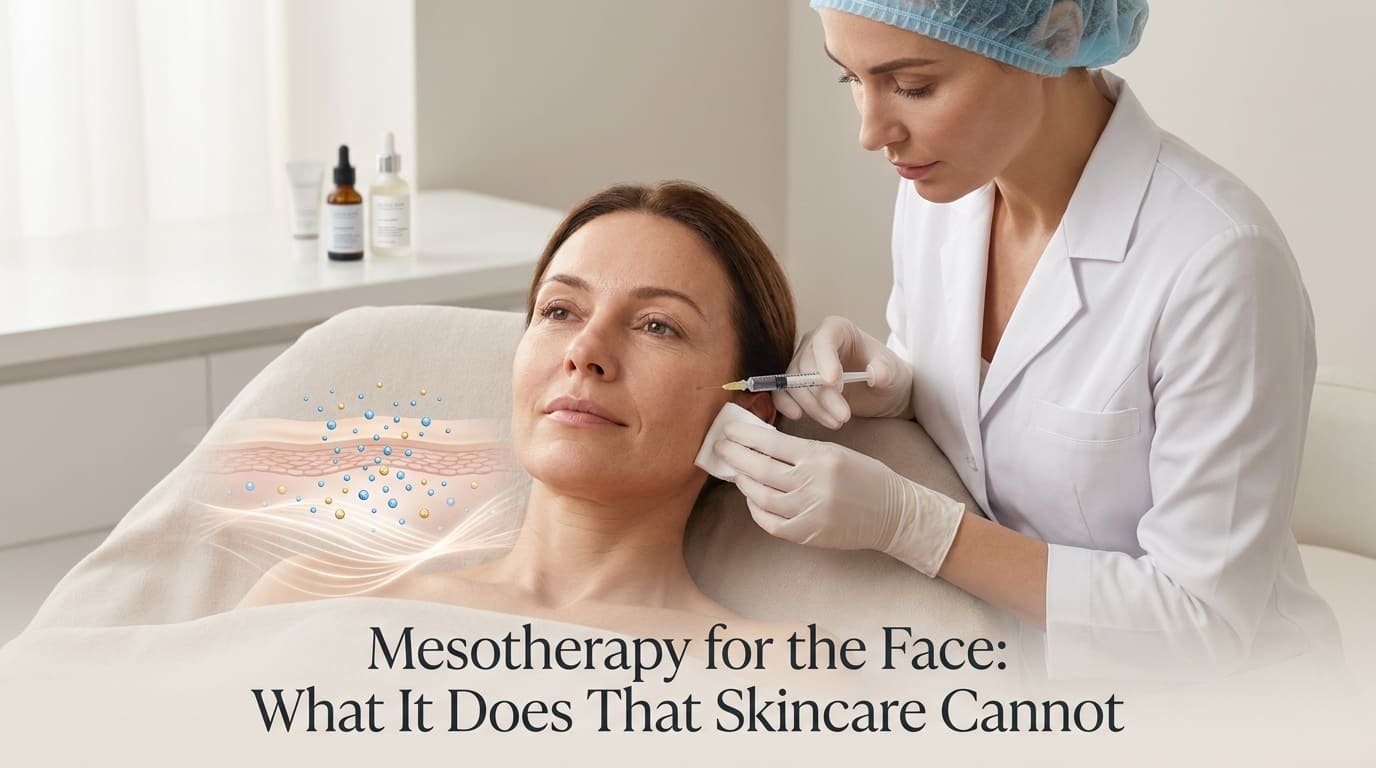
The mechanism behind skin boosters is the reason the timeline works the way it does. A skin booster delivers lightly cross-linked hyaluronic acid into the dermis through a grid of fine micro-injections. The HA absorbs water from the surrounding tissue, increasing hydration in the dermis. It also stimulates fibroblast activity through the CD44 receptor pathway, which triggers collagen and elastin production over the weeks and months following injection.
The hydration response begins relatively quickly. Hyaluronic acid starts attracting water in the dermis within the first few days of treatment. The collagen stimulation response takes longer because it involves fibroblasts receiving a signal, responding to that signal, and producing new structural proteins that gradually accumulate in the tissue. This biological process cannot be accelerated. It runs on the timescale of cellular activity rather than the timescale of a marketing claim.
This is why skin booster results build progressively across a course of sessions rather than appearing in full after one appointment. Each session adds to the biological stimulus already underway, and the cumulative effect across the full course is substantially greater than what any single session produces.
Immediately After Treatment: What Is Normal
In the hours immediately following skin booster treatment, the skin shows some redness across the treatment area and small papules at the individual injection points. These are visible but usually settle within a few hours for most patients.
Some patients notice a slight plumping or tightening sensation in the treated area on the day of treatment. This reflects the initial hydration response beginning in the tissue. It is real, and it is a sign the treatment is beginning to work, but it is not the final result, and it does not represent the full improvement that develops over the following weeks.
Bruising at one or more injection points is possible and normal. Because skin booster treatment involves multiple fine injections across the treatment area, the chance of encountering a small superficial vessel at one of those points is higher than with treatments that use fewer injection points. Bruising from this settles within five to seven days.
Do not try to assess the result on the day of treatment or the morning after. There is nothing meaningful to assess at that point. The treatment has started, but the biological response has barely begun.
Days Two to Seven: The Early Response
Over the first week following treatment, the initial redness and papules have settled for most patients. Any bruising is fading. The skin may feel slightly more hydrated or have a subtle tightening quality compared to before treatment, though this early change is often more perceptible to touch than to the eye.
Some patients notice a mild dullness or congested feeling to the skin in the first few days as it processes the micro-injection points. This is completely normal and passes within the first week. It is the skin responding to the micro-injuries of the injection process rather than a reaction to the HA itself.
By the end of the first week, the skin in the treatment area is typically calmer, and the early signs of a hydration response are becoming more noticeable. Visibly parched skin often shows the first improvement in surface appearance during this window. Skin that was less severely dehydrated may show less obvious early change.
This week is still too early to evaluate whether the treatment is doing what it is supposed to do. Hold the judgment until the timeline has had more time to develop.
Weeks Two to Four: The Improvement Begins to Show
The second and third weeks after treatment are typically when patients first start to notice something they would describe as a genuine change. The skin surface looks slightly different. Not dramatically different. Slightly more luminous, slightly more even, slightly less flat or tired-looking.
This is the hydration response maturing. The HA has been attracting and retaining water in the dermis for two to three weeks, and the effect is now visible at the skin surface. Patients who photograph their skin before treatment and during this window often notice a clearer change than they perceived from memory when they simply look in the mirror.
The collagen stimulation is also underway at this point, though it is not visible yet in any meaningful way. Fibroblast activation takes weeks to produce new collagen at a level that shows in the skin surface. That part of the result is still building.
The Second Session: Why It Matters
Most skin booster courses involve two to three sessions spaced two to four weeks apart. The second session is not a top-up because the first one did not work adequately. It is a planned and clinically necessary part of the treatment programme.
The first session establishes the initial hydration environment in the dermis and begins the fibroblast stimulation process. The second session, timed to fall when the first session's effects are active in the tissue, reinforces both the hydration and the collagen stimulus. The cumulative effect of two sessions is meaningfully greater than doubling one session's result because the biological response compounds.
Patients who complete one session and then wait to see if they need another are not following the course design and will not see the result that the full course produces. The session spacing is clinically determined, not arbitrary.
Four to Eight Weeks After Starting: The Clearest Improvement
For most patients, the most noticeable and satisfying change from a skin booster course becomes visible between four and eight weeks from the first session, which typically falls around the time of or shortly after the second or third session in the course.
By this point, the hydration response is well established. The collagen stimulation from the first and second sessions is contributing new structural proteins to the dermis. The cumulative effect shows as skin that has a different quality to how it looked before treatment started. More even in tone. More luminous at the surface. Firmer to the touch. Fine dehydration lines less visible. A general sense of improved vitality that is difficult to attribute to any single change but that multiple people tend to notice and comment on.
This is when before and after photographs tell the clearest story. The change between a photograph taken immediately before the first session and one taken at six to eight weeks into the course is typically the most useful and the most satisfying comparison available.
The collagen response continues to build slightly beyond this point, meaning the result often continues to improve for several weeks after the final session in the course before it reaches its peak.
What Affects How Quickly You See Results
Not every patient follows the same timeline. Several factors influence how quickly and how noticeably the skin booster result develops.
Baseline skin condition matters significantly. Skin that was severely dehydrated before treatment often shows faster and more pronounced improvement because it has more room to improve and responds more dramatically to the initial hydration. Skin that was already in reasonable condition typically shows a more subtle improvement because the starting point was closer to the result.
Age and skin biology influence the collagen stimulation response. Younger patients with more responsive fibroblasts tend to show the collagen-related structural improvement faster. Older patients with reduced fibroblast activity may see the hydration improvement clearly but notice the firming response developing more gradually.
The specific skin booster product used affects the timeline because different products have different HA formulations with different degrees of cross-linking, different water-attracting capacity, and different volumes of HA per injection point. Your practitioner selects the product most appropriate for your skin, and the choice influences how the result develops.
Lifestyle factors including hydration, sun exposure, sleep, and smoking all affect skin biology and therefore affect how the skin responds to treatment. Consistent daily SPF use is specifically important because UV exposure degrades HA and collagen, undermining the result the treatment is trying to build. Patients who apply SPF daily throughout a skin booster course and maintain it consistently afterward see better and longer-lasting results than those who do not.
How Long Results Last
Skin booster results typically hold well for three to six months after completing a course. The HA from the injections is gradually metabolised by the body's own hyaluronidase enzyme over this period. The collagen stimulation effect provides some residual structural benefit that outlasts the HA itself, but this also gradually diminishes without reinforcement.
Most patients who are happy with their results choose to maintain them with a single session every three to four months rather than repeating a full course. This maintenance frequency sustains the hydration and collagen stimulus at a level that prevents significant regression toward the pre-treatment baseline.
Without maintenance, the skin does not return suddenly or dramatically to how it looked before. The improvement fades gradually over the months following the last session. Many patients describe this gradual return as a noticeable signal that it is time to book a maintenance appointment rather than a sudden and disappointing loss of results.
How Skin Booster Results Compare to Profhilo Results
Patients who are deciding between skin boosters and Profhilo often ask how the results compare in terms of timeline and what they actually look like.
Profhilo results also build over time, but through a more pronounced bio-remodelling mechanism involving a higher concentration of non-cross-linked HA that spreads through the tissue and drives more intense collagen stimulation. The Profhilo timeline peaks at around eight weeks from the first session, which is broadly similar to a skin booster course. The quality of the result can differ because Profhilo targets skin laxity and structural improvement more specifically, while skin boosters focus on hydration and surface quality.
The choice between them depends on the specific skin concern being addressed rather than on which produces faster or better results in general. Both work well for the right patient and the right indication. A full comparison of the two treatments is available in the dedicated Skin Booster vs Profhilo article for patients who want to work through the decision in more detail.
Frequently Asked Questions
Is it normal to see no change at all after my first session?
Yes. Some patients notice early hydration improvement within the first one to two weeks. Others see very little visible change until the second session has been completed and the cumulative effect has had time to develop. Both are within the normal range.
Can I assess my result at two weeks?
Two weeks is still early in the process. A meaningful assessment is better made at four to eight weeks from the first session when the hydration response is established and the collagen stimulus has had time to begin contributing. If you are genuinely concerned at two weeks contact your practitioner, but do not conclude this point.
Will my results last longer if I have more sessions?
A course of two to three sessions produces a more substantial and longer-lasting result than a single session because the biological stimulus compounds across sessions. Beyond the recommended course, adding sessions indefinitely does not proportionally extend results. A planned course followed by appropriate maintenance is the most effective approach.
My skin looked worse on day three than before treatment. Is that normal?
A temporary congested or slightly dull appearance in the first few days after treatment is within the normal range as the skin processes the micro-injection points. If it persists beyond a week or if there are other symptoms, contact your practitioner.
Does skin booster treatment get more effective over time with regular maintenance?
Yes, in a meaningful way. Patients who maintain consistently over a year or more often find their skin quality at the time of each maintenance session is better than it was when they started the course, because the cumulative collagen and tissue quality improvement builds with each additional treatment.
When should I book my second session?
Most practitioners recommend two to four weeks after the first session. Your practitioner will advise the optimal timing for your specific skin and the specific product being used.
How do I know if my skin booster worked?
Photograph your skin in consistent lighting immediately before your first session and again at six to eight weeks into the course. The comparison between these two photographs is the most reliable way to see what has changed, because the gradual nature of the improvement means it is often less perceptible in the mirror than in direct photographic comparison.
If you want to discuss skin booster treatment, understand which product would suit your skin, or plan a course that addresses your specific concerns, book a consultation at our Littlehampton or Hove clinic.
Book a Skin Booster Consultation in Littlehampton or Book a Skin Booster Consultation in Hove