Skin can look tired, feel tight or appear less firm for several reasons. Sometimes the main issue is a lack of moisture. At other times, the skin has lost some of its natural elasticity and does not bounce back as easily as it once did. These concerns can look similar, particularly when fine lines and a less smooth texture are involved, but they are not the same thing.
This distinction matters when choosing skincare or considering aesthetic treatments. A moisturiser may help relieve dryness and improve the appearance of dehydrated skin, but it cannot fully address changes in the skin's underlying support. In the same way, a treatment intended to improve skin firmness is not necessarily the right solution for someone whose main concern is dehydration.
Understanding the difference between skin elasticity and skin hydration helps make treatment decisions more realistic. It also explains why a personalised approach is often more useful than choosing a product or procedure simply because it is popular.
At Angel White Aesthetics, skin concerns can be assessed individually, with attention to the condition of the skin, personal goals and treatment suitability.
What Is Skin Hydration?
Skin hydration refers to the amount of water present in the skin. Water helps maintain the skin's normal function, flexibility and comfortable appearance.
The outermost layer of the skin, known as the stratum corneum, plays an important role in maintaining hydration. It contains skin cells surrounded by a mixture of lipids, including ceramides, cholesterol and fatty acids. Together, these components help form a protective barrier that limits excessive water loss.
When this barrier is functioning well, the skin is better able to retain moisture and protect itself from everyday environmental exposure.
Hydrated skin generally looks smoother and feels more comfortable. It may appear plumper, with fine dehydration lines becoming less noticeable.
When the skin lacks sufficient water, it can feel tight, rough or uncomfortable. Fine lines may become more visible, especially around the eyes and mouth. Makeup may also settle into dry areas rather than sitting evenly on the surface.
However, dehydrated skin is not necessarily the same as naturally dry skin. Dry skin usually refers to a skin type that produces less oil, while dehydration describes a lack of water. Oily skin can also become dehydrated.
This is an important difference when deciding what kind of skincare support may be helpful.
What Is Skin Elasticity?
Skin elasticity describes the skin's ability to stretch and then return towards its original shape. It is closely connected to the structure of the dermis, the deeper layer beneath the skin's surface.
Two proteins play an important role here. Collagen provides strength and structural support, while elastin gives skin the ability to stretch and recoil. These fibres form part of a network that helps the skin maintain its shape as we smile, speak, move and make facial expressions.
When this supporting network is healthy, skin generally feels firmer and more resilient. As we age, collagen and elastin structures gradually change. The skin may become less firm and take longer to return to its original position after being stretched.
Reduced elasticity can contribute to:
- Fine lines that remain visible when the face is relaxed
- Looser-looking skin around the cheeks and jawline
- Crepey texture, particularly around the eyes and neck
- Less definition in the lower face
- Skin that appears thinner or less resilient
These changes are influenced by more than elastin alone. Collagen loss, sun damage, hormonal changes, genetics and changes in the deeper structures of the face can all contribute.
It is also worth remembering that skin elasticity is not the same as facial volume. A person may have good skin elasticity but notice reduced cheek fullness due to changes in facial fat or bone structure. Different concerns require different approaches.
Skin Hydration vs Skin Elasticity. What Is the Main Difference?
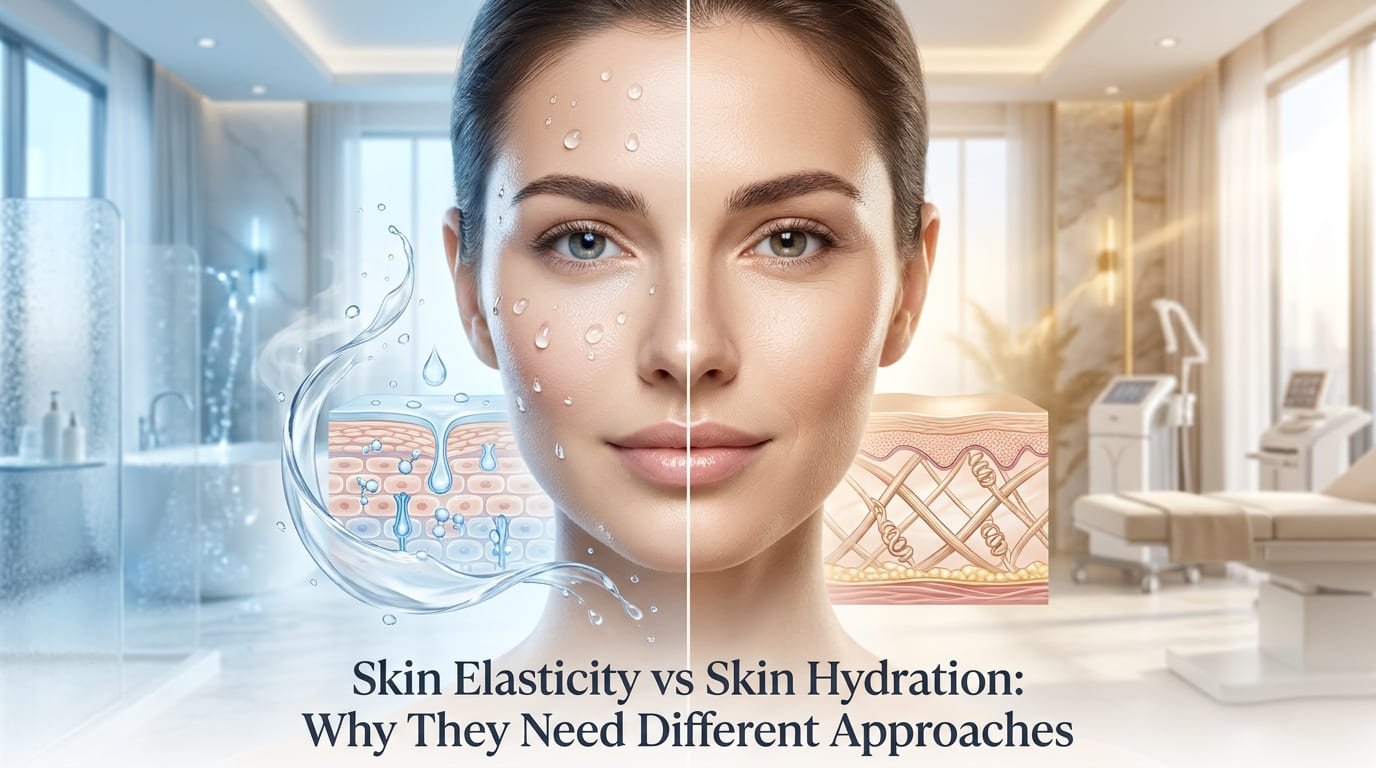
Hydration is about the water content of the skin, while elasticity is about how well the skin stretches and returns to its original shape.
They are connected, but they describe different aspects of skin health.
| Skin hydration | Skin elasticity |
| Relates to water content and moisture retention | Relates to the skin's ability to stretch and recoil |
| Strongly influenced by the skin barrier | Influenced by collagen, elastin and supporting structures |
| Can change with weather, skincare and cleansing habits | Changes gradually with ageing and accumulated skin damage |
| Dehydration may cause tightness and temporary fine lines | Reduced elasticity may contribute to laxity and persistent creasing |
| Often supported by moisturisers and hydrating ingredients | May require a broader approach to skin health and professional treatment |
A useful way to understand the difference is to think about how skin behaves after applying moisturiser.
If tightness improves and the skin looks smoother, dehydration may have been contributing to the concern. However, moisturising does not rebuild damaged elastin fibres or fully restore lost collagen support.
Equally, a treatment aimed at improving skin firmness will not necessarily resolve a damaged skin barrier or ongoing dryness.
Some people experience both concerns at the same time. This is common as skin ages, which is why an assessment should consider hydration and elasticity separately.
How Can You Tell Whether Your Skin Needs Hydration or Support for Elasticity?
It is not always easy to identify the cause by looking in the mirror. Dehydration and reduced elasticity can both make fine lines more noticeable, and skin can have more than one concern.
There are, however, some useful signs to consider.
Signs Your Skin May Be Dehydrated
Dehydrated skin often feels uncomfortable rather than simply looking older.
You may notice:
- Tightness after washing your face
- Rough or flaky patches
- A dull appearance
- Fine lines that become more noticeable when the skin is dry
- Makeup settling into dry areas
- Increased sensitivity after using certain skincare products
These symptoms may become more noticeable during colder weather, after excessive cleansing or when using strong exfoliating products too frequently.
Dehydration can affect oily, combination and dry skin types. It is therefore possible to have an oily forehead and nose while the cheeks feel tight and uncomfortable.
Signs Your Skin May Have Reduced Elasticity
Changes in elasticity tend to develop more gradually.
You might notice:
- Skin looking less firm than it used to
- Fine lines becoming more established
- Crepey texture around the eyes or neck
- Reduced definition around the jawline
- A softer appearance around the cheeks
- Skin that appears less resilient overall
These signs are not proof of collagen or elastin loss. Sun damage, facial volume changes and other factors can produce similar effects.
If the change is sudden, unusual or accompanied by a rash, pain or persistent irritation, it is better to seek appropriate medical advice rather than assume it is ordinary ageing.
Why Do Hydration and Elasticity Change With Age?
Skin changes throughout adult life. The pace and extent of those changes vary between individuals.
Hydration can fluctuate relatively quickly. Weather, indoor heating, cleansing habits, skincare ingredients and changes in the skin barrier can all affect how much moisture the skin retains.
Elasticity generally changes over a longer period. As collagen and elastin fibres become less organised, the skin's supporting structure gradually loses some of its resilience.
Sun exposure is an important factor in this process. Ultraviolet radiation contributes to the breakdown of collagen and elastin, which can lead to wrinkles, uneven texture and reduced firmness over time.
Hormonal changes can also influence skin quality. For example, changes in oestrogen around menopause may be associated with reduced skin thickness, dryness and changes in collagen content.
Lifestyle habits matter too. Smoking, inadequate sun protection and ongoing environmental exposure can contribute to visible skin ageing.
The important point is that hydration and elasticity do not decline in exactly the same way. Someone may have well-hydrated skin but still notice reduced firmness. Another person may have naturally firm skin but experience dehydration and sensitivity.
How to Improve Skin Hydration at Home
For dehydrated skin, a consistent routine that supports the skin barrier is a sensible starting point. You do not necessarily need a large collection of products.
Choose a suitable cleanser
A harsh cleanser can leave the skin feeling tight and uncomfortable. Consider a gentle formula that removes dirt, sunscreen and makeup without unnecessarily stripping the skin.
If your face feels dry immediately after cleansing, your current product or cleansing routine may not be suitable.
Use hydrating ingredients
Ingredients such as hyaluronic acid and glycerin are humectants. They attract and hold water, helping the skin feel more hydrated.
They are commonly found in serums and moisturisers. Their effectiveness also depends on the overall formulation and how the product is used.
Support the skin barrier
Moisturisers containing ingredients such as ceramides can help support the skin barrier. Emollients soften the skin, while occlusive ingredients help reduce water loss from the surface.
A suitable moisturiser can make a noticeable difference to dryness and discomfort when used consistently.
Avoid excessive exfoliation
Using exfoliating acids or retinoids too frequently can irritate the skin and weaken its barrier function.
If your skin feels sore, tight or unusually sensitive, consider reducing active products and allowing it to recover. Introduce stronger ingredients gradually and follow product instructions.
Apply sunscreen every day
Daily broad-spectrum sun protection helps reduce UV-related skin damage. This is important for both short-term skin health and the long-term preservation of collagen and elastin.
A routine that combines moisturising with sun protection is a more useful foundation than relying on one expensive product.
Can Skincare Improve Skin Elasticity?
Skincare can support the appearance and condition of ageing skin, but it has limitations when deeper structural changes are involved.
Some ingredients have evidence for improving aspects of photoaged skin and supporting collagen-related processes.
Retinoids are among the better-studied topical ingredients for signs of photoageing. Depending on the formulation and strength, they may help improve fine lines, uneven texture and the appearance of sun-damaged skin. They can also cause irritation, dryness and peeling, so introducing them gradually is important.
Vitamin C is an antioxidant used in skincare to help protect against oxidative damage. It also plays a role in normal collagen formation within the body. Topical vitamin C products may help improve the appearance of uneven tone and support a skin protection routine.
Peptides are included in some skincare formulations marketed for mature skin. Their effects depend on the specific ingredient and product formulation, and results should not be assumed to match those of professional procedures.
No topical product can completely reverse established skin laxity or replace the deeper structural support lost through ageing. A realistic skincare routine focuses on maintaining skin health, protecting against further damage and improving visible texture.
Which Professional Treatments Address Hydration and Elasticity?
Professional treatments may be considered when skincare alone is not addressing the concern. However, the right option depends on whether the main issue is dehydration, skin texture, reduced firmness or a combination of these.
At Angel White Aesthetics, several treatments are available for people looking to improve skin hydration and overall quality. Each has a different purpose, so treatment selection should follow an individual assessment.
Profhilo for Hydration and Skin Quality
Profhilo is an injectable hyaluronic acid treatment used to improve skin hydration and support overall skin quality.
It is not designed to create the same type of volume or facial reshaping associated with traditional dermal fillers. It is often considered by people concerned about dullness, dehydration, early signs of skin ageing and reduced firmness.
Angel White describes Profhilo as a treatment focused on hydration, skin remodelling and improved skin quality. Its suitability depends on the individual's skin condition and treatment goals.
Skin Boosters for Dehydrated Skin
Skin boosters are injectable treatments intended to improve skin hydration and aspects of skin quality.
They may be considered when the skin looks dull, feels dehydrated or has fine lines associated with reduced hydration. Different products have different formulations, so the expected results and treatment plans can vary.
Skin boosters are not a replacement for a good daily moisturiser or sun protection. They are a professional treatment option that may be considered when someone wants additional support for skin hydration.
Biorevitalisation for Hydration and Skin Quality
Biorevitalisation is an injectable skin rejuvenation approach focused on hydration and overall skin quality.
At Angel White, it is described as a treatment that delivers hydrating and nourishing ingredients into the skin. It may be considered for concerns such as dullness, dehydration, fine lines and early changes in firmness.
The treatment is not intended to create significant facial volume. Its suitability and expected benefits should be discussed during a consultation.
Polynucleotides for Skin Quality
Polynucleotide treatments are used in aesthetic practice to support skin quality and tissue health. They are often discussed for delicate areas, including the under-eye region, where crepey texture and changes in skin quality can be concerns.
They are different from treatments that primarily focus on delivering hydration. The potential benefits, limitations and suitability depend on the product, treatment area and individual circumstances.
Mesotherapy for Skin Rejuvenation
Mesotherapy involves delivering selected ingredients into the skin through small injections. The formulation can vary depending on the treatment protocol.
It may be considered as part of a skin rejuvenation plan where hydration and overall skin quality are priorities. The ingredients used and their intended effects should always be explained before treatment.
Why One Treatment May Not Address Both Concerns
It can be tempting to look for one treatment that improves every sign of skin ageing. In practice, hydration and elasticity need to be considered separately.
Imagine someone whose skin feels tight, looks dull and has visible dehydration lines. Their first priority may be improving moisture retention and supporting the skin barrier.
Now consider someone whose skin feels comfortable but has become less firm around the cheeks and jawline. Applying more moisturiser may improve surface comfort, but it is unlikely to address the underlying changes in skin support.
A third person may experience both problems. Their skin could be dehydrated while also showing reduced firmness and elasticity.
These situations call for different considerations.
A treatment plan may include professional skin treatments alongside an appropriate home skincare routine. However, combining several procedures does not automatically produce better results. Treatment timing, skin sensitivity, medical history and individual suitability all need to be considered.
Can You Improve Hydration and Elasticity at the Same Time?
Yes, it is possible to work on both concerns as part of a broader skin health plan. The important thing is to understand what each approach is intended to do.
For example, a person with dehydration and early signs of skin ageing may benefit from a routine that includes:
- A gentle cleanser to avoid unnecessary irritation
- A moisturiser suited to their skin type
- Daily broad-spectrum sunscreen
- Carefully selected active ingredients, introduced gradually
- A professional assessment to discuss persistent concerns
- An appropriate treatment if there is a clear reason to consider one
The order and combination will depend on the skin. Someone with sensitivity or a damaged barrier may need to focus on recovery before introducing stronger active ingredients or injectable treatments.
There is no universal treatment schedule. A practitioner should explain the expected benefits, possible side effects, recovery considerations and realistic limitations before recommending a procedure.
When Should You Seek Professional Advice?
If your skin feels persistently dry, looks less firm or has developed changes that concern you, a professional assessment can help clarify what may be happening.
It is particularly useful when you are unsure whether the issue is dehydration, sensitivity, texture changes or reduced elasticity. These concerns can overlap, and choosing a treatment without understanding the underlying issue may lead to disappointment.
Angel White Aesthetics offers skin treatments in both Littlehampton and Hove. Its consultation-led approach involves assessing the skin, discussing individual goals and recommending suitable options rather than assuming every person needs the same treatment.
The Littlehampton clinic is located at 19 Beach Road, Littlehampton, BN17 5JA. The Hove clinic is at 6 Woodland Parade, Hove, BN3 6DR.
Choosing the Right Approach for Healthier-Looking Skin
Skin hydration and skin elasticity are closely connected, but they are not interchangeable. Hydration relates to the skin's water content and ability to retain moisture. Elasticity depends on the supporting structures that allow skin to stretch and return towards its original shape.
This is why different concerns need different approaches. Moisturisers and barrier-supporting ingredients can help with dehydration, while changes in firmness and elasticity may require a broader discussion about skin ageing, sun damage and suitable professional treatments.
A consistent skincare routine remains important at every age. Daily sun protection, gentle cleansing and appropriate moisturising help maintain the skin's condition. When additional support is needed, treatments such as Profhilo, skin boosters, biorevitalisation and other skin rejuvenation options may be discussed following an assessment.
The best starting point is understanding what your skin actually needs. With realistic expectations and a suitable plan, you can make more informed decisions about maintaining healthy-looking skin over time.