Most brides think about their dress, their venue, their flowers, and their photographer long before they think about their skin. Then the wedding gets close, and the realisation arrives that some of the treatments that would make the biggest difference to how they look and feel on the day take months to deliver their full results, not days.
This is the planning gap that causes the most last-minute stress in aesthetic consultations ahead of weddings. Treatments booked too close to the day leave no room for results to settle, for any unexpected reactions to resolve, or for adjustments to be made if a result is not quite right first time. Treatments booked at the right points in a well-structured timeline compound on each other, with each session building on what the previous one delivered.
This guide sets out a realistic month-by-month timeline for wedding skin preparation based on what actually produces the best results on the day, not what sounds appealing on a treatment menu.
Why the Timeline Matters More Than the Treatments
The instinct for most people planning wedding skin prep is to focus on which treatments to have. The more important question is when to have them. A perfectly chosen set of treatments booked in the wrong sequence or too close to the wedding day will underperform every time.
Some treatments need months to deliver their full results because they work by stimulating the body's own collagen production, which is a biological process that takes time. Others need a buffer period between the treatment and the wedding to ensure any bruising, swelling, or unexpected response has fully resolved. Some treatments work best when they are performed in a specific sequence because the result of one creates a better environment for the next.
Understanding this changes how you approach the planning conversation. Starting the conversation with a practitioner at least six months before the wedding is the minimum for a properly structured programme. Twelve months is better. Eighteen months gives the most flexibility.
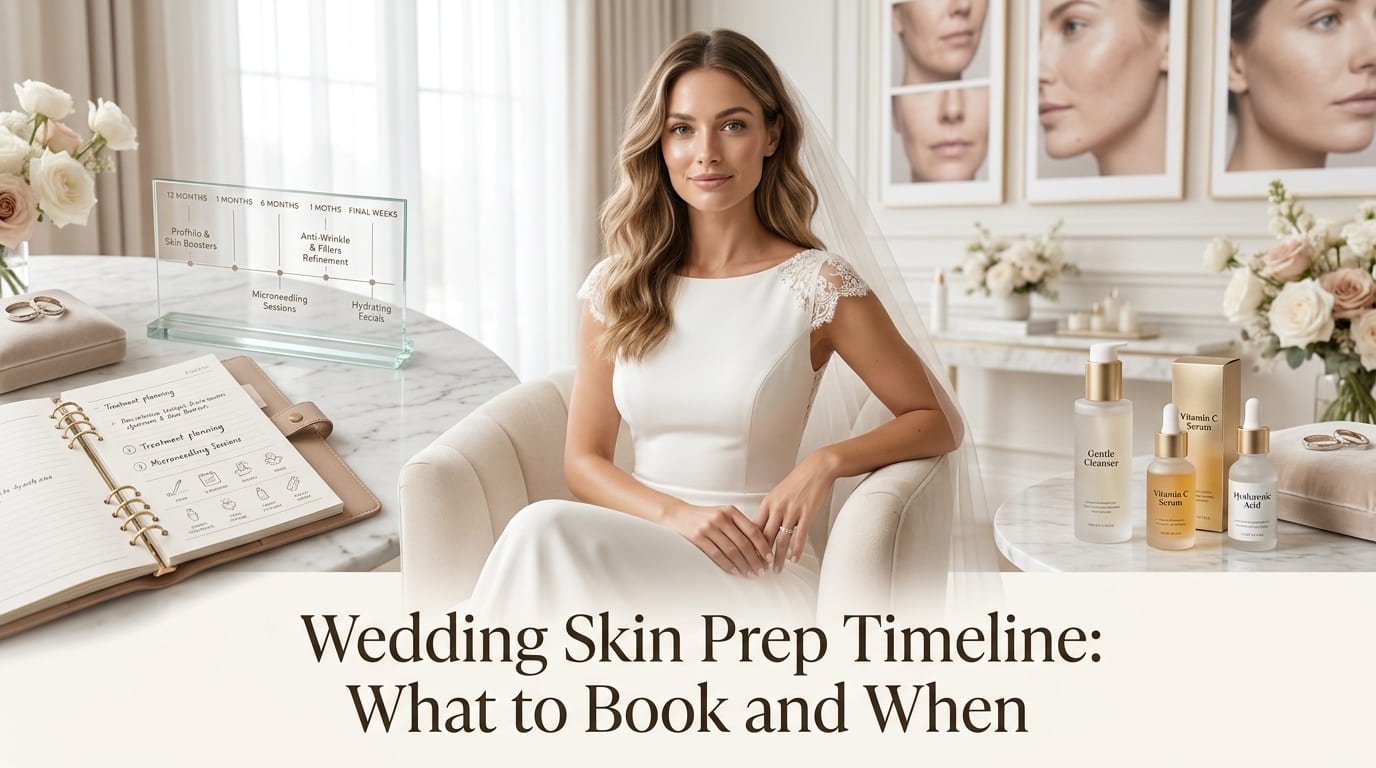
Twelve Months Before the Wedding: Start With a Consultation
The single most important appointment in the entire wedding skin timeline is a consultation, and it should happen at least a year before the wedding if possible.
A good pre-wedding consultation does several things that a standard consultation might not. It assesses your skin properly across all the dimensions that matter for a wedding result, including texture, pigmentation, laxity, hydration, specific concerns like scarring or dark circles, and how your skin has responded to any previous treatments. It gives you a realistic picture of what is achievable in the time available. It identifies which treatments will deliver the most visible improvement for your specific concerns and sequences them in a way that allows each one to work properly.
If you have never had aesthetic treatment before, twelve months also gives you time to try treatments at a pace that does not feel rushed, to assess how your skin responds, and to make any adjustments before the wedding is close enough to create pressure.
If pigmentation is a concern, starting treatment at twelve months is particularly important. Melasma and established solar damage take consistent, sustained treatment to improve meaningfully, and the sun protection required throughout that programme needs to become a genuine daily habit rather than something you start two months before the day.
Nine to Ten Months Before: Skin Foundation Treatments
This window is where foundation skin quality treatments belong. These are the treatments that produce their most visible results over a sustained period and that work best when they are done early enough to compound properly.
Profhilo or polynucleotides started at this point give the skin quality improvement mechanism time to fully develop before more targeted treatments are added on top. Starting a course of Profhilo at nine or ten months means completing two sessions, allowing the full bio-remodelling result to develop over the following eight to twelve weeks, assessing the result properly, and deciding whether a maintenance session before the wedding makes sense. The skin going into subsequent treatments will be in a meaningfully better condition than it was at the start, which improves the results of everything that follows.
If acne scarring is a concern, the structured treatment programme that produces meaningful improvement needs to start at this point or earlier. Microneedling, polynucleotides, and any subcision work for rolling scars all need sufficient treatment sessions and sufficient time between sessions for collagen remodelling to accumulate.
Pigmentation treatment programmes where chemical peels, prescription topicals, or other targeted interventions are being used also belong in this window.
Six to Eight Months Before: Anti-Wrinkle Treatment
Anti-wrinkle injections for brides who have not had them before belong in this window rather than close to the wedding for a specific and important reason.
First-time anti-wrinkle patients need to understand how their face responds to treatment before they are committed to that result on their wedding day. Most people respond beautifully to their first treatment. A small number find the dose needs adjustment, that one area responded differently from another, or that the result felt unfamiliar to them in a way they wanted to discuss with their practitioner.
Having anti-wrinkle treatment for the first time six to eight months before the wedding gives enough time to complete a first round, assess the result properly at two weeks, make any adjustments at a follow-up if needed, allow the treatment to wear off naturally, and repeat a refined second round with more confidence several months later. Going into the wedding with a result you have already experienced and are happy with is a very different position from going in with a first-ever treatment three weeks before the day.
For brides who already have regular anti-wrinkle treatment, timing the appointment so that results are at their best on the wedding day is a simpler calculation. Most practitioners can help you work back from your wedding date to identify the optimal booking window based on your known response pattern.
Four to Five Months Before: Refining and Adding Volume
This is the window for any dermal filler that is part of the plan. Lip filler, cheek filler, jawline definition, or any other volume-based treatment belongs here rather than close to the wedding.
Filler needs time to fully settle, which takes up to four weeks. More importantly, if any adjustment is needed, it needs to be identified and addressed while there is still enough time before the wedding for hyaluronidase to dissolve, settle, and for the area to be retreated if necessary. A filler result assessed and adjusted at four months means you go into the wedding with a settled, confirmed result rather than one you are hoping is right.
Lip filler specifically benefits from having been done at least once before in the months leading up to the wedding. First-time lip filler results include initial swelling and a settling period, and the result you see at two weeks looks different from the result at the same appointment. Knowing how your lips respond to treatment and having a result you have already lived with and liked is the position you want to be in when the wedding is four weeks away.
Two to Three Months Before: Maintenance and Top-Ups
This window is for any maintenance sessions that the foundation programme calls for. A Profhilo maintenance session, a skin booster top-up, or a polynucleotide maintenance treatment placed here adds a fresh layer of hydration and regenerative stimulus while still being far enough from the wedding for any minor swelling to fully resolve.
If the initial programme identified a specific concern that has improved but not fully resolved, this window also allows for one final targeted session before the timeline closes.
This is not the window for introducing any new treatment that has not been tried before. Two to three months before the wedding is not the time to try a new injectable product, a new treatment modality, or anything that carries a meaningful possibility of an unexpected response that would need time to address.
Four to Six Weeks Before: Final Skin Preparation
The treatments that belong in the final weeks before the wedding are the ones that are well established in your skin, low-risk for unexpected responses, and designed to add a final layer of polish to the result the programme has built.
A skin booster session in this window adds a final dose of hydration that enhances the glow of the skin for the weeks around the wedding. A gentle peel suitable for your skin type can improve surface texture and radiance. Any regular maintenance treatment that you know your skin responds predictably to is appropriate here.
Anti-wrinkle treatment for established patients can be timed to fall in this window based on their known onset and peak result timeline, with a practitioner who knows their response pattern well able to time it precisely.
Nothing new. Nothing aggressive. Nothing with a meaningful downtime risk.
Two Weeks Before: The Quiet Window
Two weeks before the wedding is not the time for treatment appointments. It is the time to let everything settle, to focus on sleep, hydration, and stress management, and to trust that the programme you started months ago has done its work.
If an unexpected concern arises in this window, contact your practitioner. Most experienced practitioners who have managed a pre-wedding programme will want to know if something does not look right close to the day and will advise appropriately. But this window is not for planned treatment.
On the Day: What No Treatment Can Replace
The results of a well-planned skin programme show on the wedding day not as a dramatic transformation but as the best, most consistent version of your skin. Hydrated, even in tone, firm, and genuinely healthy-looking rather than made up to compensate for concerns that were never addressed.
No treatment programme can replace adequate sleep in the weeks before the wedding, consistent hydration, a skincare routine that has been stable long enough to know it suits your skin, and SPF worn every single day. These are the background conditions that make everything else work better.
Frequently Asked Questions
What if I only have three months until my wedding and have not started yet?
Three months is enough time to make a meaningful difference to skin quality. A consultation immediately to identify the highest-impact treatments available in the time frame is the right starting point. Profhilo, skin boosters, and a refined anti-wrinkle treatment for existing patients can all be managed in this window with appropriate care.
Should the groom or partner also have a consultation?
Absolutely. Pre-wedding skin preparation is not exclusively a bridal concern. A consultation for a partner follows the same principles around timing and treatment sequencing.
Can I have a spray tan after aesthetic treatments?
Avoid spray tans for at least two weeks after any injectable treatment, and confirm with your practitioner before applying any new products or treatments in the days leading up to the treatment.
What if I bruise easily?
Tell your practitioner at the outset. Bruising tendency is factored into treatment timing recommendations so that any bruising from injectable appointments has more than adequate time to resolve before the wedding.
Is it safe to have aesthetic treatments while planning a stressful event like a wedding?
Yes. Stress is not a contraindication for aesthetic treatment. It is worth being aware that stress and poor sleep can affect skin quality in the weeks around a busy period, which is why the programme starts early enough to build a result that does not depend on everything being perfect in the final weeks.
If your wedding is on the horizon and you want to plan a skin preparation programme that is realistic, well timed, and designed around what your skin actually needs, book a consultation at our Littlehampton or Hove clinic.
Book a Consultation in Littlehampton or Book a Consultation in Hove