These two treatments appear together on clinic menus so consistently that most patients assume they are either identical or only trivially different. Clinics do not always help with this. Some use both terms to describe the same product. Others use them to describe entirely different products without explaining why. The result is a category of confusion that prevents patients from understanding what they are actually booking when they choose one over the other.
The confusion matters clinically because biorevitalisation and skin boosters, in their accurate definitions, address similar concerns through mechanisms that are meaningfully different. Understanding which one is appropriate for your specific skin situation requires knowing what each one actually does rather than simply picking the one whose name sounds more appealing or booking whichever the clinic happens to promote most prominently.
What Skin Boosters Are
Skin boosters are a category of injectable treatment using lightly cross-linked hyaluronic acid delivered through multiple fine micro-injections placed in a consistent grid pattern across the skin surface. The cross-linking in the product is the defining technical characteristic. It means the HA is structured into a gel that holds a degree of consistency rather than spreading freely through the tissue, which allows it to sit relatively close to where it is placed rather than diffusing more widely.
The primary mechanism of skin boosters is direct, localised hydration. The HA placed at each injection point draws water into the surrounding tissue through its osmotic properties, creating a hydration effect that is even across the mapped treatment area because of the grid injection pattern. The result is improved surface hydration, better skin texture, a reduction in fine surface lines associated with dehydration, and an overall improvement in complexion quality.
Skin boosters also stimulate a degree of fibroblast activity through the physical presence of the HA in the tissue, which contributes a secondary collagen stimulation effect. This is genuinely useful, but it is secondary to the direct hydration mechanism. The primary clinical purpose of a skin booster is to deliver controlled, precise hydration to the skin, and the result reflects this.
The injection experience with skin boosters involves more individual injection points than most other injectable skin treatments because the grid pattern requires consistent coverage across the entire treatment area. Each injection delivers a small, precise amount of product. Most practitioners use topical numbing cream before treatment, and most patients find the experience very tolerable.
A standard skin booster course is typically two to three sessions a few weeks apart, with maintenance sessions every three to four months to sustain the hydration benefit. The relatively frequent maintenance requirement reflects the nature of the mechanism. Hydration provided directly to the tissue does not last indefinitely and needs periodic reinforcement to remain effective.
Skin boosters work well for patients whose primary concern is surface dehydration, a dull and uneven complexion, fine surface texture irregularity, and the kind of flat, tired-looking skin that appears despite adequate topical skincare. They are particularly well suited to delicate areas like the under-eye, the neck, and the backs of the hands where a controlled, even, surface-focused approach is more appropriate than a deeper, more broadly spreading treatment.
What Biorevitalisation Is
Biorevitalisation is not a single specific product. It is a treatment category defined by a particular clinical approach to injectable skin improvement. The approach centres on using a high concentration of non-cross-linked or lightly structured hyaluronic acid as the primary active ingredient, delivered in a way that drives a deeper, more biologically active response than standard skin booster products produce.
The defining characteristic of biorevitalisation is the concentration of HA and what that concentration does in tissue. Where skin booster products use HA at a concentration designed to provide local hydration and sit relatively close to the injection point, biorevitalisation products use a higher concentration that creates a more intense biological environment in the tissue. This higher concentration drives stronger fibroblast stimulation, more active collagen and elastin production, and in the case of non-cross-linked products, a spreading effect that distributes the treatment benefit across a wider tissue area from fewer injection points.
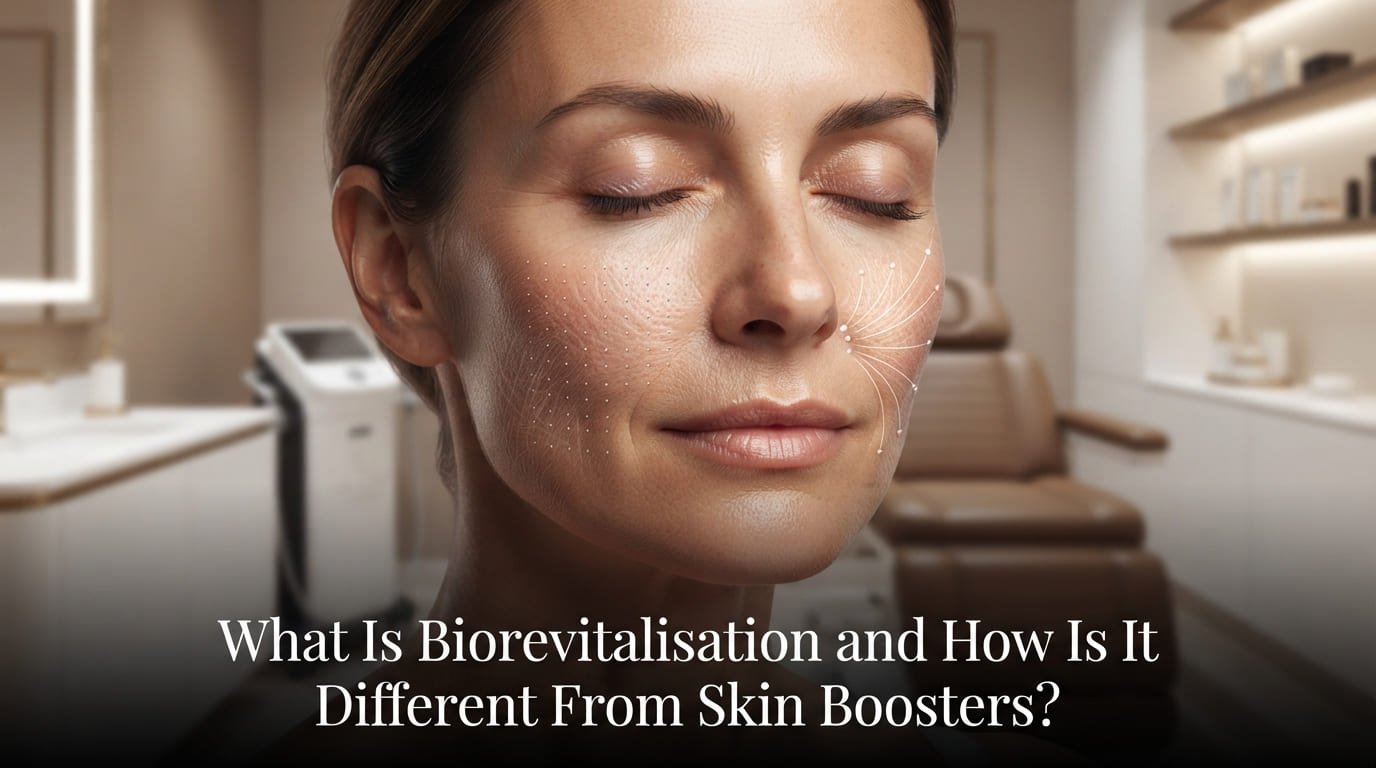
Profhilo is the most well-known specific product that falls into the biorevitalisation category. Its non-cross-linked formula spreads through the tissue after injection from five specific points on each side of the face, creating a bio-remodelling environment across the entire treatment area rather than delivering hydration only at the points of injection. The collagen and elastin stimulation it drives is the primary clinical mechanism, and the hydration improvement is a parallel benefit rather than the primary goal.
Other biorevitalisation products, including various high-concentration HA formulations from different manufacturers, follow the same category principle with variations in molecular weight, additional ingredients, and injection protocols. Novacutan, which uses three-phase stabilisation technology to work at both the extracellular and intracellular matrix level, represents the most advanced iteration of the biorevitalisation concept currently available in clinical practice.
The injection technique for biorevitalisation products varies depending on the specific formulation. Non-cross-linked high-spreading products like Profhilo use a small number of defined injection points because the product distributes itself from those points. More structured high-concentration products use a nappage or modified grid technique adapted to the product's specific behaviour in tissue. The common element is that the injection approach reflects the product's mechanism rather than simply following the universal skin booster grid.
The Meaningful Clinical Difference
The distinction between a skin booster and a biorevitalisation treatment is not simply about the product's HA concentration. It is about what the treatment is primarily designed to achieve and how the mechanism serves that goal.
Skin boosters are optimised for surface hydration delivered with precision and evenness. The grid technique, the cross-linking that keeps the product close to where it is placed, and the maintenance frequency all reflect a product and approach designed to be the most controlled and even method of delivering hydration directly to the skin.
Biorevitalisation is optimised for collagen and elastin regeneration through a strong fibroblast stimulation response. The high HA concentration, the non-cross-linked or lightly structured formula that drives a more intense biological response, and the two- to three-session initial course with less frequent maintenance all reflect a product and approach designed to produce a structural improvement in skin quality rather than primarily a hydration top-up.
A patient whose primary concern is surface dehydration and texture irregularity in otherwise structurally sound skin is a skin booster patient. The treatment addresses what they need with precision and consistency.
A patient whose primary concern is loss of skin firmness, a reduction in the structural quality of the skin that has developed over time, or a more comprehensive skin quality decline that goes beyond dehydration is a biorevitalisation patient. The treatment addresses the deeper tissue mechanism responsible for the change they are experiencing.
The overlap between the two categories is real because both use HA, both address skin quality, and both improve hydration as part of their effect. The difference is in which of these outcomes is the primary mechanism and which is the secondary benefit.
Why Most Clinics Do Not Make This Distinction
The clinical distinction between skin boosters and biorevitalisation is accurate and clinically useful, but it is not consistently communicated by clinics because, commercially, it creates a complexity that is easier to smooth over than to explain.
Most clinics offer one or two products that they use across the skin quality treatment category. Using both terms to describe these products, without distinguishing which mechanism each serves, allows the clinic to market treatments to a broader range of patient enquiries without the patient developing the knowledge to ask which is more appropriate for their specific situation.
This is not always a deliberate commercial decision. Some clinics genuinely do not differentiate between the two categories because their practitioners have not been trained with the product-level knowledge that makes the distinction clinically actionable. Biorevitalisation training at the level that covers the mechanism differences between product categories rather than simply teaching the application of a single branded product is not universal in the UK aesthetics training market.
The result is that many patients receive a skin quality treatment without knowing whether what they received was optimised for their specific concern or simply what the clinic most readily offers. This is not necessarily a harmful situation when the products used are high-quality and applied by a competent practitioner. It is, however, a situation where the patient is not fully in control of the decision about their own treatment.
How to Know Which One You Need
The question of which category is more appropriate for your skin comes down to what the dominant concern actually is when assessed honestly.
If your skin looks dull and dehydrated but feels basically structurally sound and the primary visible problem is a flat complexion rather than a loss of firmness or bounce, a skin booster is addressing the right mechanism. The controlled, even hydration it delivers targets the surface quality that is your main concern.
If your skin has lost a quality of resilience and firmness that feels like a structural change rather than simply surface dehydration, if it looks genuinely thinner or less supported than it once did, or if topical skincare and even skin booster treatments have not produced the improvement you expected, biorevitalisation is addressing a deeper mechanism that is closer to the root cause of what you are experiencing.
Many patients have elements of both concerns simultaneously. Their skin is dehydrated at the surface and has also undergone a degree of collagen and elastin decline at a deeper level. In these cases, a combination approach, using skin boosters for surface precision and biorevitalisation for deeper structural regeneration, is clinically logical. The two treatments are complementary rather than competing, and using both within a planned programme addresses different layers of skin quality decline simultaneously.
What to Ask at Your Consultation
Given that the terms are used interchangeably by many clinics, the most useful thing you can do at a skin quality consultation is ask specific questions about the products being recommended rather than accepting the category label at face value.
Ask what specific product is being recommended and what its HA concentration is. Ask whether it is cross-linked or non-cross-linked. Ask how many injection points are used and whether the technique is a grid or a smaller number of defined points. These questions will tell you more about the actual mechanism than the treatment name alone.
Ask specifically whether the product is primarily designed to hydrate or primarily to stimulate collagen and elastin production. A practitioner who can answer this clearly and explain why the recommendation matches your specific skin concern is working with the product knowledge that produces the most appropriate recommendation for your situation.
Ask about the maintenance schedule. A skin booster requiring sessions every three months and a biorevitalisation treatment requiring sessions every six months are different clinical commitments, and knowing which you are signing up for before you begin is useful practical information.
How These Treatments Fit Into a Broader Skin Quality Programme
Neither skin boosters nor biorevitalisation are typically the only treatment a patient needs to address a comprehensive skin quality concern. Both sit within broader programmes that combine surface treatments, skin quality injectables, and in some cases structural treatments to address the full range of changes the skin has undergone.
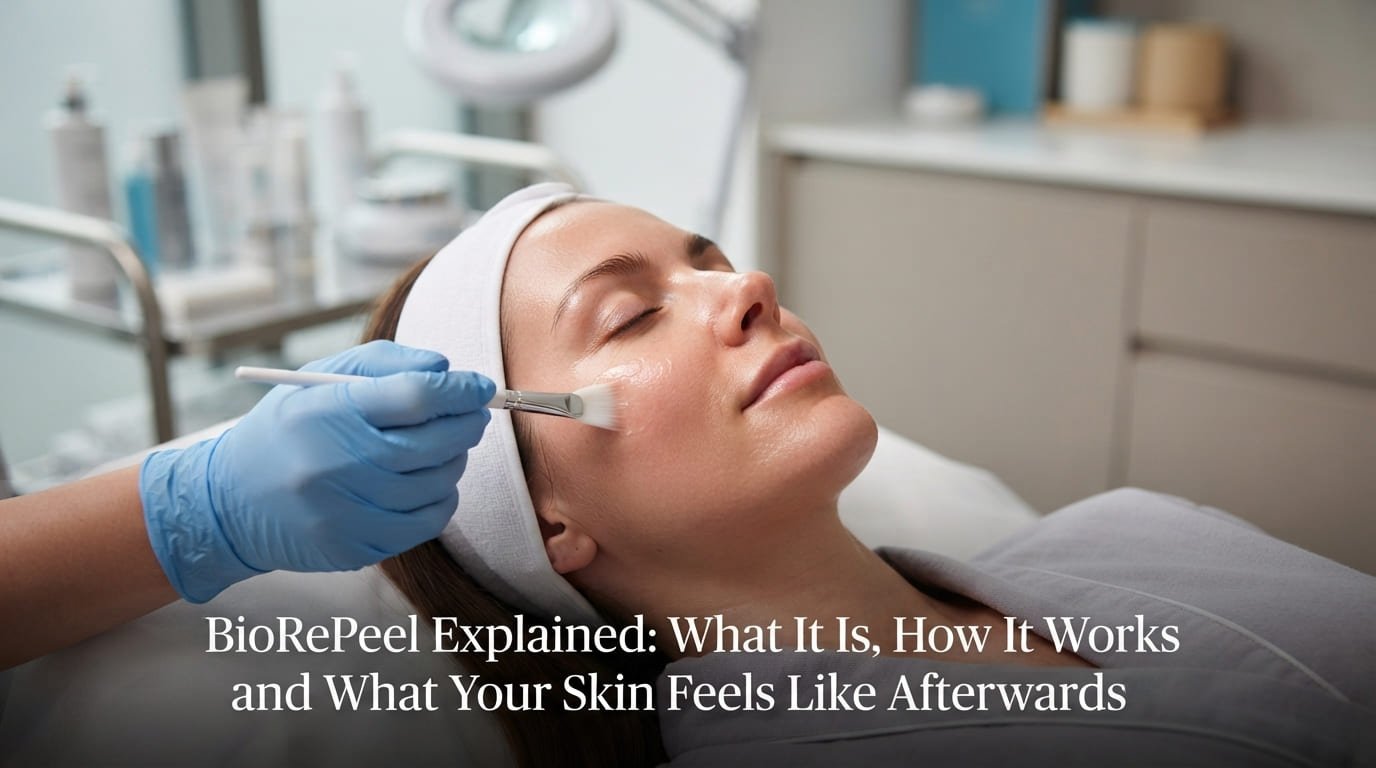
Skin boosters work well alongside BioRePeel, which addresses surface cell turnover and papillary dermis collagen stimulation from a resurfacing direction that complements the hydration the boosters deliver. Biorevitalisation works well alongside polynucleotides, where the fibroblast stimulation from the HA mechanism and the fibroblast stimulation from the DNA fragment mechanism address the same goal from two complementary biological pathways. Both categories work well alongside structural filler treatments where volume loss is also a concern, with the skin quality treatments improving the tissue environment in which structural work sits.
The most effective skin quality programmes are built around an accurate assessment of which combination of mechanisms will address the specific combination of concerns present in a specific patient's skin rather than applying a standard protocol to everyone who presents with a skin quality enquiry.
Frequently Asked Questions
Can I have skin boosters and biorevitalisation as part of the same programme?
Yes. The two treatments address different depths and different primary mechanisms. Using both within a planned programme allows the surface precision of skin boosters and the deeper structural regeneration of biorevitalisation to work simultaneously on different aspects of skin quality decline.
How quickly will I see a difference from biorevitalisation compared to skin boosters?
Skin booster hydration effects are often noticeable within a week or two of the first session as the direct hydration of the tissue takes effect. Biorevitalisation results from the collagen stimulation mechanism build more progressively over six to twelve weeks. Both approaches produce a course of improving results across multiple sessions rather than a single dramatic change.
Is biorevitalisation more expensive than skin boosters?
Not necessarily. Pricing depends on the specific product used, the provider, and the number of sessions in the course. Because biorevitalisation typically requires fewer sessions for the same clinical outcome, the total investment over a course is often comparable to a more frequent skin booster programme even if the per-session cost is similar.
My clinic offers something called a skin booster that is at a very high HA concentration. Is that biorevitalisation?
Possibly. Some products sit ambiguously between the two categories because the market has developed faster than the terminology has standardised. The mechanism matters more than the label. If the product is a high-concentration HA with a strong fibroblast stimulation mechanism, it is functioning as a biorevitalisation product regardless of what it is called.
Can these treatments be used during pregnancy?
No. Injectable skin quality treatments using hyaluronic acid are contraindicated during pregnancy and breastfeeding regardless of the specific product category.
How do I find a practitioner in West Sussex who understands this distinction?
Ask at consultation whether the practitioner can explain the difference between the products they offer in this category and why they are recommending the specific one for your skin. A clear and specific answer demonstrates the product-level knowledge that produces the most appropriate recommendation.
If you would like a proper assessment of whether skin boosters, biorevitalisation, or a combination approach is most appropriate for your skin quality concerns, book a consultation at our Littlehampton or Hove clinic.
Book a Consultation in Littlehampton or Book a Consultation in Hove