This is one of the most searched questions in the aesthetic training space and one of the most inconsistently answered. The short version is that entry requirements for aesthetic training courses vary significantly between providers, and the standards that actually matter from an insurance, regulatory, and patient-safety perspective sometimes differ from what a course brochure suggests.
Understanding the real picture before you invest in training is important. It affects whether you can get insured to practise after qualifying, whether your certificate will be recognised by the professional bodies that matter, and ultimately whether you can build a legitimate and sustainable career in aesthetics.
Here is a clear and honest answer to who can train, what the requirements actually mean in practice, and what to watch out for when comparing providers.
Why Entry Requirements Exist in Aesthetic Training
Aesthetic injectable treatments are medical procedures. Anti-wrinkle injections and dermal fillers are prescription-only medicines in the UK. They cannot legally be prescribed, supplied, or administered without an appropriate prescribing pathway in place, and that pathway requires a regulated healthcare professional to be involved.
This is not a technicality that can be worked around with the right course certificate. It is a legal and regulatory reality that shapes the entire landscape of who can practise aesthetic injectables legitimately in the UK.
The entry requirements for injectable aesthetic training courses exist because the treatments being taught sit within a medical and prescribing framework. Teaching someone to inject who has no clinical training, no understanding of anatomy at the required level, no prescribing access, and no regulated professional indemnity insurance does not produce a practitioner who can legally and safely work in this field. It produces someone with a certificate and no viable route to legitimate practice.
This context matters when you are comparing training providers. Some courses advertise very open entry requirements because they are not teaching injectables or because they are not being transparent about the professional infrastructure a graduate needs to actually work in the field. Others set entry requirements that reflect the genuine standards needed for safe and legal practice.
Who Qualifies for Injectable Aesthetic Training
The current position across reputable aesthetic training providers and the professional insurance market is that injectable aesthetic training is appropriate for regulated healthcare professionals who have an independent or supplementary prescribing pathway available to them or who work within a clinical governance framework that provides one.
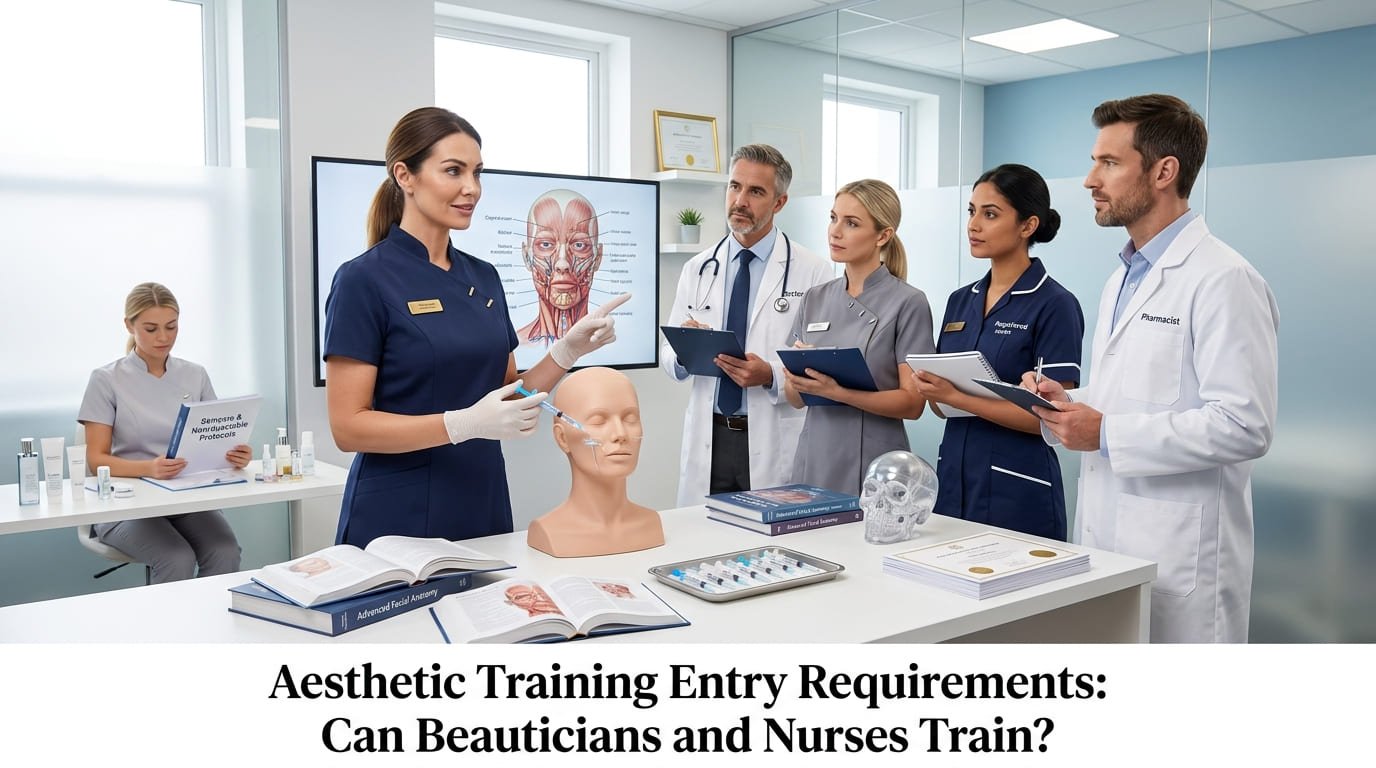
In practical terms, this means the following professional backgrounds are the primary candidates for injectable training.
Registered nurses with a valid NMC PIN are among the most common entrants to aesthetic training. Nursing provides a strong clinical foundation including anatomy knowledge, injection technique from clinical practice, patient assessment skills, and an understanding of medical emergencies and contraindications. Many nurses also have access to prescribing through the clinical settings they work within, which resolves the prescribing pathway requirement.
Doctors registered with the GMC are entirely appropriate candidates and enter aesthetic training with the broadest clinical and prescribing foundation of any professional group. Independent prescribing is within the scope of a qualified doctor as a matter of course.
Dentists registered with the GDC have detailed anatomical knowledge of the facial region, are trained in injection technique through their core professional training, and have prescribing rights within their scope of practice. They are well-prepared candidates for aesthetic injectable training.
Pharmacists with independent prescribing qualifications are an increasingly common entrant to the aesthetic space. Their prescribing expertise and clinical knowledge provide a strong foundation alongside appropriate aesthetic training.
Paramedics and other allied health professionals may qualify depending on their specific scope of practice, prescribing access, and indemnity insurance position. This is an area where individual circumstances need to be assessed rather than a blanket yes or no being appropriate.
Can Beauticians Train in Aesthetic Injectables
This is the question that generates the most confusion and the most inconsistent answers online, so it deserves a clear response.
Beauticians and beauty therapists are not regulated healthcare professionals. They do not have prescribing access. They do not have the clinical training background that aesthetic injectable training builds upon. They are not able to obtain the professional indemnity insurance required to administer prescription-only injectable treatments legally in the UK.
This means that a beautician completing an injectable aesthetic training course cannot legally practise those treatments, regardless of the certificate they receive. The course itself may be entirely legal to deliver. The graduate simply has no viable route to legitimate injectable practice in the UK because the professional and legal infrastructure required to support that practice is not in place.
Some training providers accept beauticians onto injectable courses. Whether they should is a separate question from whether a graduate can actually build a legal career in injectables from that starting point. The answer to the second question is that they cannot, at least not without first obtaining regulated healthcare professional registration through a separate qualification pathway.
This is important to know before spending money on a course. A certificate without a pathway to practice is not an investment in a career. It is an expensive piece of paper.
The position is different for non-injectable aesthetic treatments. Treatments such as skincare, facials, certain light-based therapies, and other non-prescription interventions do not carry the same regulatory requirements as injectables. Beauticians and beauty therapists can legitimately train in and practise many non-injectable treatments. The restriction is specific to prescription-only injectable medicines.
What About Level 3 or Level 4 Aesthetic Qualifications
There is a category of aesthetic qualification at Level 3 and Level 4 on the regulated qualifications framework that some providers offer, and that is sometimes marketed as an alternative route into aesthetic injectables for non-healthcare professionals.
The position of the professional indemnity insurance market on these qualifications is the clearest indicator of their practical value. The majority of specialist aesthetic insurance providers in the UK do not cover injectable treatments based on Level 3 or Level 4 aesthetic qualifications alone, regardless of what those qualifications teach or claim to cover. Without insurance, you cannot practise, regardless of what a certificate says.
Before enrolling in any qualification that claims to enable injectable practice, asking a specialist aesthetic insurance provider directly whether they would cover you on the basis of that qualification is the most practical due diligence step available.
What Nurses Specifically Need to Know Before Training
Nursing is the most common healthcare professional background in aesthetic training, and there are a few specific points worth understanding before booking a course.
Your NMC PIN must be active and in good standing. This is checked by reputable training providers and by insurance providers.
Your indemnity insurance position needs to be confirmed before you begin treating patients independently. Some nurses practise aesthetics under a clinical governance framework provided by a supervising prescriber or clinic, which resolves the prescribing and indemnity position in one arrangement. Others set up independently and need to confirm their prescribing access and insurance separately.
Aesthetic practice is outside the scope of most NHS indemnity arrangements. This means that nurses who intend to practise aesthetics alongside NHS employment need to hold separate specialist aesthetic insurance for their private practice.
Your NMC revalidation requirements continue to apply regardless of your aesthetic practice. Evidence of continuing professional development in your aesthetic work contributes to revalidation, and good training providers structure their certificates and CPD in a way that supports this.
What to Look for in a Training Provider
Entry requirements tell you something important about a training provider before you even look at the curriculum. A provider with no entry requirements or very minimal ones for injectable training is either not teaching injectable treatments or is not being transparent about the limitations their graduates will face when trying to practise.
Look for providers who are clear about entry requirements and honest about why they exist. Look for trainers who are regulated healthcare professionals with genuine clinical experience, not just training experience. Look for courses that include complications management as a substantive element rather than a box-ticking mention. Look for providers who offer post-training support because the questions that matter most to a new practitioner often arise months after the training day is over, not on the day itself.
Ask directly whether a specialist aesthetic insurer would cover the treatments you are training in based on the qualification you are about to undertake. If the training provider cannot answer that confidently and specifically, that is information worth having before you book.
Frequently Asked Questions
I am a healthcare assistant rather than a registered nurse. Can I train in aesthetic injectables?
Healthcare assistants are not registered healthcare professionals with the NMC and do not have the clinical background or prescribing access that injectable aesthetic training requires. The appropriate route would be to complete nurse training and registration first.
I qualified as a nurse abroad and am working toward UK registration. Can I train now?
Training before your NMC registration is in place means you will not be able to practise on completion. It is worth completing your registration process first so that your training has an immediate and practical application.
Can a dental nurse train in aesthetic injectables?
Dental nurses are not GDC registrants in the category that carries prescribing rights or the clinical background appropriate for injectable training. Dentists are. The distinction is between the professional registration category rather than the clinical setting.
I completed an aesthetic course previously with a provider who had no entry requirements. Is my certificate valid?
The certificate exists and records what you were taught. Whether you can practise based on it depends on your professional background and insurance position, not the certificate itself. If you are a regulated healthcare professional, your existing training may contribute toward your CPD even if the original provider had minimal entry requirements.
Does Angel White Aesthetics offer any guidance for people who want to get into aesthetics but do not yet meet the entry requirements?
Yes. The How to Start in Aesthetics guide on our website covers routes into the profession for people at different starting points. We are also happy to answer questions about whether your specific background qualifies before you commit to any course.
If you are unsure whether your professional background qualifies for aesthetic injectable training, or if you want to talk through which course suits where you are in your career, get in touch with the Angel White Aesthetics training team before you book anything.
Explore Entry Requirements or Get in Touch With the Training Team