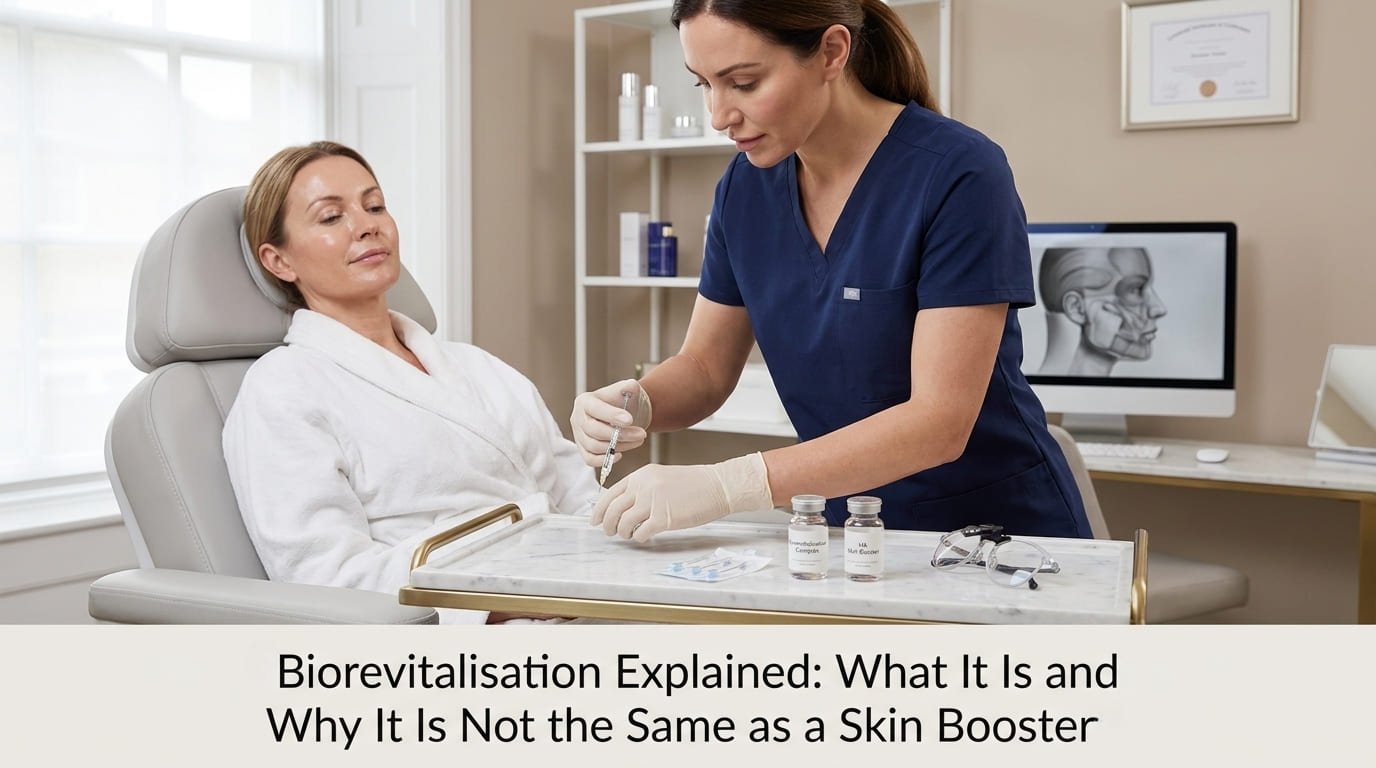
Biorevitalisation is one of the most consistently misused terms in UK aesthetics. Some clinics use it interchangeably with skin boosters. Others apply it to mesotherapy. Some use it as a general marketing term for any injectable skin quality treatment that is not filler. The result is that patients researching it often come away more confused than when they started.
The confusion is not entirely without basis. Biorevitalisation does overlap with skin boosters and mesotherapy in some of its ingredients and some of its effects. But it describes something clinically specific that is distinct from both, and understanding what that specific thing is matters when you are trying to make an informed choice about which treatment your skin actually needs.
This article explains what biorevitalisation means in clinical terms, how it differs from standard skin boosters and mesotherapy, what it is genuinely used for, and which patients it suits most.
What Biorevitalisation Actually Means
The term biorevitalisation comes from aesthetic medicine's broader category of treatments designed to restore the biological vitality of skin that has declined through ageing, environmental damage, or other factors. The prefix bio reflects the goal of working with the skin's own biological processes rather than simply adding a substance to it.
In clinical practice, biorevitalisation refers specifically to injectable treatments that combine hyaluronic acid with biologically active molecules including vitamins, amino acids, minerals, antioxidants, coenzymes, and sometimes polynucleotides or peptides, delivered into the dermis with the explicit goal of restoring the metabolic and structural function of skin cells rather than simply hydrating the tissue.
This distinction from simple hydration is the core of what makes biorevitalisation a different category from standard HA skin boosters. A skin booster delivers hyaluronic acid to hydrate and provide a mild bio-stimulating effect. The mechanism is primarily HA-driven. Biorevitalisation delivers HA alongside a complex of biologically active substances that each contribute a specific function to a broader cellular restoration goal. The HA is one component of a larger biological programme rather than the primary therapeutic agent.
A peer-reviewed paper published in Clinical, Cosmetic and Investigational Dermatology defines cutaneous biorevitalisation through injectable treatments as a non-volumising technique that does not reshape facial contours but instead aims to restore the biochemical environment of the dermis to support healthy cellular function. This clinical definition is important because it positions biorevitalisation clearly as a tissue quality and cellular function treatment rather than a hydration treatment, even though hydration is one of its outcomes.
The Ingredient Profile That Makes It Different
The defining characteristic of biorevitalisation products is the breadth and biological specificity of their ingredient list. This is what distinguishes them from standard HA skin boosters, which may contain HA alone or HA with a small number of additional ingredients.
A representative biorevitalisation formulation such as NCTF135HA contains 60 active nutritive components, including vitamins, minerals, amino acids, nucleotides, coenzymes, and antioxidants alongside its hyaluronic acid base. Each category of ingredient contributes a specific biological function.
The vitamin complex typically includes B vitamins, including B1, B2, B3, B5, B6, B8, B12, and folic acid, alongside vitamins C, E, and others. B vitamins support cellular energy metabolism and are involved in the synthesis of structural skin proteins. Vitamin C is a cofactor in collagen synthesis and a potent antioxidant that neutralises free radicals in ageing skin cells. Vitamin E contributes antioxidant protection to cell membranes.
The amino acid profile in biorevitalisation products is comprehensive. It includes the non-essential and conditionally essential amino acids that fibroblasts use directly in collagen synthesis, including glycine, proline, lysine, alanine, and serine, as well as amino acids involved in cellular signalling and metabolic support. This breadth of amino acid supply addresses the building block limitation that affects ageing skin in which reduced cellular uptake and metabolic capacity means fibroblasts cannot always access the substrates they need for collagen production at the rate required for meaningful repair.
The mineral and coenzyme components support enzymatic processes involved in cellular energy production and tissue repair. Zinc supports wound healing and protein synthesis. Manganese and copper contribute to antioxidant enzyme activity. Coenzymes including coenzyme A support metabolic pathways in skin cells that become less efficient with age.
This multi-component biological supply to the dermis is what biorevitalisation is designed around. The goal is to restore the cellular environment of ageing skin to a state where its own biological machinery can function more effectively, producing better quality collagen, maintaining hydration more efficiently, and resisting oxidative damage more successfully than it could before treatment.
How Biorevitalisation Differs From Standard Skin Boosters
Standard skin boosters are primarily HA delivery systems. The cross-linked or stabilised HA in a skin booster provides direct hydration to the dermis, stimulates the CD44 receptor pathway that fibroblasts use to respond to HA, and produces a collagen-stimulating effect through this HA-mediated pathway. The result is improved dermal hydration and a bio-stimulating effect that improves skin quality over a course of treatment.
This is genuinely effective. Skin boosters have a strong clinical evidence base and consistent patient satisfaction outcomes. The limitation is that the mechanism is primarily hydration and HA-mediated bio-stimulation. The skin is better hydrated and the fibroblasts are better stimulated through the HA pathway, but the broader cellular environment that supports fibroblast function, including the supply of vitamins, amino acids, minerals, and antioxidants that the cells require for optimal activity, is not specifically addressed by HA alone.
Biorevitalisation addresses this broader cellular environment. The HA component provides hydration and HA-mediated stimulation. The vitamin, amino acid, mineral, and coenzyme complex provides the nutritional and metabolic support that optimises how effectively the fibroblasts respond to that stimulation. The combination produces a more complete restoration of dermal function than HA alone can achieve.
This is not a theoretical distinction. A prospective study on patients treated with HA and amino acid mixtures via intradermal injection showed increased fibroblast activity, collagen production, and epidermal thickness following treatment. A multicenter study on composite HA and amino acid formulations showed that amino acids synergise with HA to promote fibroblast activation and extracellular matrix synthesis, enhancing skin elasticity beyond what HA alone produces.
How Biorevitalisation Differs From Mesotherapy
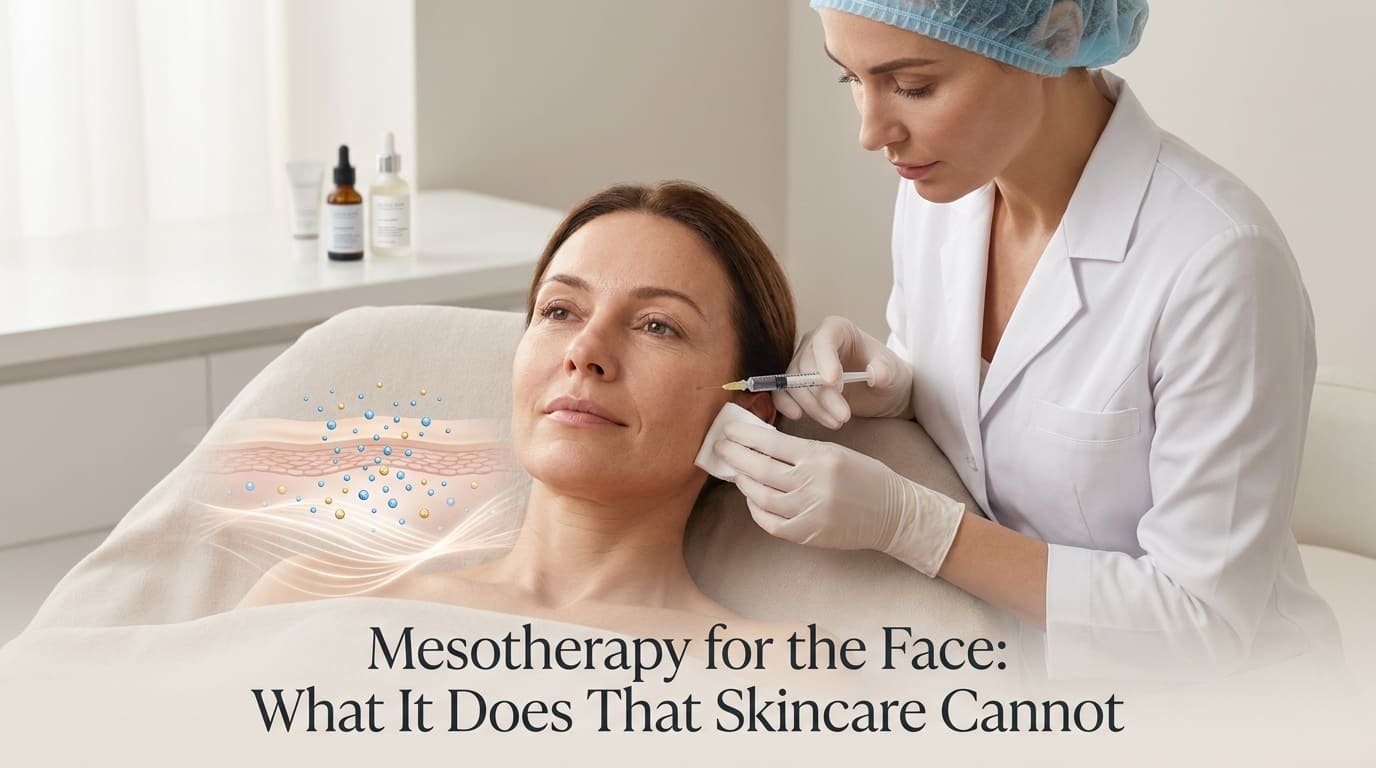
The overlap between biorevitalisation and mesotherapy is genuine, and the distinction between them reflects differences in product formulation and treatment philosophy more than completely separate mechanisms.
Mesotherapy is a technique describing the delivery of active ingredients into the mesoderm through multiple micro-injections. The ingredients used in mesotherapy vary considerably between products and practitioners. Some mesotherapy products are closer to biorevitalisation in their comprehensive ingredient list. Others are more targeted cocktails addressing specific concerns with fewer components.
Biorevitalisation as a category tends to use formulations with a more standardised and comprehensive ingredient list, often built around a proven multi-component formula with clinical evidence behind the specific combination. Mesotherapy is a broader technique within which biorevitalising products can be delivered.
In practical terms, biorevitalisation products used via the mesotherapy technique occupy the most sophisticated end of the injectable skin quality treatment spectrum, combining the comprehensive ingredient approach of biorevitalisation with the broad dermal coverage of mesotherapy delivery. This is why the terms are sometimes used interchangeably without being precisely accurate.
What Biorevitalisation Is Used For
The range of indications for biorevitalisation reflects its multi-targeted mechanism and the breadth of skin quality concerns that respond to comprehensive dermal nutritional support.
Skin that shows multiple concurrent signs of quality decline is the most appropriate overall indication. Reduced luminosity, fine dehydration lines, early laxity, uneven tone, and a general lack of vitality that does not respond adequately to single-ingredient treatments respond to biorevitalisation because the comprehensive cellular support addresses multiple contributing factors simultaneously.
Photoaged skin in patients with a history of significant sun exposure benefits from biorevitalisation because the antioxidant components specifically address the oxidative damage mechanism that drives photoageing. UV exposure generates free radicals that damage cellular DNA and degrade structural proteins in the dermis. The antioxidant complex in biorevitalisation formulations neutralises this damage and supports the repair processes that follow.
Skin recovery after periods of significant stress, illness, or other systemic challenges responds to biorevitalisation through the cellular nutritional support it provides. The metabolic demands of recovery from physical or physiological stress deplete the micronutrient environment available to skin cells. Replenishing this environment through targeted intradermal delivery supports more effective skin recovery than waiting for systemic repletion through diet alone.
Prevention in younger patients is a growing and legitimate application of biorevitalisation. Patients in their late twenties and thirties who are not yet showing significant ageing changes but who want to maintain the cellular environment that supports long-term skin quality use biorevitalisation as a proactive treatment rather than a corrective one. The evidence for this preventive use is less extensive than the evidence for treatment of established signs, but the biological rationale is sound.
What Biorevitalisation Cannot Do?
Biorevitalisation does not add volume. It does not lift descended tissue. It does not address dynamic lines caused by muscle movement. It does not correct big structural changes in the face that require filler or thread lifting.
These limitations are important to state clearly because the language around biorevitalisation can sometimes suggest a broader corrective capacity than the treatment possesses. It restores the biological environment of the dermis. It improves skin quality, hydration, luminosity, and the cellular infrastructure that supports collagen and elastin production. It does not change the shape, structure, or position of facial features.
Understanding this positions biorevitalisation correctly within a treatment programme as a skin quality intervention that complements rather than replaces structural treatments where structural concerns are also present.
What a Course Looks Like and What Results to Expect
A standard biorevitalisation course involves three to four sessions spaced two to four weeks apart. The initial sessions establish the nutritional and metabolic environment in the dermis and begin stimulating the fibroblast response. Later sessions build on the cellular improvements already underway.
Most patients notice initial improvements in skin hydration and luminosity within the first two weeks of starting treatment. The structural improvements from enhanced collagen and elastin production develop more gradually and are most visible four to six weeks after completing the full course.
Results from a completed course hold for four to six months for most patients. Maintenance sessions every three to six months sustain the cellular environment and prevent the gradual return of the skin quality concerns the treatment addressed.
The improvement patients describe is typically characterised as skin looking like a healthier and more vital version of itself rather than a treated version. The luminosity and quality improvement is real and visible without looking artificial, which reflects the mechanism working as intended through biological restoration rather than external addition.
Frequently Asked Questions
Is biorevitalisation the same as a skin booster?
No. Skin boosters are primarily HA delivery systems. Biorevitalisation combines HA with a comprehensive complex of vitamins, amino acids, minerals, coenzymes, and antioxidants to restore the metabolic and structural function of skin cells rather than simply hydrating the tissue.
Is biorevitalisation better than mesotherapy?
The distinction is more about formulation than about one being universally better. Biorevitalisation products tend to use standardised multi-component formulas with established clinical evidence. Mesotherapy is the delivery technique within which biorevitalising products can be administered. A well-formulated biorevitalisation product delivered via the mesotherapy technique is both.
Can biorevitalisation be combined with Profhilo?
Yes, and this is a common combination in comprehensive skin quality programmes. Profhilo provides intense HA-driven bio-remodelling while biorevitalisation addresses the cellular nutritional environment. The two work through different mechanisms and are genuinely complementary.
How many sessions are needed before I see results?
Most patients notice initial hydration and luminosity improvement after the first session or two. The full cellular restoration benefit builds across the complete course and is most visible after the final session and in the weeks that follow.
Is biorevitalisation suitable for all skin types?
Yes. The comprehensive ingredient profile is appropriate across skin types and tones. A consultation to assess your specific skin condition and concerns determines the most appropriate formulation and course plan.
Does biorevitalisation help with acne-prone skin?
Some biorevitalisation formulations include ingredients relevant to sebaceous regulation and anti-inflammatory activity. For patients with acne-prone skin, a consultation assessing the specific components in the planned formulation ensures appropriateness before treatment proceeds.
Can biorevitalisation treat the neck and hands?
Yes. The same technique is used on the neck, décolletage, and hands where skin quality decline is a concern. The biological mechanism is the same regardless of the treatment area.
If you want to understand whether biorevitalisation is the right treatment for your skin or how it fits within a broader skin quality programme, book a consultation at our Littlehampton or Hove clinic.
Book a Consultation in Littlehampton or Book a Consultation in Hove