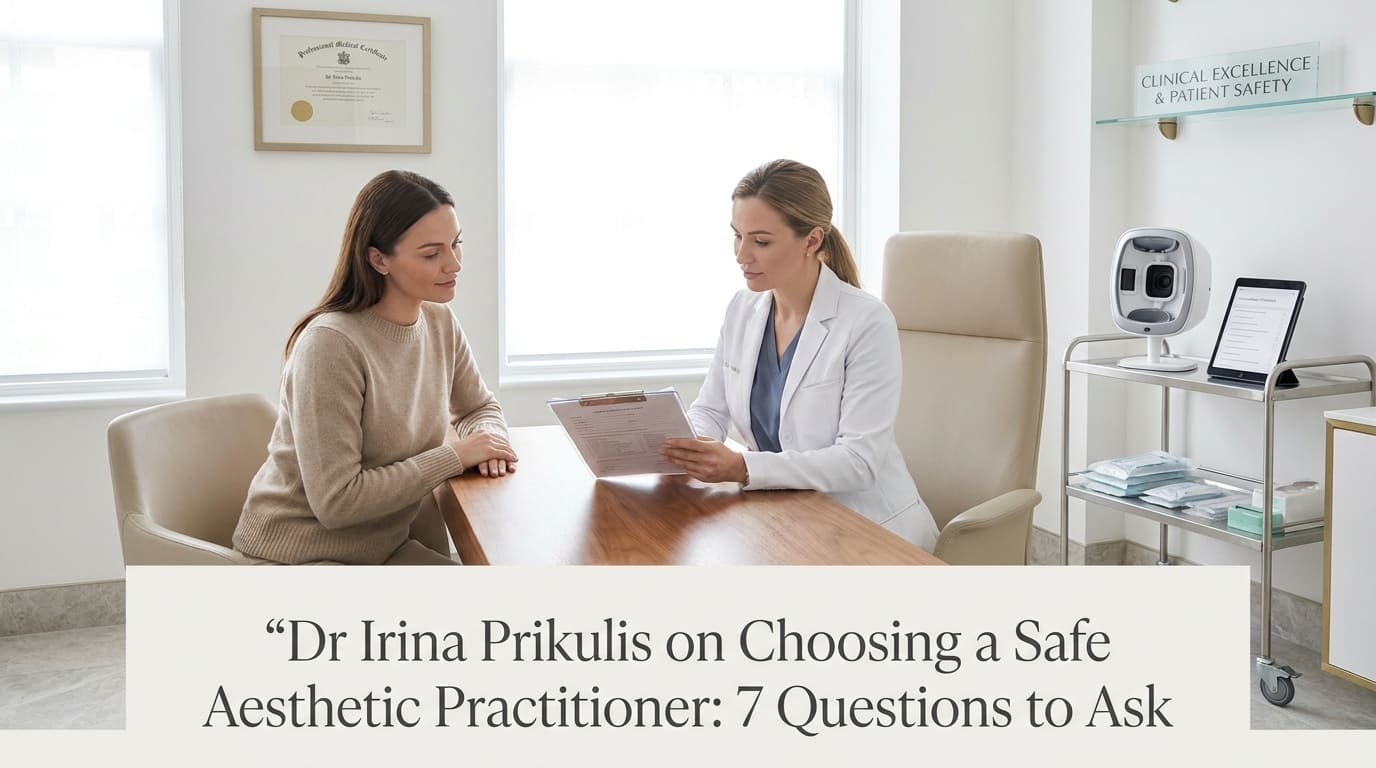
Written by Dr Irina Prikulis, founder of Angel White Aesthetics, with over 14 years of clinical aesthetic practice across Littlehampton and Hove.
I have been working in aesthetic medicine for over fourteen years. In that time, I have seen what good practice looks like, and I have seen what happens when it goes wrong. I have treated patients who came to me after receiving treatment elsewhere that caused them real harm. I have also seen the anxiety and confusion patients feel when they are trying to choose between practitioners and have no idea what to actually look for beyond a glossy Instagram feed and a list of treatments.
The aesthetics industry in the UK is not uniformly regulated in the way that many patients assume it is. Anyone can call themselves an aesthetic practitioner. Not everyone who does has the clinical background, the emergency training, or the professional infrastructure to treat you safely. The responsibility for navigating that landscape falls partly on the patient, and that is not fair, but it is the reality we are working within right now.
These are the seven questions I would want my own family members to ask before booking injectable treatment with anyone. They are not designed to catch practitioners out. They are designed to help you identify the ones who are genuinely prepared to treat you safely and the ones who are not.
Question 1: What is your professional background and registration?
This is the starting point, and it matters more than any other question on this list.
Injectable aesthetic treatments in the UK use prescription-only medicines. The legal and safe administration of these treatments requires a regulated healthcare professional to be involved, either as the person injecting or as the prescribing practitioner overseeing the treatment. Ask directly what professional body your practitioner is registered with and check that registration yourself before you book.
Nurses should be registered with the Nursing and Midwifery Council. Doctors with the General Medical Council. Dentists with the General Dental Council. These registers are publicly searchable and verification takes less than two minutes. Any practitioner who is hesitant about confirming their registration or makes it difficult for you to find is sending you a signal worth paying attention to.
Background in medicine, nursing, or dentistry also means the person treating you has training in anatomy, clinical assessment, and medical emergency management that is genuinely relevant to what they are doing when they inject your face.
Question 2: Do you carry hyaluronidase and are you trained to use it?
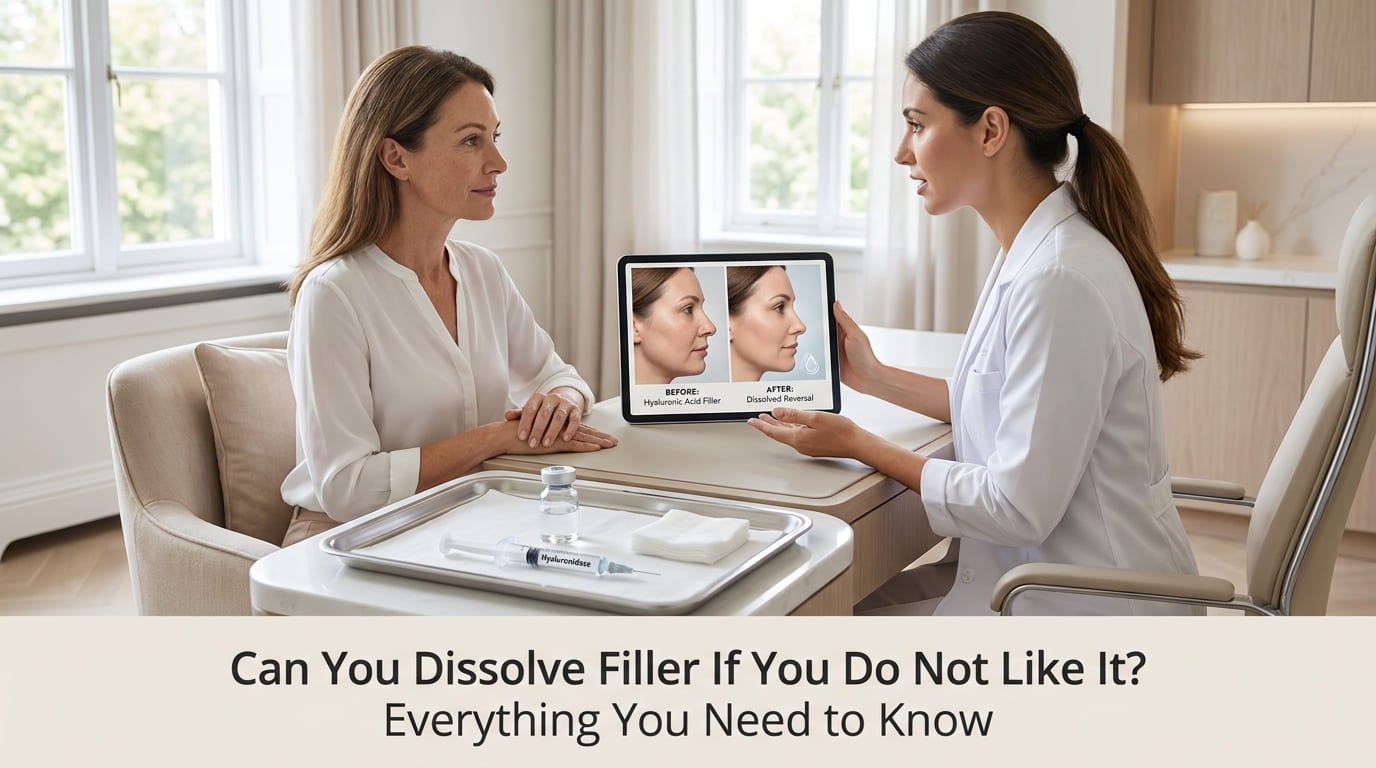
Hyaluronidase is an enzyme that dissolves hyaluronic acid filler. It is the primary emergency treatment for vascular occlusion, which is the most serious acute complication associated with dermal filler. Vascular occlusion occurs when filler blocks or compresses a blood vessel. When it happens, time is critical. A practitioner who does not have hyaluronidase immediately available and who is not trained in recognising and managing this complication is not equipped to treat you safely with filler.
Ask this question directly. A practitioner who carries hyaluronidase as standard, knows precisely where it is, and can speak confidently about the clinical signs of a vascular event and their emergency protocol is demonstrating something important about how seriously they take patient safety. A practitioner who is vague, dismissive, or unfamiliar with the question is telling you something equally important.
This question applies even if you are only having anti-wrinkle injections rather than filler. A clinic that takes complications seriously maintains its emergency protocols across all injectable treatments, not just the ones where the most acute risk is highest.
Question 3: Will I have a proper consultation before any treatment is agreed?
A consultation is not a formality. It is the clinical foundation on which a safe and appropriate treatment plan is built.
A proper consultation involves an assessment of your medical history, including medications, allergies, previous treatments, and any conditions that might contraindicate treatment. It involves a realistic discussion of what is achievable given your anatomy and your goals. It involves informed consent that goes beyond a signature on a form, meaning you genuinely understand what the treatment involves, what the realistic outcomes are, and what the risks are.
A practitioner who is willing to book you in for treatment without a consultation, or whose consultation lasts five minutes and covers none of the above, is operating below the standard of care you should expect. This includes booking treatment based solely on a social media message exchange or an online form.
Question 4: Can you show me evidence of your training and qualifications?
Asking to see evidence of training is reasonable and any practitioner worth trusting will have no difficulty with the question.
What you are looking for is not just a certificate from a training course. You are looking for training that is accredited, delivered by a qualified medical professional, includes complications management as a substantive element, and is relevant to the specific treatment you are considering. A certificate in lip filler training from a one-day course run by a non-medical trainer is a very different thing from a qualification delivered by an experienced medical aesthetic practitioner who has been treating patients for years.
Ask specifically whether their training covered complications management. Ask whether they have completed any advanced or refresher training since their foundation qualification. The best practitioners in this field are the ones who treat their continuing professional development seriously throughout their career, not just at the beginning of it.
Question 5: What happens if something goes wrong?
This question makes some people uncomfortable to ask. Ask it anyway.
A practitioner who has thought seriously about patient safety will have a clear and confident answer. They will tell you about the emergency protocols they have in place, the products they carry for complication management, and the aftercare support available to you following treatment.
They should also be able to tell you about their professional indemnity insurance and confirm that it covers the treatments they are offering. Insurance is not just a box-ticking exercise. It is the mechanism that protects you as a patient if something goes wrong and you need access to further clinical care or treatment.
A practitioner who has not thought about this question, who becomes defensive when asked, or who cannot clearly articulate what would happen in the event of a complication is not a practitioner whose hands you want to be in.
Question 6: Are you honest about what treatment can and cannot achieve for me?
This one is harder to assess from a single question, but you will get a sense of it from the consultation itself.
Practitioners who tell every patient that treatment will give them remarkable results, who agree to whatever the patient requests without clinical assessment, and who never suggest that a patient might not be an appropriate candidate for a particular treatment are not practising honestly. They are practising in a way that prioritises booking over clinical appropriateness.
The best consultations I have with patients are the ones where I am honest about what a treatment can and cannot achieve for their specific face, their specific concern, and their specific starting point. Sometimes that means suggesting a different approach from the one a patient had in mind. Sometimes it means recommending they wait or address a different concern first. Occasionally it means telling someone that the result they are picturing is not something I can realistically deliver.
A practitioner who tells you only what you want to hear is not serving your interests. One who gives you an honest clinical assessment, even when parts of it are not what you hoped to hear, is the one worth trusting.
Question 7: Where will treatment take place and what is the clinical environment like?
The environment in which treatment is delivered matters more than most patients consider before booking.
Injectable aesthetic treatment should take place in a clean, clinical setting with appropriate equipment, adequate lighting, and access to emergency management supplies. A consultation and treatment taking place in a practitioner's home living room, a hair salon, or a pop-up location at a beauty event does not provide the clinical environment that safe injectable treatment requires.
Ask where treatment takes place. Ask whether the setting is appropriate for the management of a complication if one occurred. The answer tells you something important about how the practitioner thinks about the context of what they are doing.
A Final Note on Price
Price is not on this list of seven questions deliberately. Low price is one of the most consistent risk factors for unsafe aesthetic treatment, and I want to say that plainly.
Significantly discounted injectable treatment is possible for one of a limited number of reasons. The practitioner is unqualified and therefore operating outside the legitimate cost structure of the regulated market. The products being used are unbranded or counterfeit. The clinical standards being applied are lower than those that protect you. None of these are reasons to book.
Appropriate aesthetic treatment from a qualified medical practitioner using genuine pharmaceutical products costs what it costs. The price reflects the training, the products, the professional infrastructure, and the safety standards behind the appointment. A treatment that is priced significantly below the market for your area is worth questioning before you book, not after.
Frequently Asked Questions
Is it safe to book aesthetic treatment through social media?
Social media is a legitimate way to find practitioners and see examples of their work. It is not a substitute for verifying their registration, qualifications, and clinical standards. Finding someone on Instagram and booking from their bio link without doing any further research carries real risk.
What if a practitioner seems offended when I ask these questions?
A practitioner with nothing to hide will not be offended by any of these questions. They demonstrate that you are a patient who takes your own safety seriously, which is exactly the kind of patient a good practitioner wants. Defensiveness or irritation at reasonable questions about qualifications and safety is itself a red flag.
How do I check a nurse's or doctor's registration?
The NMC register for nurses is publicly searchable at nmc.org.uk. The GMC register for doctors is at gmcuk.org. The GDC register for dentists is at gdc-uk.org. All are free to search and return current registration status.
Can I ask these questions before a consultation rather than during it?
Yes, and I would encourage it. Many of these questions can and should be asked before you even book a consultation. The answers help you decide whether a consultation is worth your time before you spend it.
Does being qualified and registered guarantee a good result?
Registration and qualification are the foundation, not the guarantee. Experience, ongoing training, honest consultation, and genuine clinical skill are what produce consistently good outcomes. Registration tells you the baseline is in place. Reviews, word of mouth, and the quality of your consultation tell you the rest.
If you would like to book a consultation at Angel White Aesthetics across our Littlehampton or Hove clinics, we are happy to answer any of these questions before you commit to anything. Transparency about our qualifications, our standards, and our approach is something we consider part of the service.
Book a Consultation in Littlehampton or Book a Consultation in Hove