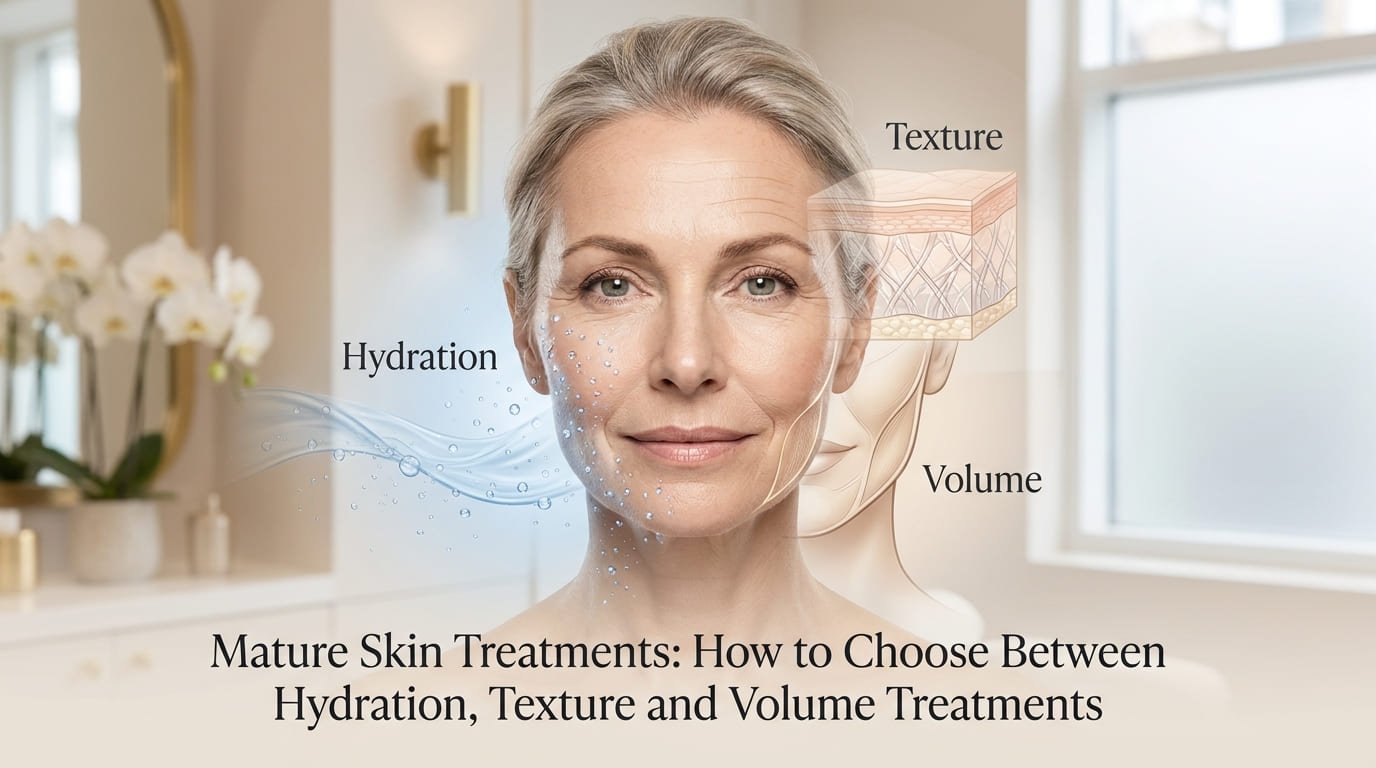
Mature skin does not change in just one way. You may notice that your face looks less fresh than it once did, even when you follow a regular skincare routine. Fine lines become more visible. The skin may feel drier, look uneven or lose some of its natural firmness. In other cases, the cheeks appear flatter, the jawline becomes less defined or certain areas of the face seem to have lost volume.
These changes are often connected, but they do not all have the same cause. Skin dehydration, changes in surface texture and age related volume loss are different concerns. Each requires a different approach.
This is why choosing an aesthetic treatment based only on age is rarely helpful. Someone in their fifties may mainly need support with skin hydration, while another person of the same age may be more concerned about facial volume or uneven texture.
Understanding what is happening beneath the skin can make treatment decisions more informed. This guide explains the differences between hydration, texture and volume treatments, what each approach aims to address and how a practitioner can help determine which option is appropriate.
How Does Skin Change With Age?
Skin naturally changes as we get older. Collagen and elastin production gradually decline, while the skin's ability to retain moisture may also become less effective. Cell turnover can slow down, and environmental exposure accumulated over the years may become more visible.
These changes affect different layers of the skin.
The outermost layer helps protect the skin and maintain moisture. When its barrier becomes less effective, the skin may feel tight, dry or sensitive. Changes in the deeper dermal layer can affect firmness, elasticity and the appearance of fine lines. Meanwhile, natural changes in facial fat compartments and underlying support structures can influence facial shape and volume.
Not everyone experiences these changes at the same rate. Genetics, sun exposure, smoking, hormonal changes, lifestyle and skincare habits can all contribute.
For this reason, mature skin should not be treated as one specific skin type. A proper assessment looks at the condition of the skin, facial structure and the concerns that matter most to the individual.
Hydration Treatments for Mature Skin
One of the most common concerns associated with mature skin is dehydration. It can make the complexion appear dull and cause fine lines to look more noticeable.
Dehydrated skin lacks sufficient water in its outer layers. This is different from dry skin, which is generally associated with reduced oil production. A person can have oily skin and still experience dehydration.
Signs That Your Skin May Need More Hydration
Some common signs include:
- A tight or uncomfortable feeling after cleansing
- Fine lines that appear more visible when the skin is dry
- A dull or tired looking complexion
- Roughness or reduced skin softness
- Makeup settling into small lines
- Skin that feels less comfortable throughout the day
These signs do not automatically mean that an injectable treatment is needed. Skincare, moisturisers and ingredients that support the skin barrier may be sufficient for some people.
A professional skin assessment can help distinguish temporary dehydration from more established changes in skin quality.
What Are Injectable Skin Hydration Treatments?
Some aesthetic treatments are designed to improve skin hydration and overall skin quality rather than add noticeable facial volume.
Skin boosters are one example. Depending on the formulation, they use injectable ingredients such as hyaluronic acid to support skin hydration and improve the appearance of skin texture.
Hyaluronic acid is naturally present in the body and has the ability to attract and retain water. In injectable skin treatments, its formulation and placement influence how it behaves in the tissue. Skin boosters are not the same as traditional dermal fillers, which are generally used to restore or create volume in selected areas.
Profhilo is another injectable treatment used in skin quality and remodelling approaches. Its formulation is based on hyaluronic acid, and it is intended to improve the appearance of skin laxity and hydration. It should not be considered a direct replacement for volume restoration.
The suitability of these treatments depends on individual skin condition, medical history and treatment goals. Results vary, and no injectable can stop the natural ageing process.
Texture Treatments for Uneven or Rough Skin
Hydration is only one part of healthy looking skin. Some people have sufficient moisture but remain concerned about roughness, visible pores, uneven tone or old acne marks.
These concerns relate more closely to skin texture and surface appearance.
Skin texture can change with age because cell renewal becomes slower. Sun exposure may contribute to uneven pigmentation and a rougher appearance. Previous acne, inflammation and other skin conditions can also leave changes that remain visible long after the original problem has settled.
Common Skin Texture Concerns
Texture related concerns may include:
- Uneven or rough skin surface
- Enlarged or more visible pores
- Mild pigmentation and uneven skin tone
- Fine surface lines
- Post acne marks and scarring
- Dullness caused by accumulated dead skin cells
It is important to identify the cause before selecting a treatment. Pigmentation, acne scarring and dehydration may look similar at first glance, but they require different management approaches.
Which Treatments May Help Improve Skin Texture?
Several professional treatments may be considered depending on the concern.
Chemical peels
Chemical peels use selected acids to exfoliate the skin at controlled depths. They may help improve certain forms of uneven tone, superficial pigmentation and rough texture. The type and strength of peel should be selected according to skin condition, sensitivity and clinical suitability.
BioRePeel
BioRePeel is a professional chemical peel treatment used to address concerns such as dullness, uneven texture and the appearance of fine lines. Its suitability depends on the individual's skin and the treatment protocol followed by the practitioner.
Microneedling
Microneedling uses fine needles to create controlled microchannels in the skin. This stimulates a wound healing response and may support improvements in selected concerns, including some types of acne scarring and uneven texture. The depth, technique and number of sessions depend on the area being treated and the condition of the skin.
Mesotherapy
Mesotherapy involves delivering selected substances into the skin through multiple small injections. Formulations and treatment approaches vary. It may be considered as part of a skin quality plan, but the expected benefits depend on the ingredients used and the individual's needs.
Not every texture concern can be addressed with an aesthetic treatment. Active acne, persistent inflammation, suspicious skin lesions and certain pigmentation changes may need medical assessment before cosmetic procedures are considered.
Volume Treatments for Age Related Facial Changes
Facial volume changes are different from dehydration and surface texture concerns.
As the face ages, there may be changes in the distribution of facial fat, bone structure, ligaments and soft tissue support. These changes can affect the appearance of the cheeks, temples, jawline and lower face.
Some people notice that their cheeks appear flatter. Others become concerned about hollow areas, deeper folds or changes in facial definition.
These changes are not necessarily caused by a lack of skin hydration. Applying more moisturiser or choosing a skin booster may improve skin quality, but it will not necessarily restore lost structural volume.
Signs of Facial Volume Loss
Possible signs include:
- Reduced fullness in the cheeks
- Hollowing around the temples
- Changes in the transition between the lower eyelid and cheek
- A less defined facial contour
- More noticeable folds around the mouth
- Changes in the appearance of the lower face
These features can have several causes. A deeper fold, for example, may be influenced by volume changes, skin laxity, facial movement or the natural structure of the face. It should not automatically be treated by placing filler directly into the visible line.
How Do Dermal Fillers Work?
Dermal fillers are injectable products used to add volume, improve selected contours or provide support in specific facial areas. Many commonly used fillers contain hyaluronic acid, although other formulations are also available.
Treatment planning should be based on facial anatomy and the individual's proportions. The aim is not simply to make an area larger. It is to assess whether volume restoration is appropriate and how it may affect the balance of the face.
For mature skin, conservative treatment planning is particularly important. Adding too much filler can create an unnatural appearance, especially when the underlying concern is skin laxity rather than volume loss.
Dermal fillers also carry risks, including swelling, bruising, lumps, infection and, rarely, serious vascular complications. Treatment should only be performed by an appropriately qualified and trained medical professional who understands facial anatomy and emergency management.
Hydration vs Texture vs Volume: What Is the Difference?
Although these concerns can overlap, they have different treatment goals.
| Main concern | What may be happening | Treatment approaches that may be considered |
| Dehydration and dullness | Reduced water content in the outer skin layers | Skincare, barrier support and selected skin boosters |
| Rough or uneven texture | Changes in surface renewal, pigmentation or scarring | Chemical peels, microneedling and other suitable skin treatments |
| Reduced facial fullness | Changes in facial fat, bone and soft tissue support | Carefully planned dermal filler treatment where appropriate |
| Skin laxity | Changes in collagen, elastin and tissue support | Individualised skin quality or tightening approaches following assessment |
The table is a general guide, not a treatment prescription. A person may have more than one concern, and the most appropriate approach depends on a clinical assessment.
Can Mature Skin Need More Than One Type of Treatment?
Yes. It is common for mature skin to have a combination of concerns.
For example, someone may have dehydrated skin, uneven texture and reduced cheek volume at the same time. Treating only one concern may improve part of the overall appearance, but it may not address everything the person wants to change.
This does not mean that several procedures should be performed together. In many cases, a staged approach is more appropriate.
A practitioner may first recommend improving the skin barrier and managing any active irritation. Once the skin is stable, a suitable treatment for texture may be considered. If facial volume loss is also present, this can be assessed separately.
The order matters. Some treatments require recovery time, and combining procedures without considering their effects on the skin can increase irritation or complications.
A personalised plan should also consider the person's budget, recovery preferences, medical history and willingness to maintain results over time.
How to Choose the Right Treatment for Mature Skin
Choosing a treatment should begin with the concern rather than the name of a popular procedure.
A useful consultation should explore several areas.
1. Identify Your Main Concern
Think about what you would most like to improve. Is your skin uncomfortable and dehydrated? Are you concerned about rough texture or pigmentation? Or do you feel that your facial shape has changed because of reduced fullness?
Being clear about your main concern helps the practitioner assess suitable options without recommending unnecessary procedures.
2. Understand Your Skin Condition
A professional assessment should consider skin thickness, sensitivity, hydration, elasticity, pigmentation and any existing skin conditions.
It should also distinguish between surface changes and deeper structural changes. This is important because two people with similar looking lines may need very different treatment plans.
3. Discuss Your Medical History
Previous aesthetic treatments, allergies, medication, medical conditions and a history of cold sores or skin reactions may influence treatment suitability.
Do not leave out information because it seems unrelated. The practitioner needs a complete picture before recommending an injectable or skin procedure.
4. Ask About Expected Results and Limitations
Every treatment has limitations. Skin boosters may support hydration and skin quality, but they do not replace lost facial volume. Chemical peels may improve selected surface concerns, but they cannot correct deeper structural changes.
Ask what improvement is realistic, how many sessions may be recommended, what recovery involves and how long the effects may last. Results differ between individuals, and maintenance may be needed.
5. Check Practitioner Qualifications and Safety
Choose a practitioner with appropriate qualifications, relevant experience and a clear understanding of the treatment being offered.
Ask about the products used, possible complications, aftercare and what support is available if a problem develops. A responsible practitioner should be willing to explain when a treatment is not suitable.
What Role Does Skincare Play in Mature Skin?
Professional treatments are only one part of skin care. A consistent home routine can help maintain skin comfort and support the skin barrier.
A simple routine may include a gentle cleanser, a moisturiser suited to the skin type and daily broad spectrum sun protection. Sun protection is particularly important because cumulative ultraviolet exposure contributes to visible skin ageing and pigmentation changes.
Ingredients such as retinoids may help with certain signs of photoageing, while ingredients such as niacinamide can support the skin barrier and improve the appearance of uneven tone in some people. However, active ingredients should be introduced carefully, particularly if the skin is sensitive or undergoing professional treatments.
More products do not always mean better results. A routine that the person can follow consistently is often more useful than a complicated collection of active ingredients.
When Should You Avoid or Delay an Aesthetic Treatment?
An aesthetic procedure may need to be postponed if the skin has an active infection, significant irritation, an unexplained rash or an untreated skin condition in the treatment area.
Some medical conditions and medications can also affect suitability. Pregnancy and breastfeeding may influence whether particular elective procedures should be considered. The practitioner should discuss these factors during consultation and follow relevant clinical guidance.
New, changing or unusual skin lesions should be assessed by an appropriate healthcare professional rather than treated as a cosmetic concern.
It is also reasonable to delay treatment if you feel uncertain or pressured. A good consultation should give you enough information to make a considered decision.
A Personalised Approach to Mature Skin
There is no single treatment that addresses every change associated with mature skin. Hydration treatments focus on skin moisture and quality. Texture treatments aim to improve surface irregularities, uneven tone and selected scarring concerns. Volume treatments address changes in facial fullness and contour.
The most suitable option depends on what is actually happening in the skin and underlying facial structures. Age alone does not determine the right procedure.
At Angel White Aesthetics, a consultation can help assess individual skin concerns and discuss appropriate treatment options. Whether the priority is hydration, texture or facial volume, the aim should be a considered plan that respects natural features, explains realistic outcomes and places safety first.
Healthy looking mature skin is not about trying to look like a younger version of yourself. It is about understanding what your skin needs and choosing treatments that are appropriate for your concerns.