Good skincare matters. A consistent routine with the right products makes a genuine difference to how skin looks and behaves over time. Anyone who tells you otherwise is selling something that does not require you to have good skin to buy it.
But skincare has a fundamental limitation that no product formulation or delivery system at the consumer level has fully solved. The skin barrier exists specifically to keep things out. It is extraordinarily effective at this job. The molecules in most skincare products, including active ingredients like vitamin C, peptides, growth factors, and certain antioxidants, are either too large to penetrate reliably through the epidermis to the dermis where they would do the most work, or they reach the dermis in concentrations too low to produce the biological responses that clinical treatment can generate.
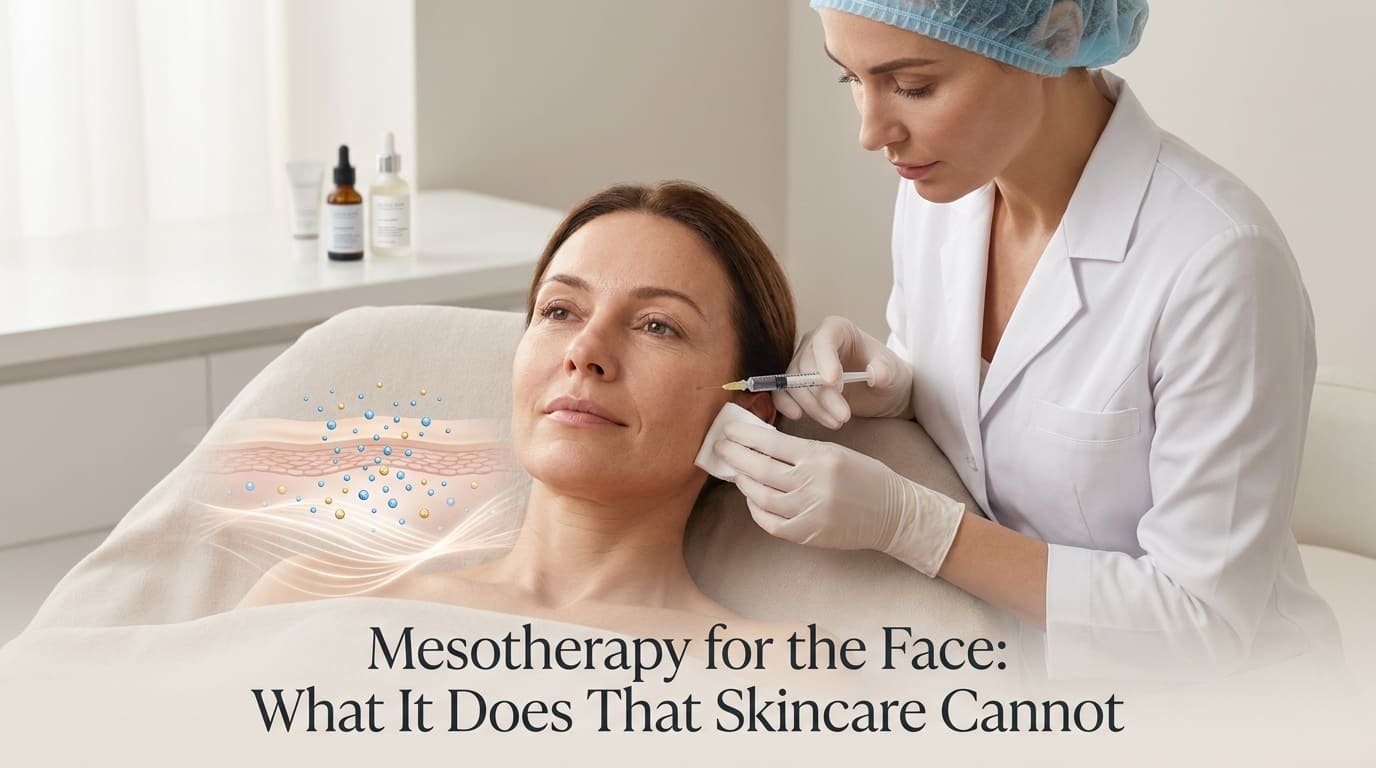
Mesotherapy exists to address this limitation directly. By placing active ingredients into the dermis through injection, it bypasses the skin barrier entirely and delivers therapeutic concentrations of multiple active substances precisely where fibroblasts, blood vessels, and other cellular structures need them. This is the clinical basis for why mesotherapy produces results that sustained topical application of the same ingredients often cannot.
What Mesotherapy Actually Is
Facial mesotherapy is a technique rather than a single specific product. The term describes the delivery of a multi-ingredient injectable solution into the mesoderm, which is the middle layer of the skin, through a series of fine micro-injections placed across the treatment area. The concept was developed in France by Dr Michel Pistor in the 1950s and has evolved significantly in its ingredient sophistication and delivery precision over the decades since.
The solution injected varies between products and practitioners but typically contains some combination of hyaluronic acid in a light, non-cross-linked form, a vitamin complex including B vitamins and vitamin C, amino acids that serve as the building blocks for collagen and elastin synthesis, minerals and trace elements that support enzymatic skin repair processes, peptides that signal specific cellular responses, antioxidants that reduce oxidative stress in ageing skin cells, and occasionally growth factors or coenzymes depending on the specific formulation.
This multi-ingredient approach is the central characteristic of mesotherapy and what distinguishes it most clearly from single-ingredient injectable treatments like skin boosters, which focus on hyaluronic acid alone. Where a skin booster delivers one substance with a targeted hydration and mild bio-stimulating effect, mesotherapy delivers a complete active environment designed to address multiple aspects of skin quality simultaneously.
Why the Dermis Is the Right Target
Understanding why injecting into the dermis produces different results from applying products to the surface requires understanding what the dermis actually contains and does.
The dermis is where fibroblasts live. Fibroblasts are the cells responsible for producing collagen, elastin, and hyaluronic acid in the skin. They are the biological machinery that determines skin firmness, elasticity, and resilience. When fibroblasts are well nourished and actively signalled to produce structural proteins, skin quality improves in ways that surface application cannot replicate because the fibroblasts themselves are not accessible from the outside.
The dermis also contains the skin's vascular network. Microcirculation in the dermis determines how efficiently the skin receives oxygen and nutrients from the bloodstream. Ageing and sun damage both compromise dermal microcirculation. Certain ingredients delivered through mesotherapy, including arginine and other amino acids that support nitric oxide production, directly support microcirculation in the treatment area, improving the baseline nutritional environment available to skin cells.
Clinical evidence for the efficacy of HA and amino acid combinations delivered via mesotherapy has been confirmed in peer-reviewed research. A prospective study of forty healthy subjects treated with three intradermal injections of HA, amino acids, and vitamin complex at two-week intervals showed that facial skin viscoelasticity increased by 12.5 percent at day 42 compared with baseline. A histological and ultrasound study of patients receiving mesotherapy with HA and amino acid solutions demonstrated increased fibroblast activity, collagen production, and epidermal thickness following a course of treatment. These are not anecdotal outcomes. They are measurable structural changes in the tissue confirmed through biopsy and imaging.
What Facial Mesotherapy Is Used For
The multi-ingredient nature of mesotherapy makes it suited to a range of concurrent skin quality concerns rather than a single isolated problem.
Dull and dehydrated skin is the most straightforward indication. Hyaluronic acid in the mesotherapy formula hydrates from within the dermis, producing a skin quality and surface luminosity improvement that genuinely differs from the temporary surface plumping that topical HA provides. Patients who have used hyaluronic acid serums for years without seeing the skin quality change they were hoping for often find mesotherapy delivers what the products could not.
Fine lines and surface texture irregularity respond well to mesotherapy across a course of sessions. The combined effect of dermal hydration, amino acid-driven collagen stimulation, and antioxidant support produces a gradual but meaningful improvement in the fine texture of the skin surface that is distinct from the more targeted approach of anti-wrinkle injections, which address dynamic muscle-related lines. Mesotherapy addresses the quality of the skin tissue itself rather than the behaviour of the muscles beneath it.
Pigmentation and uneven skin tone are addressed through the vitamin C and antioxidant components of the mesotherapy solution. Vitamin C delivered into the dermis inhibits melanin production through the tyrosinase inhibition pathway at a concentration that topical application rarely achieves reliably. The brightening effect of consistent mesotherapy sessions on uneven skin tone is gradual but sustained over a course of treatment.
Hair loss in its early stages and conditions affecting scalp health are treated with mesotherapy through the same mechanism applied to the scalp environment. The nutrient delivery to the scalp dermis supports follicle health and the microcirculation that follicles depend on. This is a growing and legitimate application of mesotherapy technique beyond the face that builds on the same evidence base for dermal nutrient delivery.
Ageing skin showing multiple concurrent signs including reduced firmness, dullness, dehydration, and early fine lines is perhaps the most appropriate overall indication for mesotherapy, because the multi-targeted nature of the cocktail addresses several elements of skin quality decline simultaneously in a way that single-ingredient treatments do not.
The Treatment Experience
Facial mesotherapy involves a series of micro-injections placed across the treatment area using a very fine needle, typically 30 gauge, at multiple points in a systematic pattern. The number of injection points varies depending on the treatment area, the specific product, and the practitioner's technique.
Most practitioners apply topical numbing cream for 20 to 30 minutes before treatment to maximise comfort. Even without numbing the injections are fine enough that most patients find the treatment entirely manageable, describing a mild pricking or stinging sensation at each point that resolves immediately.
A standard facial mesotherapy session takes between 20 and 40 minutes depending on the areas covered. The face, neck, and décolletage can all be treated in a single session. Some practitioners also treat the periorbital area, the scalp, and the hands using the same technique.
Immediately after treatment, the skin typically shows mild redness and small papules at the injection points. These settle within a few hours for most patients. Social downtime after mesotherapy is minimal for the majority of people, with most able to return to normal activities on the same day or the following morning.
Some patients experience minor bruising at individual injection points. This fades within five to seven days and is not a sign of incorrect technique but rather a consequence of the density of injection points in the treatment area.
How Many Sessions Are Needed
A single mesotherapy session produces noticeable improvement in skin hydration and surface radiance for many patients, particularly those whose skin was significantly dehydrated before treatment. This immediate response is real but it represents a fraction of what a complete course delivers.
The sustained improvements in skin quality, collagen production, and tissue structure from mesotherapy build across a course of sessions rather than appearing fully after one. A standard course is typically four to six sessions spaced two to four weeks apart. Clinical studies using two-week intervals between sessions have shown statistically significant improvements in skin viscoelasticity by day 42, which corresponds roughly to after the third session in a course at this spacing.
After completing an initial course, maintenance sessions every four to eight weeks sustain the active ingredient environment in the dermis and prevent the gradual return of the skin quality concerns the treatment addressed. Many patients who find mesotherapy effective incorporate it into a regular maintenance schedule alongside other treatments rather than using it as a one-time intervention.
How Mesotherapy Compares to Individual Injectable Treatments
Mesotherapy is sometimes described as doing what multiple separate injectable treatments would need to be combined to achieve, which is broadly accurate as a way of explaining its multi-targeted approach but requires some nuance.
Skin boosters deliver HA hydration more directly and with better targeting to the specific hydration mechanism because they use a cross-linked or specifically formulated HA designed for precise integration. The HA in mesotherapy is a lighter, more diffuse component of a broader cocktail rather than the primary therapeutic agent.
Polynucleotides drive fibroblast stimulation and cellular regeneration through a DNA-mediated mechanism that mesotherapy's amino acid complex, while also stimulating fibroblasts, does not fully replicate. Polynucleotides produce a more pronounced and specific regenerative signal than mesotherapy delivers through nutrient supply alone.
Profhilo provides a higher concentration of bio-remodelling HA than any mesotherapy product and drives a specific collagen stimulation response through the tissue that mesotherapy's more diffuse HA component does not match in intensity.
What mesotherapy provides that none of these single-ingredient treatments individually achieve is the simultaneous delivery of hydration, vitamin support, amino acid building blocks for collagen synthesis, antioxidant protection, and microcirculation support in a single treatment session. For patients whose skin has multiple concurrent quality concerns, this breadth of simultaneous action is the specific value that mesotherapy offers.
Mesotherapy Within a Broader Treatment Programme
Mesotherapy works well as a standalone skin quality maintenance treatment and equally well as part of a planned programme that combines it with treatments addressing different mechanisms.
Used alongside polynucleotides, mesotherapy provides surface-level nutrient support and hydration while polynucleotides drive deeper cellular regeneration through a distinct biological pathway. The two treatments are genuinely complementary because they work through different mechanisms at different levels of the tissue.
Used alongside BioRePeel, mesotherapy provides the dermal nutritional environment while BioRePeel addresses surface exfoliation and renewal. The combination produces improvement in both surface texture and underlying tissue quality that neither treatment alone achieves as completely.
Used within a comprehensive anti-ageing programme including structural filler, anti-wrinkle injections, and skin quality treatments, mesotherapy contributes the tissue nutrition and microcirculation dimension that addresses baseline skin health rather than specific structural concerns.
Frequently Asked Questions
Is facial mesotherapy the same as a vitamin facial?
The terms are sometimes used interchangeably, but mesotherapy is a specific injectable technique delivering active ingredients into the dermis. A vitamin facial, as a surface treatment, does not achieve the dermal penetration that injectable mesotherapy delivers.
How quickly will I notice a difference?
Many patients notice improved hydration and a surface radiance improvement within a week of their first session. The structural tissue improvements from collagen stimulation build more gradually over the course of treatment.
Can mesotherapy be used on the neck and décolletage?
Yes. The same technique and similar formulations are used on the neck and décolletage, which respond well to mesotherapy given the thin, sun-exposed nature of the skin in these areas.
Is mesotherapy suitable for sensitive skin?
It depends on the specific formulation and the individual's sensitivity profile. A consultation and assessment before the first session is important for any patient with known skin reactivity.
Can I combine mesotherapy with Profhilo?
Yes, and this is a common combination in planned skin quality programmes. The two treatments address different aspects of skin quality and are not duplicates of each other.
How is mesotherapy different from a skin booster?
Skin boosters deliver HA as the primary therapeutic agent in a formulation designed for optimal HA hydration and bio-stimulation. Mesotherapy delivers a multi-ingredient cocktail targeting several skin quality mechanisms simultaneously. The choice between them depends on whether targeted HA hydration or multi-ingredient nutrient delivery better addresses your specific skin concerns.
Does the result from mesotherapy last without maintenance?
The ingredient environment created by mesotherapy gradually diminishes as the injected substances are processed by the body. Without maintenance sessions, the skin returns toward its pre-treatment baseline over several months. Regular maintenance sustains the improvements achieved during the course.
If you want to understand whether facial mesotherapy is appropriate for your skin concerns or how it fits within a broader skin quality programme, book a consultation at our Littlehampton or Hove clinic.
Book a Consultation in Littlehampton or Book a Consultation in Hove