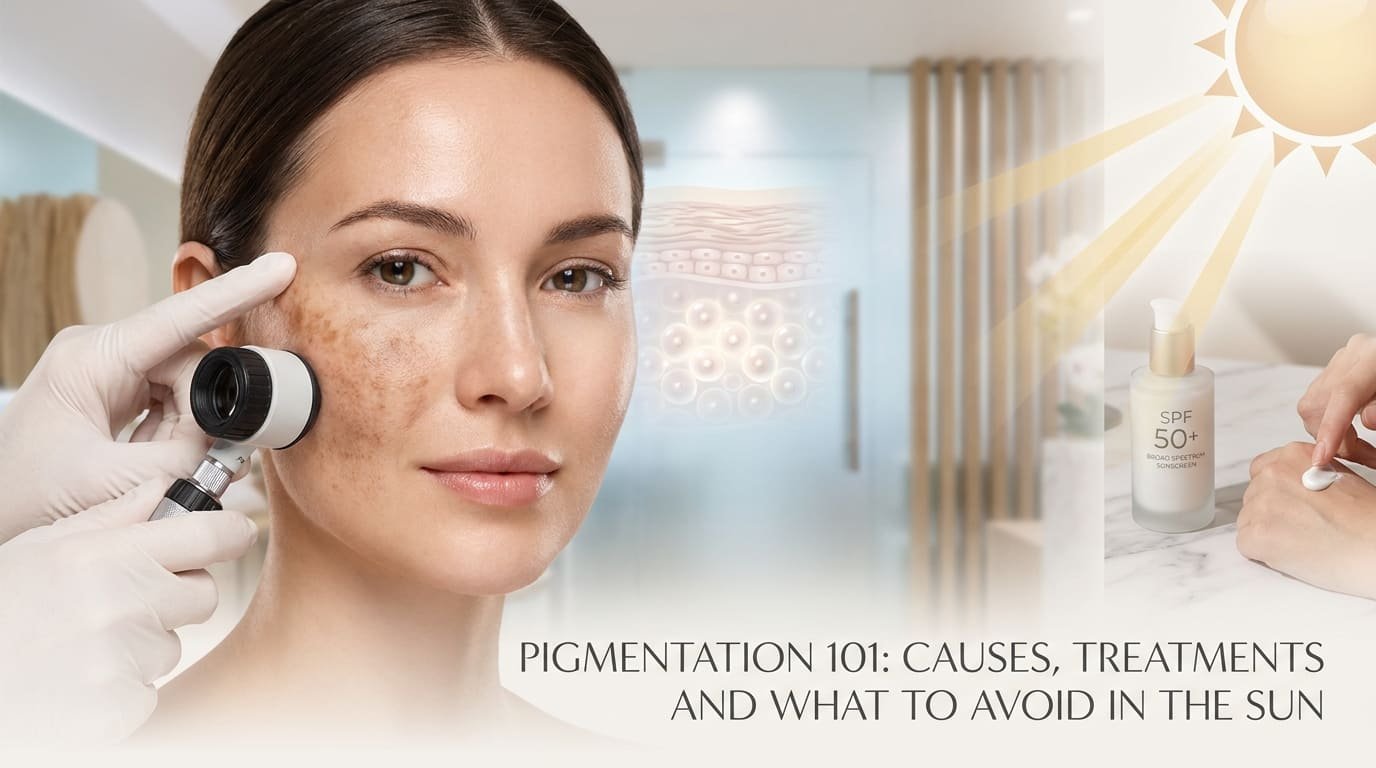
Pigmentation is one of those skin concerns that almost everyone has to some degree, but very few people fully understand. Dark patches, uneven skin tone, brown spots, melasma, post-acne marks. They are all described under the same broad umbrella, and they all look broadly similar on the surface. But they have different causes, different tissue behaviour, and they respond very differently to treatment.
Treating pigmentation without knowing which type you have is one of the most consistent reasons people spend money on treatments and products that do not work. Getting this right starts with understanding what is actually happening in the skin before anything else.
What Pigmentation Actually Is
Pigmentation in the skin is produced by cells called melanocytes. These cells produce a pigment called melanin, which gives skin, hair, and eyes their colour. Melanin production is the skin's primary defence mechanism against ultraviolet radiation. When UV hits the skin, melanocytes respond by producing more melanin to absorb and scatter the UV energy before it damages deeper tissue.
The problem is that this process does not always distribute evenly. Melanocytes cluster in certain areas, overproduce in response to hormonal signals, or leave concentrated deposits of pigment in areas of previous inflammation. When that happens, the result is visible patches of darker skin against the surrounding tone, which is what most people mean when they talk about pigmentation.
The unifying factor across almost all pigmentation types is that UV exposure either causes them, triggers them, or makes them significantly worse. This is not incidental information. It is the single most clinically important thing to understand about pigmentation because it shapes every treatment decision and every aftercare recommendation.
The Main Types of Pigmentation and How They Differ
Sun damage and solar lentigines are the most common form seen in clinic. These are the flat brown spots that develop on areas of the skin with the highest cumulative UV exposure over a lifetime, most commonly the face, hands, décolletage, and forearms. They develop gradually over years and decades and are directly caused by melanocyte activity driven by repeated sun exposure. They are generally well defined, stable in shape, and respond well to clinical treatment.
Melasma is a different animal entirely. It presents as larger, more diffuse patches of pigmentation, most commonly across the cheeks, forehead, upper lip, and jawline. It has a characteristic symmetrical appearance that is quite different from the more isolated spots of solar damage. Melasma is driven by a combination of hormonal influences and UV exposure. It is significantly more common in women and often appears or worsens during pregnancy, while taking hormonal contraception, or during periods of significant hormonal change. It can also appear without any obvious hormonal trigger.
Melasma is notoriously difficult to treat and even more difficult to keep treated, because the underlying hormonal sensitivity of the melanocytes remains present even after the surface pigmentation has been cleared. UV exposure of any degree can reactivate it quickly. This makes melasma management a long-term commitment to both active treatment and rigorous prevention rather than a course of treatment that resolves the issue permanently.
Post-inflammatory hyperpigmentation is the pigment discolouration left behind after skin inflammation. Acne breakouts are the most common cause but it also occurs after any skin injury or trauma, including certain aesthetic treatments if aftercare is not followed correctly. The good news is that post-inflammatory pigmentation is not structural scarring. It is a surface melanin deposit that fades over time even without treatment, though targeted clinical treatment and diligent sun protection accelerate that process significantly.
Periorbital hyperpigmentation, the dark circles under and around the eye area, can have a pigmentation component in certain patients, though it is often also influenced by vascular factors, thin skin, and anatomical shadowing rather than melanin alone. Treating it as purely a pigmentation concern without addressing the other contributing factors explains why many dark circle treatments produce limited results.
Treatments That Produce Real Improvement
The treatments most relevant to pigmentation management in an aesthetic clinic setting fall into a few core categories, each addressing the concern from a different clinical angle.
Chemical peels work by controlled exfoliation of the upper skin layers, removing melanin-containing cells from the surface and stimulating cellular renewal in the dermis below. They are effective for solar lentigines and post-inflammatory pigmentation and can contribute to melasma management when used as part of a broader programme. The choice of peel agent, concentration, and frequency is important. Certain peel types are better suited to specific pigmentation types and skin tones, and using an inappropriate peel on darker skin tones risks worsening pigmentation through inflammation. Assessment of your skin tone and pigmentation type by an experienced practitioner before any peel is non-negotiable.
Polynucleotides have a meaningful role in pigmentation treatment through their effect on cellular repair and tissue regeneration. By creating a more active and healthy cellular environment, they support the skin's ability to process and reduce melanin deposits over time, particularly in areas of post-inflammatory pigmentation and early solar damage. Their anti-inflammatory properties also make them a useful adjunct in conditions like melasma where inflammation contributes to ongoing pigment production.
Topical prescription treatments containing ingredients such as hydroquinone, azelaic acid, tranexamic acid, and retinoids are often incorporated into pigmentation management plans alongside clinical treatments. These are not over-the-counter products and work at a cellular level to inhibit melanin production or accelerate the turnover of pigmented cells. They form part of a managed plan rather than a standalone solution.
Laser and light-based treatments are highly effective for solar lentigines and certain other pigmentation types but require careful assessment of skin tone and pigmentation type before use. Applied incorrectly or on inappropriate skin, certain laser wavelengths can worsen pigmentation rather than improve it. If laser forms part of a treatment plan, it would be discussed at consultation with appropriate referral where relevant.
What Sun Exposure Does to Pigmentation Treatment
This section deserves its own space because it is the part of pigmentation management that patients most consistently underestimate, and it is the reason so many treatment courses produce disappointing results despite being clinically well executed.
UV exposure does not need to be significant to reactivate melanin production in sensitised skin. Walking from the car to the office. Sitting near a window. A ten-minute walk without SPF. These exposures are enough to stimulate melanocytes in skin that is being treated for pigmentation, and that stimulation partially or completely reverses the clinical work being done.
A broad spectrum SPF of at least 30, and ideally 50, applied every morning without exception is the minimum standard during any pigmentation treatment programme. In practice, reapplication through the day is more protective than a single morning application, particularly if you spend time outdoors. SPF in foundation or tinted moisturiser is not a sufficient substitute for a dedicated SPF product applied underneath.
UV exposure also matters when you are not actively in a treatment programme. Pigmentation that has been successfully treated and cleared will return faster and more dramatically in patients who do not maintain daily sun protection than in those who do. The work done in clinic to clear pigmentation does not confer permanent immunity to it coming back. Sustained sun protection is what maintains the result over time.
Heat is also worth noting separately from UV. Significant heat exposure, including saunas, hot yoga, and spending time in very hot environments, can also stimulate melanocyte activity in patients with melasma specifically. This is one of the more surprising triggers for patients and one that explains why some people experience melasma flares in summer even when their UV protection has been consistent.
Building a Pigmentation Treatment Plan That Holds
The patients who see lasting improvement from pigmentation treatment are those who approach it as a programme rather than a single intervention. A well-structured plan addresses the pigmentation with appropriate clinical treatments, supports the cellular environment with targeted homecare, and protects the result consistently with sun protection that does not lapse.
Melasma in particular requires this long-term thinking. It is a condition that can be managed very effectively but rarely cured in a permanent sense. Patients who understand this at the start of treatment are the ones who maintain their improvement. Those who expect a course of treatment to resolve it indefinitely are the ones who feel let down when it reappears after sun exposure.
For solar damage and post-inflammatory pigmentation the picture is more straightforward. With the right treatment and consistent sun protection, results can be excellent and lasting. The condition does not have the same underlying hormonal driver that makes melasma more complex.
Frequently Asked Questions
Can I treat pigmentation at home without clinical treatment?
Some over the counter products containing vitamin C, niacinamide, and low-concentration azelaic acid can contribute to fading mild pigmentation over time. For more established pigmentation, solar damage, or melasma, clinical treatment produces significantly better results in a much shorter timeframe.
Why has my pigmentation come back after treatment?
UV exposure is the most common reason. Even a short period without consistent sun protection after a treatment course is enough to reactivate melanin production in treated areas. Hormonal changes can also trigger melasma recurrence independent of sun exposure.
Is it safe to treat pigmentation on darker skin tones?
Yes, with an experienced practitioner who understands the specific considerations involved. Certain treatments that are appropriate for lighter skin tones carry a risk of worsening pigmentation on darker skin if not applied correctly. Assessment of your skin tone is a fundamental part of any pigmentation consultation.
How long before I see results from pigmentation treatment?
This varies by treatment type and pigmentation severity. Post-inflammatory pigmentation often shows improvement relatively quickly with the right approach. Solar damage and melasma typically require a sustained programme over several months to achieve meaningful visible improvement.
Does SPF need to be worn indoors?
For patients managing melasma specifically, indoor light from windows does carry a UV component sufficient to stimulate melanin production. For most other pigmentation types, consistent outdoor SPF use is the primary requirement. Your practitioner will advise based on your specific condition.
If you have been dealing with pigmentation and want to understand what is actually causing it and what treatment would genuinely work for your skin, book a consultation at our Littlehampton or Hove clinic. We will assess your pigmentation type properly before recommending anything.
Book a Consultation in Littlehampton or Book a Consultation in Hove