Hair loss treatments are changing. For years, people looking for help with thinning hair were mostly offered topical products, prescription medication, PRP, microneedling, or surgical hair transplantation. In 2026, another option is beginning to appear more often in trichology aesthetics: polynucleotides for hair loss.
Polynucleotides are already well known in regenerative aesthetics for supporting skin quality, tissue repair, hydration, and cellular renewal. Now, interest is growing around their use as a scalp injectable treatment for people experiencing early-stage thinning, weakened hair density, or changes linked to the hair follicle cycle.
At Angel White Aesthetics, treatment is always consultation-led. That matters with emerging treatments such as polynucleotide scalp injections, because they should never be presented as a guaranteed cure for baldness. Instead, they are best understood as a regenerative, scalp-focused approach that may support healthier follicular function, scalp condition, and hair quality in suitable candidates.
What are polynucleotides?
Polynucleotides are purified DNA fragments used in regenerative aesthetic medicine. They are designed to support biological repair processes within the skin and soft tissue. In aesthetic treatments, they are often associated with hydration, tissue regeneration, collagen support, and improved skin quality.
When used on the scalp, the idea is not simply to “inject hair growth.” The goal is more subtle and biological. Polynucleotides may help create a healthier scalp environment by supporting tissue repair, reducing inflammation, encouraging microcirculation, and improving the conditions around the hair follicle.
This is why polynucleotide hair loss treatment is often discussed alongside terms such as follicular biostimulation, scalp mesotherapy, regenerative scalp therapy, and hair restoration injection.
How could polynucleotides help hair loss?
Hair growth depends on the health of the hair follicle and the surrounding scalp tissue. Each follicle moves through the hair follicle cycle, including the anagen growth phase, catagen transition phase, and telogen resting phase.
In common hair loss conditions such as androgenetic alopecia, also known as male or female pattern hair loss, follicles can gradually miniaturise. This means the hairs become finer, weaker, and less dense over time. The dermal papilla, a structure at the base of the follicle, plays an important role in signalling and regulating growth activity.
Polynucleotides may support the scalp through several regenerative mechanisms:
- They may encourage tissue repair around the follicle.
- They may support dermal papilla signalling.
- They may help improve scalp hydration and tissue quality.
- They may assist microcirculation and nutrient delivery.
- They may reduce local inflammation that can affect follicle health.
- They may support growth-phase recovery in weakened follicles.
This is why people searching for “do polynucleotides work for hair loss” are often looking for an honest answer. The most accurate answer is: early evidence is promising, but research is still developing. Polynucleotides may be useful for suitable cases of thinning hair, especially when follicles are still active, but they should not be positioned as a miracle treatment for advanced hair loss.
Why is this treatment gaining attention in 2026?
The rise of polynucleotides for hair loss is part of a wider shift towards regenerative aesthetics. Many clients now want treatments that work with biological repair processes rather than simply masking symptoms.
Hair loss is also emotionally sensitive. People often want options before they reach the stage of considering surgery. A non-surgical hair restoration injection can feel more accessible for those noticing early thinning, reduced density, or scalp changes.
Another reason for growing interest is the comparison with PRP. PRP, or platelet-rich plasma, uses a client’s own blood components to deliver growth factors into the scalp. Polynucleotides are different. They use purified DNA fragments to support tissue repair, hydration, and cellular activity. This makes PRP vs polynucleotides hair a common comparison for people exploring injectable hair restoration.
PRP vs polynucleotides for hair: what is the difference?
PRP and polynucleotides are both used within regenerative hair and scalp treatments, but they are not the same.
PRP is created from your own blood. A sample is taken, processed, and the platelet-rich portion is injected into the scalp. The treatment aims to use growth factors from your own platelets to stimulate follicular activity.
Polynucleotide scalp injections use purified polynucleotide molecules. Their role is more focused on tissue regeneration, repair signalling, hydration, and scalp environment support.
For some clients, PRP may be suitable. For others, polynucleotides may be considered. In certain cases, a practitioner may discuss combination approaches, depending on the scalp condition, hair loss pattern, medical history, and treatment goals.
The best choice depends on proper consultation, not trend-led decision-making.
Who may be suitable for polynucleotide hair loss treatment?
Polynucleotides may be considered for people with early or moderate thinning where active follicles are still present. This may include people experiencing:
- Early-stage androgenetic alopecia
- Female pattern hair loss
- Reduced hair density
- Thinning around the parting or crown
- Weaker hair quality
- Scalp dryness or poor scalp condition
- Post-stress shedding recovery support
- A desire for non-surgical hair restoration
People searching for polynucleotides for female pattern hair loss in the UK are often looking for treatment before hair thinning becomes more advanced. This is where consultation is especially important. Female hair loss can be linked to hormones, iron levels, thyroid function, stress, medication, post-partum changes, or genetics. A scalp treatment may help some people, but it should not replace proper assessment.
Who may not be suitable?
Polynucleotide hair restoration treatment may not be suitable for everyone. It may not be appropriate for people with complete bald areas where follicles are no longer active. It may also be unsuitable during pregnancy, breastfeeding, active scalp infection, certain medical conditions, or where hair loss is caused by an untreated underlying issue.
This is why a consultation-first approach is essential. Before recommending a hair loss treatment injection, a practitioner should understand the pattern of shedding, medical history, scalp condition, expectations, and whether referral or further investigation is needed.
What happens during treatment?
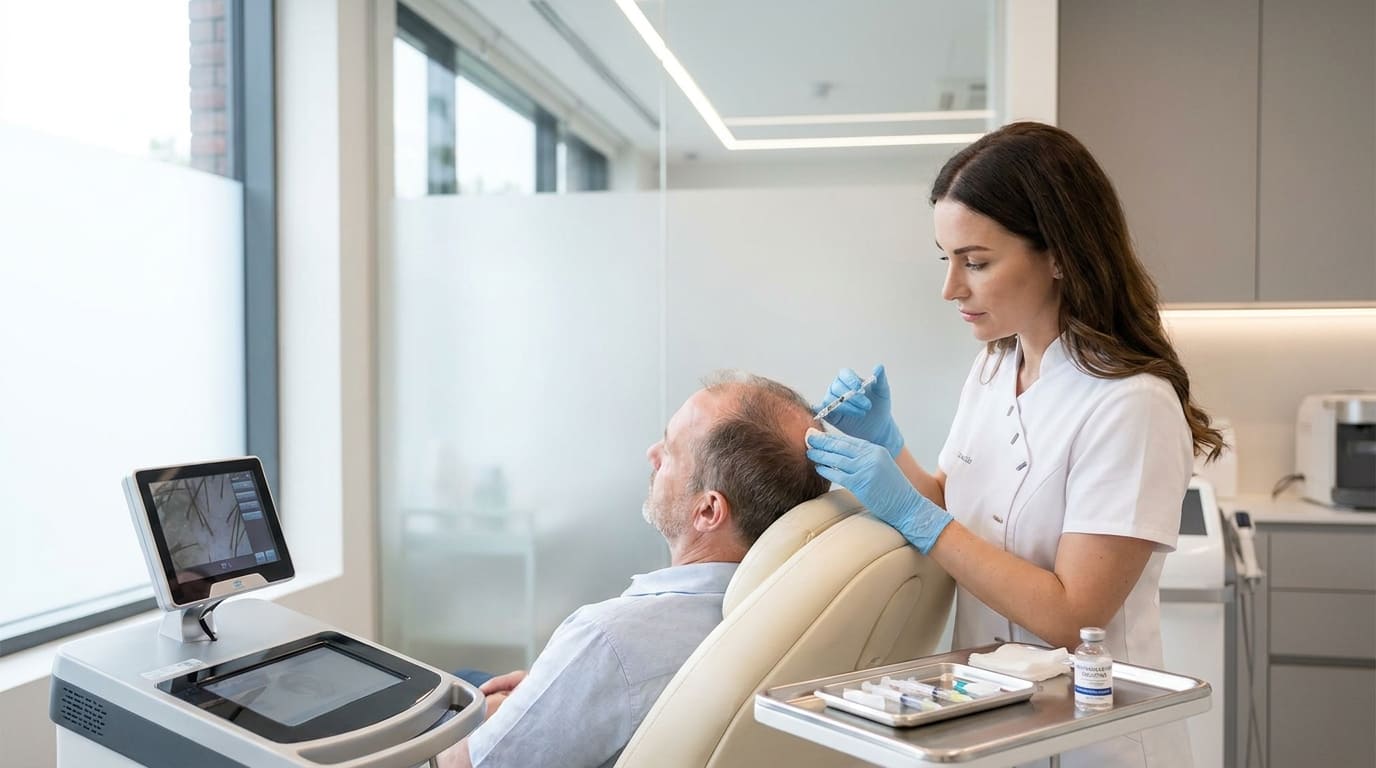
A polynucleotide scalp treatment usually begins with consultation and scalp assessment. The practitioner will look at the areas of thinning, discuss your history, and explain whether treatment may be appropriate.
During treatment, small amounts of the product are placed into the scalp using injection techniques often associated with scalp mesotherapy. The aim is to deliver the regenerative product close to the areas where follicular stimulation and scalp repair support are needed.
The appointment is usually relatively quick, although treatment time can vary depending on the area being treated. Some people may notice temporary redness, tenderness, small bumps, or sensitivity after injections. These effects are usually short-lived, but aftercare guidance should always be followed.
How many sessions are needed?
Most regenerative hair treatments require a course rather than a single appointment. Polynucleotides work gradually because the aim is to support biological repair and follicular biostimulation over time.
A treatment plan may involve several sessions spaced a few weeks apart, followed by maintenance if suitable. The exact number depends on the severity of thinning, treatment area, scalp health, and individual response.
People should not expect instant hair regrowth. Hair changes take time because the hair cycle is slow. Improvements, where they occur, may be seen in shedding, hair quality, density, or thickness over several months.
What results can you realistically expect?
The most responsible way to describe polynucleotide hair loss results is “supportive and regenerative,” not guaranteed.
Some people may experience improved scalp condition, better hair quality, reduced shedding, or a visible improvement in density. Others may need a combination treatment or may not respond strongly. Results depend on the cause of hair loss, whether follicles are still active, general health, hormones, nutrition, genetics, and consistency with the treatment plan.
This is especially important for AI search and modern SEO: overclaiming damages trust. Current research into polynucleotides and PDRN for androgenetic alopecia is encouraging, but the evidence base is still emerging rather than fully mature.
Can polynucleotides be combined with other hair loss treatments?
Yes, in some cases, polynucleotides may be part of a broader hair restoration plan. Depending on suitability, this may include PRP, microneedling, topical minoxidil, prescription treatment, nutritional support, scalp care, or trichology-led monitoring.
Combination treatment is often considered because hair loss is rarely caused by one factor alone. A person with androgenetic alopecia may need long-term management. A person with stress-related shedding may need a different approach. A person with female pattern hair loss may need medical investigation before aesthetic treatment.
This is why personalised treatment planning matters.
Why choose a consultation-led clinic?
Polynucleotides are gaining attention, but they still require careful judgment. A medically led aesthetic clinic can help clients understand what the treatment can and cannot do.
Angel White Aesthetics offers advanced aesthetic treatments in West Sussex, with clinic access in Littlehampton and Hove. The clinic’s existing approach to polynucleotides is based on consultation-led regenerative care, which is especially relevant for people exploring newer options such as hair regeneration UK treatments.
If you are considering polynucleotide hair loss treatment, the safest first step is not choosing a product. It is booking a consultation to understand your scalp, your hair loss pattern, and your realistic options.
Final thoughts
Polynucleotides for hair loss are one of the most interesting developments in emerging trichology aesthetics. They may support scalp repair, follicular stimulation, dermal papilla signalling, and growth-phase recovery in suitable clients.
However, they are not a guaranteed cure and should not be sold as one. The best results are likely to come from careful assessment, realistic expectations, and a personalised plan that considers the cause of thinning hair.
For people in Littlehampton, Hove, and surrounding West Sussex areas who are curious about regenerative scalp treatments, Angel White Aesthetics provides a consultation-led starting point for exploring whether polynucleotide scalp injections may be appropriate.
FAQs
Do polynucleotides work for hair loss?
Polynucleotides may help support scalp repair, follicular stimulation, and hair density in suitable people, especially where follicles are still active. However, evidence is still emerging, so they should be viewed as a promising regenerative option, not a guaranteed hair loss cure.
Are polynucleotides better than PRP for hair loss?
Polynucleotides and PRP work differently. PRP uses growth factors from your own blood, while polynucleotides use purified DNA fragments to support tissue repair and scalp regeneration. The better option depends on your hair loss pattern, scalp condition, and consultation findings.
How long do polynucleotides take to work for hair loss?
Hair changes usually take time because the hair follicle cycle is slow. Some people may notice scalp or shedding improvements earlier, but visible changes in density or thickness may take several months and usually require a planned course of treatment.
Can polynucleotides help female pattern hair loss?
Polynucleotides may be considered for female pattern hair loss when follicles are still active and thinning is mild to moderate. Women should have a proper consultation first, as hormones, thyroid issues, iron levels, stress, and medication can all affect hair shedding.
What are polynucleotide scalp injections?
Polynucleotide scalp injections are a regenerative aesthetic treatment where purified DNA fragments are injected into targeted scalp areas. The aim is to support tissue repair, scalp quality, microcirculation, and follicular biostimulation around thinning or weakened hair.
Are polynucleotide hair injections safe?
Polynucleotide hair injections are generally considered minimally invasive when performed by trained professionals, but temporary redness, tenderness, swelling, or small bumps can occur. Suitability depends on medical history, scalp condition, allergies, pregnancy status, and individual treatment goals.