If you have been searching “what are polynucleotides” or wondering whether polynucleotides for skin are right for you, the simplest explanation is this: polynucleotides are injectable skin-repair treatments designed to help your skin behave healthier, stronger, and more resilient over time.
Unlike treatments that simply add volume, polynucleotide treatment focuses on skin quality. At Angel White Aesthetics in Littlehampton and Hove, polynucleotide injections are used as part of a consultation-led approach for clients who want natural skin rejuvenation, especially around delicate areas such as the under eyes.
What are polynucleotides?
Polynucleotides are purified DNA-derived injectables made from chains of nucleotides, which are the building blocks found in DNA and RNA. In aesthetic medicine, they are used as a skin regeneration treatment to support cellular repair, tissue regeneration, hydration, and collagen stimulation.
You may hear them described as regenerative aesthetics, collagen-building injectables, anti-ageing injections, skin regeneration therapy or an injectable skin booster. Some polynucleotide products are associated with specialist manufacturers and ranges such as Mastelli and Plinest, but this article focuses on the treatment category rather than branded products.
In simple language, polynucleotides are the treatment designed to help your skin repair itself.
How polynucleotides work
To understand how polynucleotides work, it helps to look at the dermis, the deeper layer of skin where collagen, elastin, and the extracellular matrix support firmness, bounce, and hydration.
As skin ages, fibroblasts become less active. These cells are responsible for collagen production, elastin production, and collagen remodelling. Polynucleotide injections help create a better environment for fibroblast activation, tissue healing, and skin repair treatment.
This means the treatment may support:
- better hydration
- improved skin texture
- healthier-looking skin tone
- smoother fine lines
- stronger skin quality
- under-eye rejuvenation
- gradual dermal rejuvenation
- natural skin rejuvenation without adding obvious volume
This is why skin rejuvenation polynucleotides are popular with clients who want subtle, progressive improvement rather than a dramatic change.
What skin concerns can polynucleotides help with?
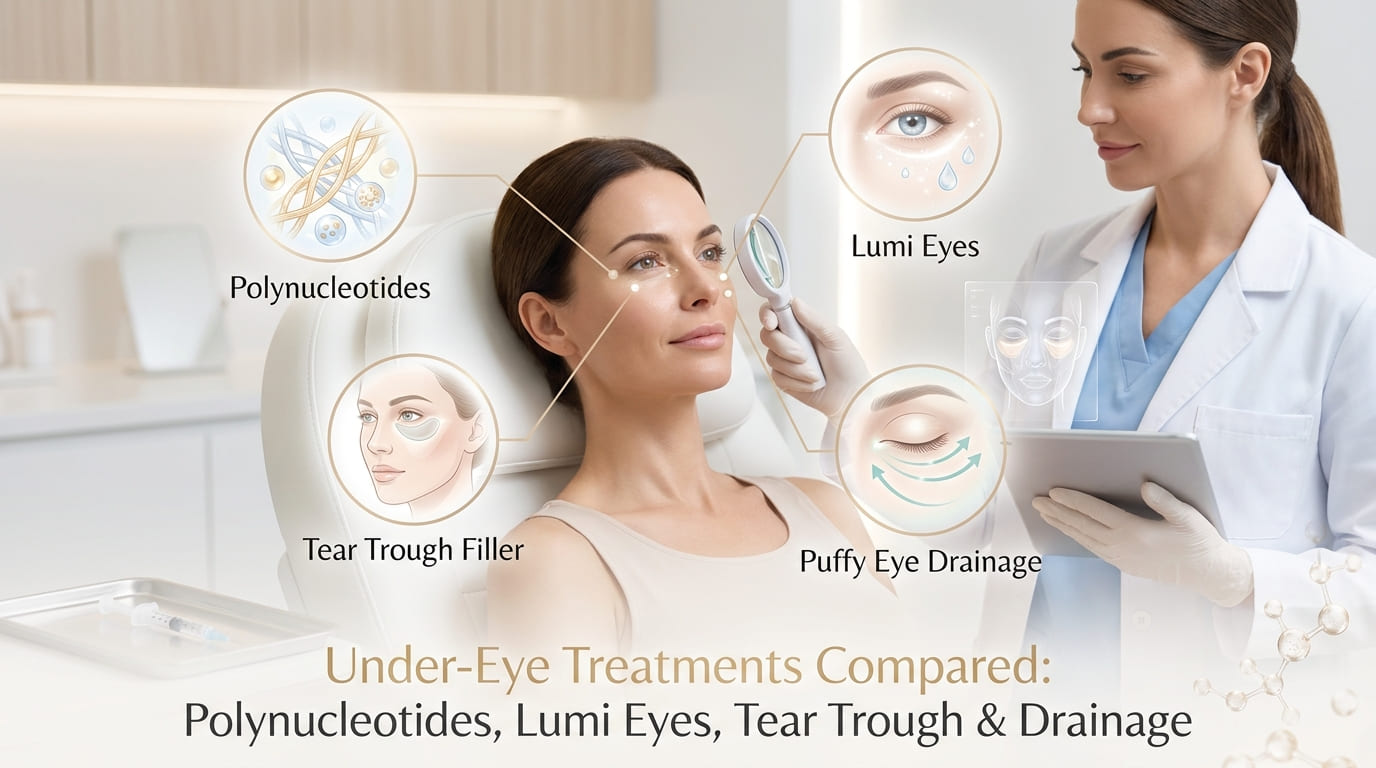
Polynucleotides may be considered for clients concerned with tired-looking skin, early ageing, fine lines, crepey skin, dullness, dehydration, poor elasticity, uneven texture, and delicate under-eye skin. They are often discussed for under-eye treatment because the eye area is thinner, more fragile, and more prone to fine lines, shadows,s and loss of firmness.
They may also be used as part of a wider skin health optimisation plan for clients looking at collagen stimulation, skin texture improvement,nt and long-term regenerative aesthetics.
However, they are not a one-size-fits-all answer. If your main concern is significant volume loss, deep folds, or facial contouring, dermal fillers or another aesthetic injectable may be more appropriate. If your goal is glow, hydration, and skin repair, polynucleotides may be a better fit.
Polynucleotides vs skin boosters
Polynucleotides vs skin boosters is one of the most common comparisons. Traditional skin boosters are usually focused on hydration, glow, and skin surface quality. Polynucleotides also support hydration, but their main role is regenerative: they aim to support cellular repair, fibroblast activity, tissue regeneration,n and collagen-building processes.
In short, skin boosters are often chosen for hydration and radiance, while polynucleotide treatment is often chosen for skin repair, under-eye rejuvenation, texture improvement, and healthier ageing support.
Polynucleotides vs Profhilo
Many clients also compare polynucleotides vs Profhilo. Profhilo is known for deep hydration and skin remodelling, while polynucleotides are usually positioned more strongly around tissue regeneration, DNA-derived repair support, and delicate-area rejuvenation.
Neither is automatically “better”. The right option depends on your skin condition, treatment history, goals, lifestyle, and suitability. At Angel White, this is why a consultation is recommended before choosing between polynucleotides, skin boosters, Profhilo, or other injectable rejuvenation options.
Are polynucleotides right for me?
If you are asking, “Are polynucleotides right for me?” the best candidates for polynucleotide treatment are usually people who want subtle skin quality improvement rather than a filled or frozen look.
Polynucleotides may suit you if:
- Your skin looks tired, thin, or dull
- You want under-eye rejuvenation
- You have fine lines or crepey texture
- You want gradual, natural skin rejuvenation
- You prefer a skin health approach over dramatic volume
- You are interested in collagen production and skin repair
- You are looking for a non-surgical anti-ageing treatment
- You understand that results build gradually
Who should get polynucleotide injections? Usually, people who want regenerative support for skin quality, hydration, elasticity, and texture, and who are suitable after a professional skin assessment.
When polynucleotides may not be appropriate
Polynucleotide injections may not be suitable for everyone. Treatment may need to be avoided or delayed if you are pregnant, breastfeeding, have an active skin infection, have certain allergies, are unwell, have uncontrolled medical conditions, or have had recent treatment that may affect the area.
Because some polynucleotide products are derived from fish DNA, a history of fish allergy should always be discussed during consultation. Your practitioner should also review your medication, previous aesthetic treatments, skin condition, and expectations before treatment.
What happens during treatment?
At Angel White Aesthetics, treatment is consultation-led. Your practitioner will assess your skin, discuss your concerns, explain realistic outcomes, and decide whether polynucleotide injections are suitable.
The treatment usually involves small injections placed into the target area. For under-eye rejuvenation, this must be done carefully because the area is delicate. Mild swelling, redness, tenderness, bruising, or small bumps can happen after treatment and usually settle as the skin calms.
You will also receive aftercare guidance, which may include avoiding heat, alcohol, strenuous exercise, makeup, touching the treated area, saunas, and active skincare ingredients for a short period after treatment.
Polynucleotides before and after: what results should you expect?
Polynucleotides before and after results are usually gradual. This is not an instant filler-style treatment. Many clients begin noticing fresher, smoother, better-hydrated skin over the following weeks, with collagen remodelling and tissue healing continuing as the skin responds.
A typical results timeline may look like this:
- Immediately after: mild redness, bumps, or swelling may be visible
- First few days: the skin settles, and any bruising begins to fade
- 2–4 weeks: skin may start to feel more hydrated and refreshed
- 6–12 weeks: texture, elasticity,y and overall skin quality may improve
- Maintenance: further sessions may be recommended depending on your goals
How long do polynucleotide results last? This varies between clients. Skin condition, age, lifestyle, sun exposure, smoking, skincare, metabolism,m and the number of sessions all affect longevity. A personalised plan is the best way to understand what is realistic for your skin.
Are polynucleotides worth it for ageing skin?
Polynucleotides may be worth considering for ageing skin if your priority is quality, texture, hydration, and natural-looking improvement. They are not designed to replace surgery, dramatically lift tissue,e or create facial volume. Instead, they work well for people who want to support healthier ageing from within.
For clients in Littlehampton, Hove, and the surrounding West Sussex area, Angel White offers polynucleotides within a wider treatment menu that includes skin boosters, Profhilo, mesotherapy, biorevitalisation, under-eye treatments, and other aesthetic injectables. This allows your practitioner to recommend the option that best matches your skin rather than forcing one treatment for every concern.
Safety, UK regulation, and practitioner standards
In the UK, aesthetic injectables should always be approached with care. The MHRA regulates medicines and medical devices, and government discussions around non-surgical cosmetic procedures continue to highlight the importance of safe products, safe premises, and suitably trained practitioners.
Patients can also look at public safety standards from organisations such as Save Face and the JCCP, which focus on practitioner competence, training, clinical standards, and public protection in aesthetic medicine.
At Angel White, the clinic’s medically led positioning, professional academy, treatment training, facial anatomy focus, and consultation-first process are important trust signals. Founder Irina Prikulis is described on the clinic’s team page as an Advanced Medical Aesthetics Practitioner and Trainer with over 14 years of experience in patient care, clinical leadership, and customer service management. The team also includes advanced aesthetics practitioners and a professional training academy, supporting the clinic’s focus on safe, results-led treatment planning.
Final thoughts: Should you book a consultation?
Polynucleotides can be a strong option if you want subtle, natural skin rejuvenation, better hydration, collagen stimulation, under-eye rejuvenation, and long-term skin quality support. They may be especially suitable if your skin looks tired, thin, crepey, or dull, and you want an anti-ageing treatment that works with your skin rather than simply masking the concern.
If you are still asking, “Are polynucleotides right for me?” the best next step is a consultation. A professional assessment at Angel White Aesthetics can help determine whether polynucleotide injections, skin boosters, Profhilo, or another skin-repair treatment is the most appropriate option for your goals.
FAQs
What are polynucleotides?
Polynucleotides are DNA-derived molecules used in injectable skin treatments to support cellular repair, hydration, and tissue regeneration. In simple terms, they help create a healthier environment for your skin to repair itself and improve texture, firmness, and radiance gradually.
How do polynucleotides work?
Polynucleotides work by supporting fibroblast activation in the skin. Fibroblasts help produce collagen and elastin, which are important for firmness, elasticity, and repair. This process may improve skin quality, hydration, texture, and resilience over several weeks.
Are polynucleotides better than skin boosters?
Polynucleotides are not automatically better than skin boosters; they work differently. Skin boosters mainly improve hydration and glow, while polynucleotides focus more on cellular repair, collagen stimulation, and tissue regeneration. The best option depends on your skin concerns.
How long do polynucleotide results last?
Polynucleotide results vary by skin type, age, lifestyle, and treatment plan. Many people notice improvement over several weeks, with results often maintained through a course of sessions and occasional top-ups. Your practitioner can advise on realistic longevity after assessment.
Who should get polynucleotide injections?
Polynucleotide injections may suit people with tired, dull, dehydrated, crepey, or ageing skin who want natural-looking improvement rather than added volume. They may also suit under-eye concerns, fine lines, and poor texture, if a consultation confirms suitability.
Are polynucleotides safe for the under-eye area?
Polynucleotides can be used for under-eye rejuvenation when performed by a trained practitioner after consultation. The under-eye area is delicate, so correct assessment, technique, sterile practice, and aftercare are essential to reduce risks such as swelling, bruising, or irritation.