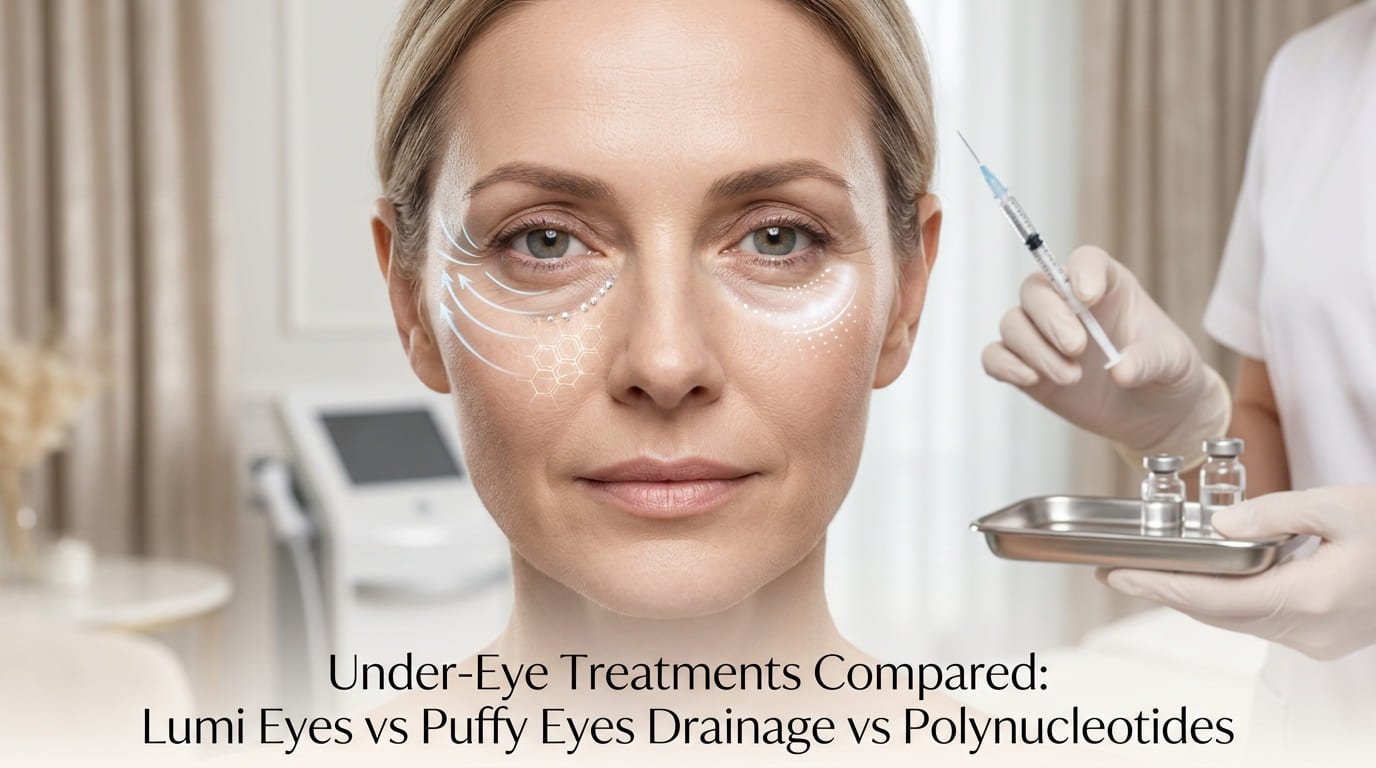
The under-eye area is one of the most requested concerns in aesthetic consultation and one of the most consistently misunderstood. Patients come in describing dark circles when what they actually have is volume loss casting a shadow. Others describe puffiness when the real issue is fluid retention in the lymphatic system rather than excess fat. Some describe both and have a combination of causes contributing to the same visual result.
This matters because the three most commonly used injectable under-eye treatments each address a different underlying cause. Using the wrong one for your specific concern is one of the most reliable ways to spend money and come away disappointed. Getting the right one depends on understanding what is actually causing the appearance you want to change, which is exactly what this article is designed to help with.
Why Under-Eye Concerns Are More Complicated Than They Look
Before comparing treatments, it helps to understand the anatomy of why the under-eye area ages and changes the way it does, because the treatment choice follows directly from the cause.
The skin beneath the eye is among the thinnest on the entire face. It has fewer oil glands than skin elsewhere, which makes it more prone to dryness and faster to show the effects of dehydration. The fat compartments that sit beneath this skin and provide the smooth, supported appearance of a youthful under-eye gradually deflate and descend with age, creating a hollowed or shadowed appearance known as a tear trough deformity. The orbicularis oculi muscle that surrounds the eye socket weakens over time and provides less structural support. The lymphatic drainage system in this area can become sluggish due to a range of factors including diet, sleep, alcohol, hormonal changes, and ageing, leading to fluid accumulation that shows as puffiness.
Dark circles specifically can result from several different mechanisms. Pigmentation in the skin of the under-eye area, which is particularly common in patients with deeper skin tones, produces a brown discolouration that responds to pigmentation-targeted treatment. Thin skin overlying the orbicularis muscle allows the purple-blue colour of the muscle itself to show through, which is a structural issue rather than a pigmentation one. Shadowing from volume loss creates a darkened appearance that resolves with volume restoration. Vascular congestion produces a bluish discolouration associated with poor circulation in the under-eye vessels.
Treating all of these with the same intervention is why under-eye treatment so often produces underwhelming results. Identifying which mechanism or combination of mechanisms is driving the appearance in your specific case is what a proper consultation does before any treatment is recommended.
Lumi Eyes: What It Is and What It Does
Lumi Eyes is a specific injectable product containing polynucleotides derived from salmon DNA in a formulation specifically designed for use in the delicate periorbital area. It sits within the broader polynucleotide category but is formulated specifically to be safe and effective for injection in the thin, sensitive skin beneath the eye where the margin for error in terms of product consistency and depth of placement is smaller than almost anywhere else on the face.
The mechanism is the same regenerative fibroblast stimulation that polynucleotides drive in other areas of the face. Lumi Eyes injected into the under-eye skin stimulates collagen and elastin production in the thin dermis of the periorbital region, improving the quality, thickness, and resilience of the skin over a course of treatment. Thicker, more structurally supported under-eye skin reduces the visibility of the muscle beneath it, improves the reflection of light from the area, and addresses the kind of crepey, transparent skin quality that makes the under-eye look aged and tired.
Lumi Eyes is most appropriate for patients whose primary concern is skin quality in the under-eye area. Crepiness, fine lines, a translucent quality to the skin, or a general tired appearance driven by poor skin condition rather than volume loss or fluid retention respond well to Lumi Eyes across a course of treatment. It also has a meaningful role in improving dark circles, where the mechanism is thin skin allowing underlying structures to show through, rather than pigmentation or shadowing from volume loss.
Results build progressively across a standard course of three sessions, and the improvement continues for some weeks after the final session as collagen production accumulates. This is not a treatment that delivers an immediate dramatic result. It is a treatment that produces a genuine and lasting improvement in skin quality over a timeframe of two to three months.
Puffy Eyes Drainage Treatment: What It Is and What It Does
Puffy eyes drainage treatment addresses a completely different mechanism from Lumi Eyes. Where Lumi Eyes is about skin quality and regeneration, puffy eyes drainage is about lymphatic function and fluid management in the periorbital area.
The treatment uses a specific injection or manual technique to stimulate lymphatic drainage in the under-eye region, reducing the fluid accumulation that creates puffiness. The lymphatic system in the under-eye area drains fluid through a network of vessels that run toward the preauricular lymph nodes. When this drainage is sluggish, fluid builds up in the loose connective tissue beneath the eye and shows as the characteristic morning puffiness that many patients describe getting worse with alcohol, poor sleep, high salt intake, or hormonal fluctuations.
Puffy eyes drainage treatment is most appropriate for patients whose primary complaint is genuine puffiness driven by fluid retention rather than by structural fat herniation or volume loss. The two can look similar on the surface but behave very differently under assessment. Puffiness that is worse in the morning and better by the afternoon, that fluctuates with lifestyle factors, and that feels soft and moveable is more likely to be fluid-related. Puffiness that is consistent throughout the day, that does not change significantly with lifestyle modifications, and that feels firm is more likely to be structural fat and is better addressed through different means.
The results from drainage treatment can be visible relatively quickly because the mechanism is functional rather than regenerative. Reducing fluid accumulation produces an immediate visual change that is particularly satisfying for patients who have struggled with consistent morning puffiness for years.
Polynucleotides for the Under-Eye: How They Differ From Lumi Eyes
Polynucleotides as a broader category and Lumi Eyes as a specific periorbital polynucleotide product are related but worth distinguishing. Standard polynucleotide formulations used on the face and neck are effective skin regeneration treatments. The specific formulation in Lumi Eyes is calibrated for the under-eye environment where the skin is thinner and the structures beneath more delicate.
Using a standard polynucleotide formulation versus a periorbital-specific one is a clinical decision that a practitioner makes based on the product's consistency, the precise depth of injection, and the tissue characteristics of the area being treated. The regenerative mechanism is the same. The application specificity differs.
Polynucleotides in the broader sense, used as part of a full-face programme, contribute to under-eye improvement as a secondary benefit of improving overall periorbital skin quality. The targeted periorbital application of Lumi Eyes produces a more concentrated effect in the under-eye area specifically.
Comparing the Three Across the Factors That Matter
On the question of what concern each treatment addresses most directly, the distinction is clear. Lumi Eyes and periorbital polynucleotides address skin quality, crepiness, and thinness. Puffy eyes drainage addresses fluid accumulation and lymphatic sluggishness. Neither addresses volume loss in the tear trough, which requires a different conversation about dermal filler or other structural approaches.
On onset of results, drainage treatment produces the most immediate visible change because the mechanism is functional rather than regenerative. Polynucleotides and Lumi Eyes produce progressive improvement across a course of several weeks to months.
On longevity, skin quality improvements from Lumi Eyes and polynucleotides are longer lasting because they involve genuine tissue change rather than fluid management. Drainage results need maintaining through a combination of periodic treatment and lifestyle awareness around the factors that worsen lymphatic sluggishness.
On patient experience during treatment, all three involve injections in a sensitive area. Lumi Eyes and polynucleotide injections in the periorbital region are typically well tolerated with appropriate numbing. Drainage technique is generally very gentle. Some bruising and mild swelling after any periorbital injection is expected.
On combination potential, all three work well together and many patients with complex under-eye concerns benefit from a programme that addresses more than one mechanism. Lumi Eyes improves skin quality alongside drainage treatment, addressing fluid accumulation and two concurrent causes in a way that neither treatment alone achieves.
What a Good Under-Eye Consultation Actually Looks Like
The under-eye area, more than almost anywhere else on the face, requires a practitioner who looks carefully at what is actually driving the appearance before recommending anything. The visual presentations of different under-eye concerns overlap significantly. Dark circles from pigmentation look different from dark circles from shadowing, but both look like dark circles to most patients describing their concern.
A good consultation assesses the skin quality, the degree of volume loss if any, the presence of genuine puffiness and its characteristics, the pigmentation pattern if relevant, and how these elements interact with each other. It produces a treatment recommendation that addresses the dominant causes rather than simply applying the most popular under-eye treatment regardless of fit.
Patients who feel their under-eye treatment did not deliver what they hoped almost always had a treatment that addressed one cause when their presentation involved another. Resolving that starts with a thorough assessment rather than a booked appointment.
Frequently Asked Questions
Can I have Lumi Eyes and puffy eyes drainage at the same appointment?
In many cases, yes, and combining them makes clinical sense where both skin quality and fluid management are contributing to the under-eye appearance. Your practitioner will assess whether the same appointment is appropriate or whether sequencing them separately produces better results.
How many sessions of Lumi Eyes are needed?
A standard course is three sessions spaced two to four weeks apart. Results continue to build for several weeks after the final session. Maintenance sessions are typically recommended every six to twelve months.
Will polynucleotides help with dark circles?
It depends on what is causing the dark circles. If thin skin allowing underlying structures to show through is the mechanism, polynucleotides and Lumi Eyes address this directly. If pigmentation or shadowing from volume loss is the primary cause, a different treatment approach is more appropriate.
Is there significant downtime after under-eye injections?
Minor bruising and mild swelling in the days following treatment is common and normal. Most patients find this manageable and resolve within five to seven days. The under-eye area is more prone to visible bruising than other injection sites due to the region's delicate vasculature.
At what age do patients typically start under-eye treatments?
This varies widely. Some patients in their late twenties seek treatment for hereditary under-eye darkness or early crepiness. Others come to it in their forties or fifties as volume loss and structural changes become more apparent. The right time is when the concern is bothering you and when an appropriate treatment exists for your specific presentation.
Can under-eye treatments be combined with anti-wrinkle injections around the eye area?
Yes, this is a common and clinically appropriate combination. The sequencing and timing of different treatments in the same region are managed at consultation to ensure each treatment settles properly before the next is assessed.
If you have concerns about the under-eye area and want a proper assessment of what is actually driving the appearance before any treatment is recommended, book a consultation at our Littlehampton or Hove clinic.
Book a Consultation in Littlehampton or Book a Consultation in Hove