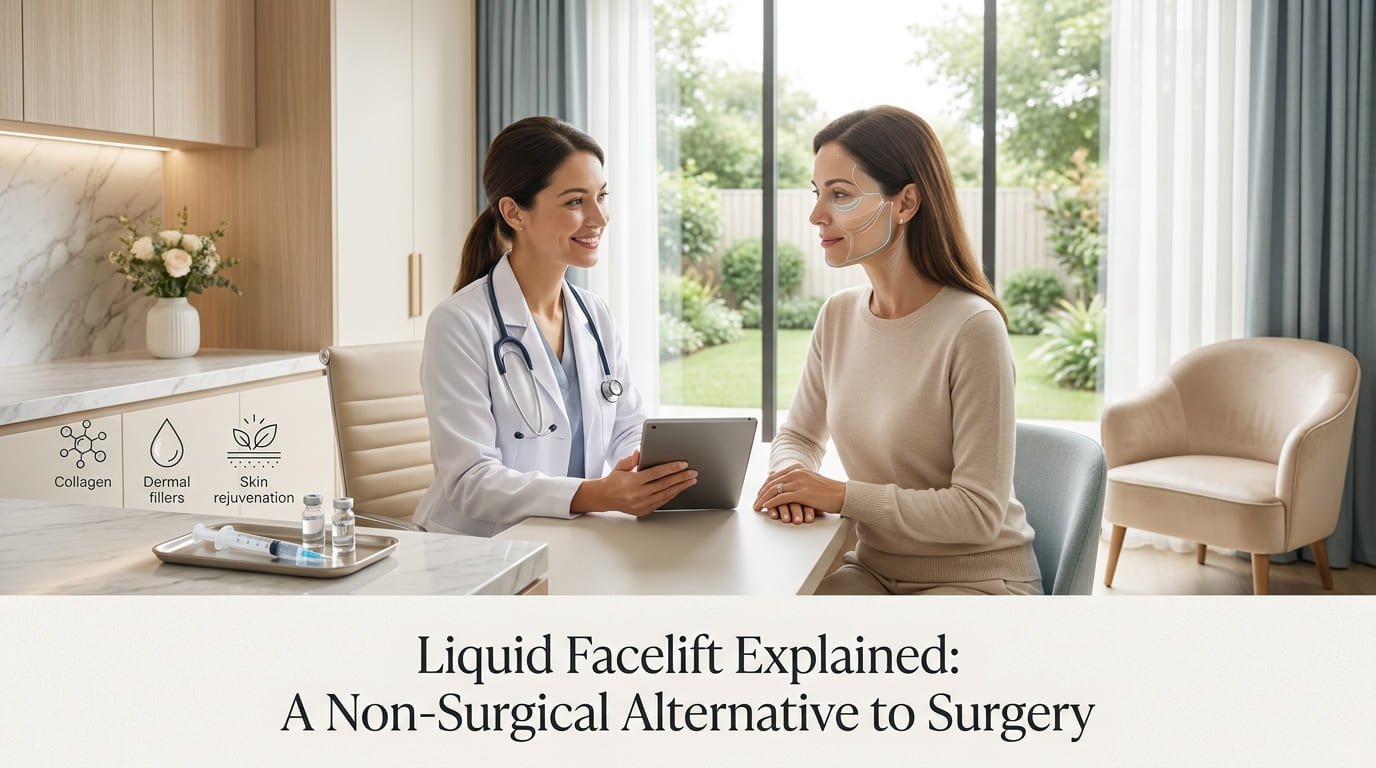
The term liquid facelift gets used a great deal in aesthetics marketing and is understood far less often than it gets used. Some clinics use it to describe a single filler treatment. Others use it for a comprehensive multi-treatment programme combining several different modalities. The name itself is not regulated or standardised, which means two practitioners calling something a liquid facelift may be describing experiences and outcomes that are quite different from each other.
That ambiguity is worth resolving before you book anything. Understanding what a liquid facelift actually is in clinical terms, what it can and genuinely cannot achieve, and how to evaluate whether a clinic's version of it is appropriate for your face and your goals is the only way to approach the treatment as an informed patient rather than a marketing target.
What a Liquid Facelift Actually Is
At its most accurate, a liquid facelift is a planned, multi-treatment approach to facial rejuvenation that uses injectable and energy-based treatments to address volume loss, skin laxity, texture, and contour in a coordinated way across the face as a whole rather than treating individual concerns in isolation.
The keyword is planned. A liquid facelift is not simply having a lot of filler at once. It is a structured treatment programme built around a thorough assessment of the face, an understanding of how the different elements of facial ageing are presenting in a specific patient, and a coherent plan for addressing those elements in a way that produces a natural, proportionate, and lasting result.
The treatments that typically form part of a liquid facelift programme include dermal filler used for volume restoration and structural contouring, anti-wrinkle injections for dynamic line relaxation, skin quality treatments such as Profhilo or polynucleotides to improve the tissue environment the structural work sits in, and occasionally thread lifts to address soft tissue descent that filler alone cannot adequately correct.
No two liquid facelift programmes should look identical because no two faces are identical. The combination used, the volumes involved, the sequencing of treatments, and the intervals between them should all be determined by what a specific face actually needs rather than by a fixed menu applied to everyone.
How Facial Ageing Actually Works and Why It Matters for Treatment Planning
Understanding why a liquid facelift works the way it does requires a brief understanding of how the face actually ages, because the treatment is designed to address those specific processes rather than simply adding volume or relaxing muscles in isolation.
Facial ageing is not a single process. It is the cumulative result of several changes happening simultaneously across different tissue layers. Bone resorption in the midface, orbital rim, and jaw reduces the structural scaffold the soft tissue depends on. Fat compartments that once sat in distinct, well-defined pockets begin to descend and deflate over time. Ligaments that hold tissue in position weaken with age and provide less support against gravitational descent. Skin produces less collagen and elastin as the decades pass, becoming thinner, less elastic, and less able to snap back after repeated movement. Muscles that contract repeatedly create permanent creasing in the overlying skin as that skin loses its resilience.
A liquid facelift approach addresses each of these layers deliberately. Structural filler replaces lost skeletal support and restores the framework the soft tissue needs. Volume filler replenishes deflated fat compartments. Thread lifting or strategic filler placement addresses descended tissue. Skin quality treatments rebuild the collagen and elastin environment that supports the structural work from within. Anti-wrinkle injections reduce the dynamic muscle activity that continues to crease the skin surface.
When these elements are combined in the right sequence and proportion for a specific face, the cumulative effect is substantially more than any single treatment could achieve. The face looks refreshed and naturally younger because the actual biology of why it aged is being addressed rather than just one visible symptom of it.
What Results Are Genuinely Achievable
This is where honesty matters more than it does almost anywhere else in aesthetics because the liquid facelift concept is more vulnerable to overpromising than almost any other treatment name in the field.
A well-planned liquid facelift programme delivered by an experienced practitioner to an appropriate candidate can achieve a meaningful, visible improvement in facial appearance that looks natural rather than treated. Cheeks that have lost their projection can be restored. A jawline that has become soft can be redefined. Skin that looks dehydrated and dull can be genuinely improved in quality. Dynamic lines can be relaxed. An overall tiredness or heaviness that has accumulated over years can be significantly reduced.
What a liquid facelift cannot achieve is the structural correction that surgical intervention provides. A surgical facelift physically removes and repositions excess skin and underlying tissue. It addresses significant soft tissue descent in a way that injectable treatments, however carefully planned and expertly delivered, cannot fully replicate. The skin excision, the SMAS repositioning, and the physical lift of the surgical approach produce outcomes in appropriate surgical candidates that go beyond what any combination of injectables and energy devices achieves.
This is not a criticism of the liquid facelift approach. It is a description of where it sits in the clinical landscape. For patients in their late thirties through to their mid-fifties with mild to moderate facial ageing, a liquid facelift programme is often the most appropriate and most natural-looking intervention available. For patients with more advanced soft tissue descent and significant skin laxity, an honest conversation about whether non-surgical treatment can genuinely meet their goals is more valuable than a programme that will produce partial results and ongoing disappointment.
The right practitioner tells you which category you are in rather than finding a way to proceed regardless.
What the Treatment Journey Looks Like
A liquid facelift is not a single appointment. It is a programme that unfolds across several sessions depending on what is included in the plan.
The starting point is always a thorough consultation. A consultation for a liquid facelift should include an assessment of the full face, a discussion of the specific changes that are bothering you and why, an honest appraisal of what is achievable with non-surgical treatment in your specific case, and a clear plan with realistic timescales before any treatment begins.
Treatments within the programme may be delivered in a single comprehensive session or across several appointments depending on what is being combined and how your practitioner chooses to sequence the interventions. Some combinations work well together in the same sitting. Others are better staggered to allow each element to settle properly before the next is assessed and performed.
Results build progressively rather than appearing immediately after the first session. Skin quality treatments deliver their most visible improvement over weeks to months as collagen production builds. Structural filler results are visible more quickly but take two to four weeks to fully settle. The complete picture of a liquid facelift programme is typically most visible three to six months after the first session, not the day after.
How to Evaluate Whether a Clinic's Approach Is Sound
The liquid facelift name being unregulated means the clinical standard behind it varies considerably between providers. There are markers worth looking for that distinguish a thoughtfully planned programme from a marketing concept attached to a high-volume filler appointment.
A sound approach starts with a consultation that assesses your face before recommending any specific treatments or volumes. It involves a practitioner who is willing to tell you what they are not going to do and why, not just what they intend to include. It involves a realistic and honest conversation about what the programme can achieve given your specific starting point. It involves a practitioner who is qualified, medically registered, and experienced in the full range of treatments being combined rather than being primarily a filler practitioner who has added other services to a treatment list.
The quality of the assessment and the honesty of the conversation at consultation tell you more about the quality of the programme than any before and after photograph.
Where the Liquid Facelift Fits Within a Broader Treatment Journey
Many patients who pursue a liquid facelift programme find it becomes the beginning of an ongoing relationship with aesthetic medicine rather than a one-time intervention. The treatments involved generally need maintenance over time. Filler gradually reabsorbs. Skin quality treatments need periodic reinforcement as the natural ageing process continues. Anti-wrinkle treatment wears off and needs repeating.
This ongoing dimension is worth being clear about before starting. A liquid facelift programme is an investment in maintaining your appearance over time, not a permanent solution to facial ageing. Understanding that from the start means you can plan appropriately rather than being surprised when results need refreshing.
Patients who approach it this way, as a long-term maintenance strategy rather than a single dramatic intervention, consistently report the most satisfaction with the outcome. The face looks consistently well rather than dramatically different one month and then gradually declining until the next round of treatment.
Frequently Asked Questions
Is a liquid facelift painful?
The treatments included involve injections, which carry the discomfort associated with fine needle procedures. Numbing cream is used where appropriate, and most patients find the overall experience very manageable.
How long do the results last?
This varies by treatment and individual. The combined programme typically needs refreshing at intervals between six and eighteen months depending on which elements are included and how quickly each metabolises the treatments.
Am I too young or too old for a liquid facelift?
The right age for any facial rejuvenation programme is when you have concerns you want to address and when non-surgical treatment can genuinely meet your goals. That range is wide. A thorough consultation is the only way to assess what is appropriate for your specific situation.
Can I have a liquid facelift if I have had surgical work done in the past?
In many cases, yes, but a detailed history of previous treatments is essential before planning anything. Previous surgery can alter facial anatomy in ways that affect where and how injectable treatments are placed.
What is the difference between a liquid facelift and just having a lot of filler?
A liquid facelift is a planned, multi-modal programme designed around a clinical assessment of the whole face. Having a lot of filler at once is not the same thing and does not carry the same clinical rationale. The distinction is in the planning, the combination of modalities, and the clinical thinking behind the programme rather than simply the volume of product used.
If you are thinking about a liquid facelift programme and want an honest assessment of whether non-surgical treatment can genuinely achieve what you are hoping for, book a consultation at our Littlehampton or Hove clinic. We will assess your face properly and give you a realistic picture before any treatment is planned.
Book a Consultation in Littlehampton or Book a Consultation in Hove