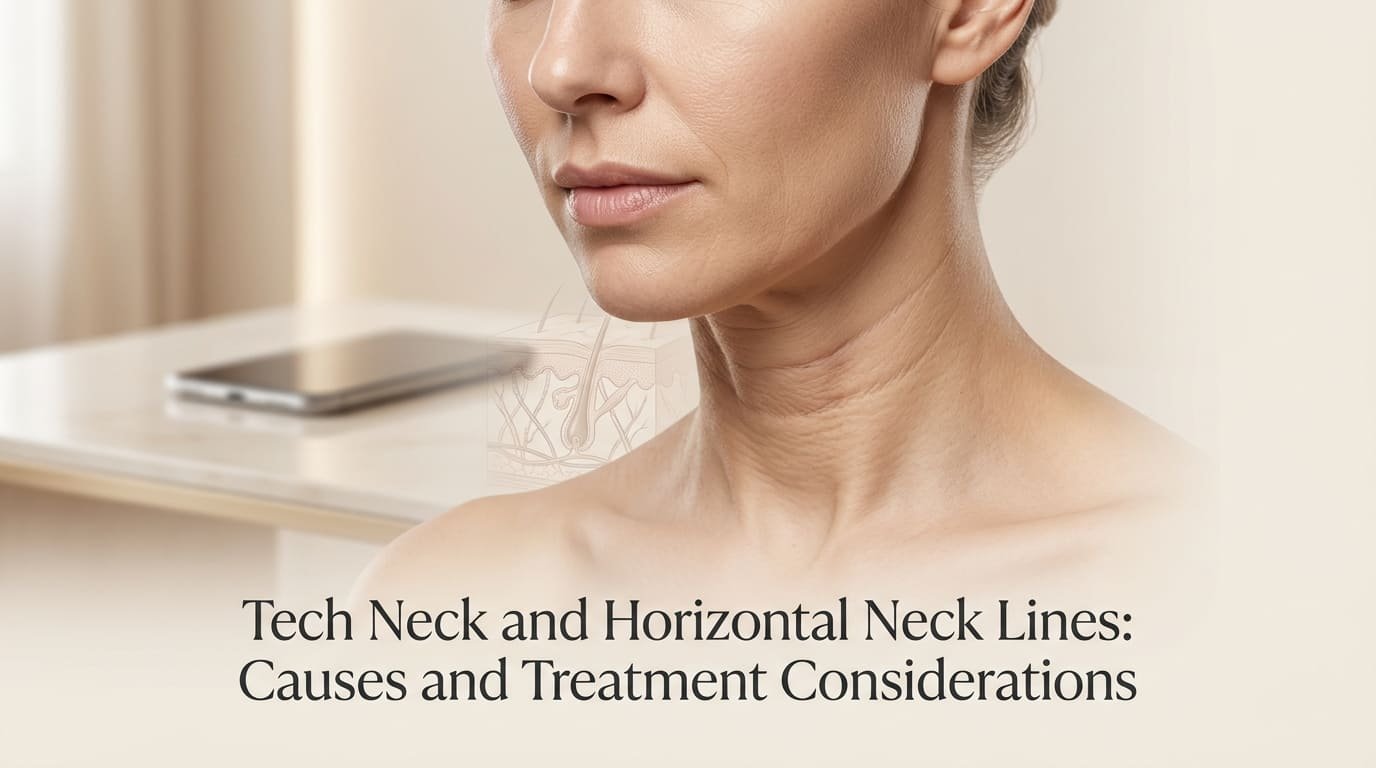
Horizontal lines across the neck are something many people notice long before they expect to see signs of ageing. They may appear in the twenties or thirties, sometimes becoming more noticeable during the forties. In some people, the lines are visible even when the skin is otherwise smooth and firm.
The term tech neck has become increasingly popular because of the way we use phones, tablets and laptops. Spending long periods looking down can repeatedly fold the skin at the front of the neck. Over time, these creases may become more noticeable.
However, screen use is not the only explanation. Genetics, natural skin folds, sun exposure, skin thickness, and changes in collagen also play a role. This is why two people with similar daily habits can have very different necks.
Understanding the cause is important before considering treatment. Horizontal neck lines are not the same as loose skin, vertical neck bands, or excess fat beneath the chin. Each concern may require a different approach.
What Is Tech Neck?
Tech neck is a term used to describe changes around the neck that are associated with repetitive forward head positioning and frequent downward movement, particularly when using electronic devices.
When you look down at a phone, the skin at the front of your neck folds. This is a normal movement. The problem is not the occasional crease, but repeated folding in the same area combined with other factors that affect skin quality.
Over time, lines may remain visible when the neck is in a neutral position. They can become deeper, making them more difficult to soften with skincare alone.
The term is sometimes used broadly to describe horizontal neck wrinkles, neck discomfort, and changes in posture. These are related concerns, but they are not necessarily the same problem.
Someone may have prominent horizontal lines without neck pain. Another person may experience stiffness from prolonged screen use without having visible wrinkles.
What Causes Horizontal Neck Lines?
Several factors can contribute to the development of neck creases. In most cases, there is no single cause.
Repeated Neck Movement
The neck moves throughout the day. We bend it to read, look at our phones, work at a desk, drive, and perform everyday tasks.
The skin naturally folds during these movements. When the same areas fold repeatedly, visible creases may become more established, particularly when the skin has already lost some elasticity.
This helps explain why horizontal lines can appear in younger adults. They are not always a sign of premature ageing.
Natural Skin Folds and Genetics
Some people have horizontal neck lines from an early age. Their appearance may be linked to natural skin folds, inherited facial and neck anatomy, and the way soft tissues are distributed.
These lines can be visible in people who have never spent long periods looking down at screens.
If your neck creases have been present for many years, posture changes alone are unlikely to remove them completely.
Reduced Collagen and Elastin
Collagen helps provide strength and structure to the skin. Elastin contributes to its ability to stretch and return to its original position.
As we age, the production and organisation of these proteins change. The skin may become thinner, less resilient, and more prone to visible creasing.
The neck can show these changes quite early because its skin is relatively delicate and receives less attention than the face in many skincare routines.
Sun Exposure
Ultraviolet exposure is an important contributor to skin ageing. It can damage collagen and elastin, gradually affecting skin texture, firmness, and elasticity.
Many people apply sunscreen to their face but stop around the jawline. The neck and upper chest are also exposed to sunlight, particularly during warmer months.
Repeated exposure can make horizontal creases more visible and contribute to uneven pigmentation and a crepey texture.
Dryness and Changes in Skin Quality
The neck may feel dry or appear rough even when the face feels comfortable. Dehydration can make existing lines look more pronounced, although it is not the same as structural ageing.
When the skin lacks moisture, its surface may appear less smooth. Fine creases can become more noticeable, particularly after washing, during colder weather, or when using irritating skincare products.
Improving hydration may help the appearance of the skin, but it will not remove deep, established folds.
How Can You Tell Whether Your Neck Lines Are Becoming Deeper?
A simple way to assess changes is to observe the neck when it is relaxed and in a neutral position.
If lines are visible only when you bend your head, they may be primarily movement-related. If they remain visible when your head is upright, the creases may have become more established.
You may also notice other changes around the same time.
The skin might appear thinner, feel less smooth, or show more fine wrinkles. Some people develop mild laxity, while others notice vertical bands running down the neck.
Horizontal lines, vertical bands, and loose skin should not be treated as interchangeable concerns. The underlying structures are different, which is why a professional assessment can be useful before choosing an aesthetic treatment.
Can Changing Your Posture Prevent Tech Neck?
Improving posture may help reduce repeated folding and the strain associated with prolonged downward positioning. It is a sensible habit, particularly if you spend most of your working day using a computer or mobile device.
Try raising your phone closer to eye level rather than holding it near your waist. Adjust your monitor so you are not constantly looking down. Take regular breaks, move around, and gently change your neck position throughout the day.
These adjustments may reduce unnecessary strain and help you become more aware of how often you bend your neck.
However, posture changes cannot reverse established skin creases, replace lost collagen, or correct genetic skin folds. It is better to view them as supportive habits rather than a treatment for existing lines.
Skincare for Horizontal Neck Lines
A consistent skincare routine can support the skin and may improve the appearance of fine lines. The neck should receive the same attention as the face, although products may need to be introduced more carefully because the skin can be sensitive.
Daily Sun Protection
Applying broad-spectrum sunscreen to the neck and upper chest is one of the most useful habits for reducing ongoing UV damage.
Use an appropriate SPF and reapply when needed, particularly when spending extended periods outdoors. Clothing and shade can provide additional protection.
Prevention will not erase existing creases, but it can help reduce further sun-related skin damage.
Moisturising
A moisturiser containing ingredients such as glycerin, ceramides or hyaluronic acid can help support the skin barrier and reduce dryness.
Well moisturised skin often looks smoother and more comfortable. Fine lines caused partly by dryness may appear less obvious.
This is different from restoring the underlying structure of a deep neck crease.
Retinoids
Retinoids are ingredients used to support skin renewal and improve the appearance of fine lines over time. They may also support collagen-related changes in the skin.
However, the neck can be more sensitive than the face. Retinoids may cause dryness, redness, irritation, or peeling, especially when introduced too quickly.
Start cautiously with a suitable product and avoid combining several irritating ingredients at once. If you have sensitive skin or an existing skin condition, seek professional advice before using stronger retinoids.
For more information about visible ageing and skin concerns, explore our guide to fine lines and wrinkles.
Which Aesthetic Treatments May Help?
Treatment depends on the depth of the lines, skin quality, elasticity, and the person's expectations. There is no single treatment that suits every type of horizontal neck crease.
The aim should be to improve the appearance of the skin without creating unnecessary risk or treating an area that may not benefit from intervention.
Skin Boosters
Skin boosters are injectable treatments designed to improve aspects of skin quality, particularly hydration and smoothness.
Some formulations contain hyaluronic acid, which helps attract and retain moisture. Depending on the product and treatment approach, they may be considered for skin that appears dry, dull, or less supple.
They are not designed to provide the same structural volume as traditional dermal fillers. Their suitability for the neck depends on the condition of the skin, the product being used, and the practitioner's assessment.
You can learn more about skin booster treatments and how they differ from treatments intended to restore facial volume.
Profhilo
Profhilo is an injectable treatment containing hyaluronic acid. It is used in selected patients to improve skin quality and hydration.
It may be discussed when the concern involves skin texture, mild changes in elasticity or an overall reduction in skin quality. It is not a direct treatment for every deep horizontal crease, and results vary.
The neck requires careful assessment because its skin and underlying anatomy differ from those of the face.
Read more about Profhilo treatment in Littlehampton to understand its intended role and suitability.
Mesotherapy and Biorevitalisation
Mesotherapy and biorevitalisation are approaches used in aesthetic practice to support skin quality. Depending on the treatment, formulations may contain ingredients intended to improve hydration or the appearance of the skin.
They may be considered when the concern is dullness, dryness or changes in texture rather than a deep structural crease.
Treatment choice should be based on the ingredients, evidence, intended use and individual skin condition. The name of a treatment alone does not guarantee a particular result.
You can explore mesotherapy and biorevitalisation to learn more about these skin quality approaches.
Anti Wrinkle Injections
Anti-wrinkle injections work by reducing the activity of selected muscles. They are often used to soften expression lines in areas such as the forehead and around the eyes.
Their role in horizontal neck lines is more complex. Not every neck crease is caused by muscle activity, and treating the wrong muscle or using an unsuitable approach can create unwanted effects.
The neck contains important muscles involved in movement, swallowing, and other functions. Injectable treatment in this area requires a thorough understanding of anatomy and careful patient selection.
If you are considering injectable treatment, read about anti-wrinkle treatments and discuss whether they are appropriate for your particular concern during a consultation.
What About Deep or Long-Standing Neck Lines?
Deep horizontal lines may remain visible even when the skin is well hydrated and healthy.
This is because established creases can involve changes within the dermis and the way the skin folds over underlying structures. Skincare may improve the surface appearance, but it cannot always make a deep line disappear.
Some patients may be considered for more advanced procedures, including carefully selected injectable treatments or energy-based skin treatments where available. These options have different benefits, limitations, recovery requirements, and risks.
The neck is an area where aggressive treatment should be approached cautiously. Skin thickness, healing response, pigmentation risk, and the anatomy beneath the surface all matter.
A treatment plan should not be based on social media photographs or a promise of completely smooth skin. A realistic improvement may be more appropriate than trying to remove every natural crease.
When Should You Seek a Professional Assessment?
You may wish to seek advice if horizontal lines are becoming more noticeable, if the skin has developed a crepey appearance, or if you are unsure whether the concern is related to wrinkles, laxity, or another change.
An assessment should look at the neck as a whole. This includes skin texture, elasticity, the depth of the lines, muscle activity, and any other relevant factors.
It is also important to discuss your medical history, previous aesthetic treatments, skincare products, and expectations. Not every patient is suitable for an injectable or skin rejuvenation procedure.
A good consultation should give you time to ask questions. You should understand why a treatment is being suggested, what improvement may realistically be expected and what risks are involved.
You can find further information through our clinic FAQs before deciding whether to arrange an appointment.
Frequently Asked Questions
Does looking down at my phone cause neck wrinkles?
Repeated neck flexion may contribute to creasing, but it is not the only cause. Genetics, natural skin folds, collagen changes, and sun exposure also influence horizontal neck lines.
Can tech neck lines disappear completely?
Established lines may be difficult to remove completely. Some treatments can soften their appearance, but results depend on the depth of the creases, skin quality, and the treatment used.
Are horizontal neck lines a sign of ageing?
Not always. They can appear in younger people because of natural skin folds and individual anatomy. Age-related changes may make them more prominent over time.
Is neck skincare the same as facial skincare?
Many facial skincare products can be used on the neck, but the area may be more sensitive. Retinoids and exfoliating products should be introduced carefully, especially if irritation develops.
Is treatment necessary for tech neck?
No. Horizontal neck lines are a normal feature of skin and anatomy. Treatment is a personal choice, not a medical necessity in most cases. If you decide to explore aesthetic options, the priority should be suitability, safety, and realistic expectations.
A More Thoughtful Approach to Neck Rejuvenation
Horizontal neck lines can develop for several reasons. Repeated movement may contribute to creasing, but genetics, sun exposure, skin thickness and natural ageing also play important roles.
The most useful approach is to look beyond the term tech neck and understand what is happening to your skin. Posture adjustments, sun protection and a consistent skincare routine are sensible starting points. For established lines or changes in skin quality, professional treatments may offer additional options.
The neck is a delicate area and should not be treated simply because a crease is visible. The right treatment is one that addresses the actual concern, suits your skin, and has a realistic benefit.
Sometimes improving skin quality is enough. In other cases, a more specific treatment may be considered. The goal should always be a considered approach to healthy-looking skin rather than trying to remove every sign of natural movement and ageing.