Jowls are one of those concerns people often notice suddenly. One day the jawline looks defined and clean. Then at some point, usually in the mid-forties but sometimes earlier, the lower face starts to look heavier. The jaw loses its edge. The skin along the chin begins to droop slightly, and the contour that used to be there just is not anymore.
It is one of the most common things patients bring to consultation. And it consistently generates the same question. Thread lift or filler. Which one actually works and which one lasts longer?
The honest answer involves understanding what each treatment is actually doing to the tissue, because they work completely differently and suit different presentations of the same concern.
Why Jowls Develop in the First Place
Before comparing treatments, it helps to understand what you are actually treating, because jowls are not a single thing. They are the visible result of several changes happening simultaneously underneath the skin.
Fat compartments in the mid-face that once sat high and full gradually descend with age and gravity. Volume that previously gave the cheeks and midface their lifted appearance migrates downward over decades. The ligaments that hold facial tissues in position weaken over time and provide less structural support. Skin laxity increases as collagen production slows. Bone density in the jaw and midface gradually reduces, which removes the structural scaffolding the soft tissue relies on.
The result of all of this happening together is that the lower face looks heavier than it used to, the jawline loses definition, and jowls appear where the skin and soft tissue have descended below the natural jaw contour.
Knowing which of these changes is most prominent in your particular face is what determines which treatment approach makes most sense. This is why a good consultation looks at the face structurally before recommending anything.
What a Thread Lift Does for Jowls
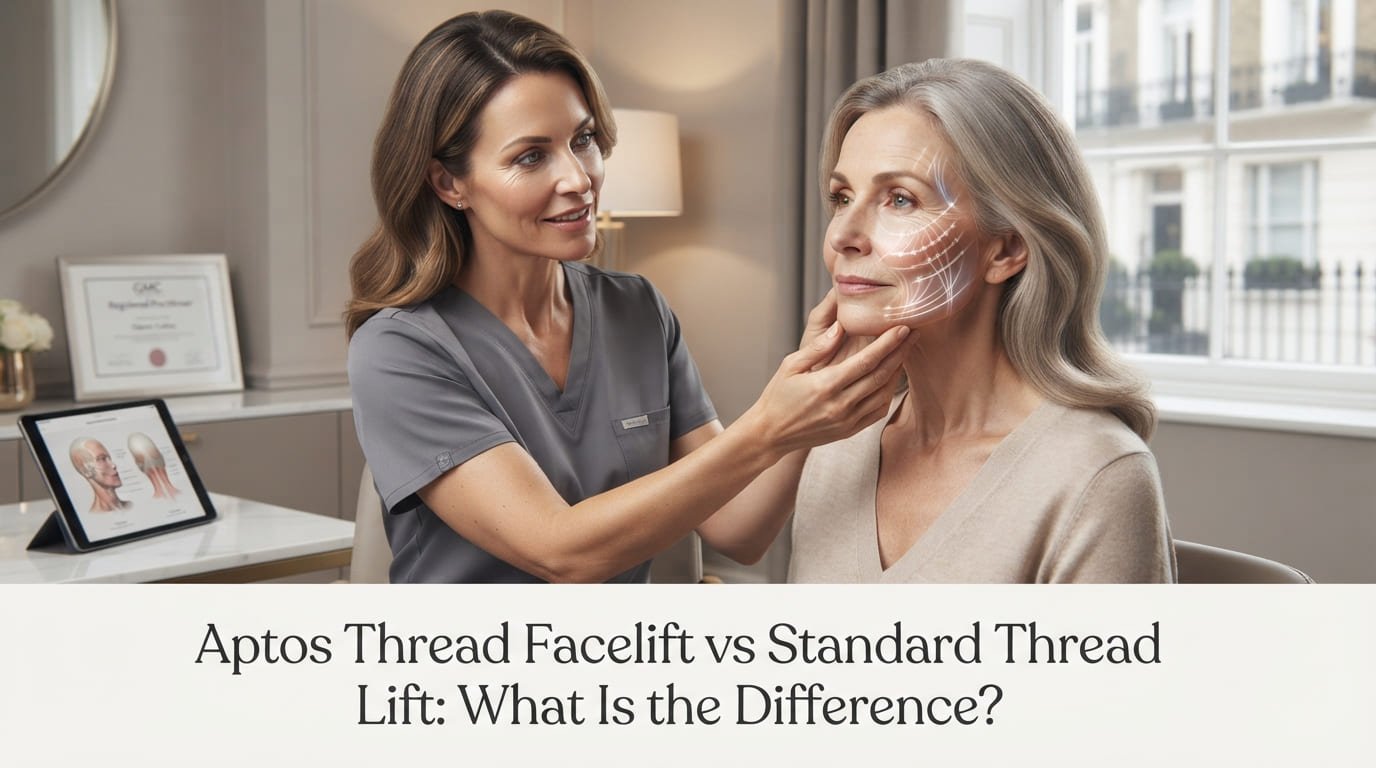
A thread lift uses fine dissolvable threads, typically made from PDO (polydioxanone) or PLLA material, inserted under the skin using a fine needle or cannula. Once in place, the threads provide an immediate mechanical lift by physically repositioning the descended tissue upward. Over the following weeks and months, the threads also stimulate collagen production in the tissue around them as the body responds to their presence.
For jowl correction specifically, threads are placed along the lower face and jawline in a pattern designed to reposition the soft tissue that has descended below the jaw margin. The result is a more defined jawline, a reduction in the heaviness along the lower face, and a lift that addresses the actual cause of jowl formation rather than simply adding volume around it.
The immediate lift from threads is visible straight after treatment, though some swelling and bruising in the first week means the settled result is better assessed at around two to three weeks. The collagen stimulation effect continues to build for several months after the threads are placed.
PDO threads dissolve naturally over around six months. The collagen they stimulate can support results for longer, with many patients seeing meaningful improvement for 12 to 18 months from a well-placed thread treatment. PLLA threads tend to last a little longer than PDO due to their slower absorption rate.
Thread lifts suit patients who have genuine soft tissue descent. If the primary concern is that tissue has moved downward and the jawline has lost its contour as a result, threads address that movement directly in a way filler cannot.
What Dermal Filler Does for Jowls
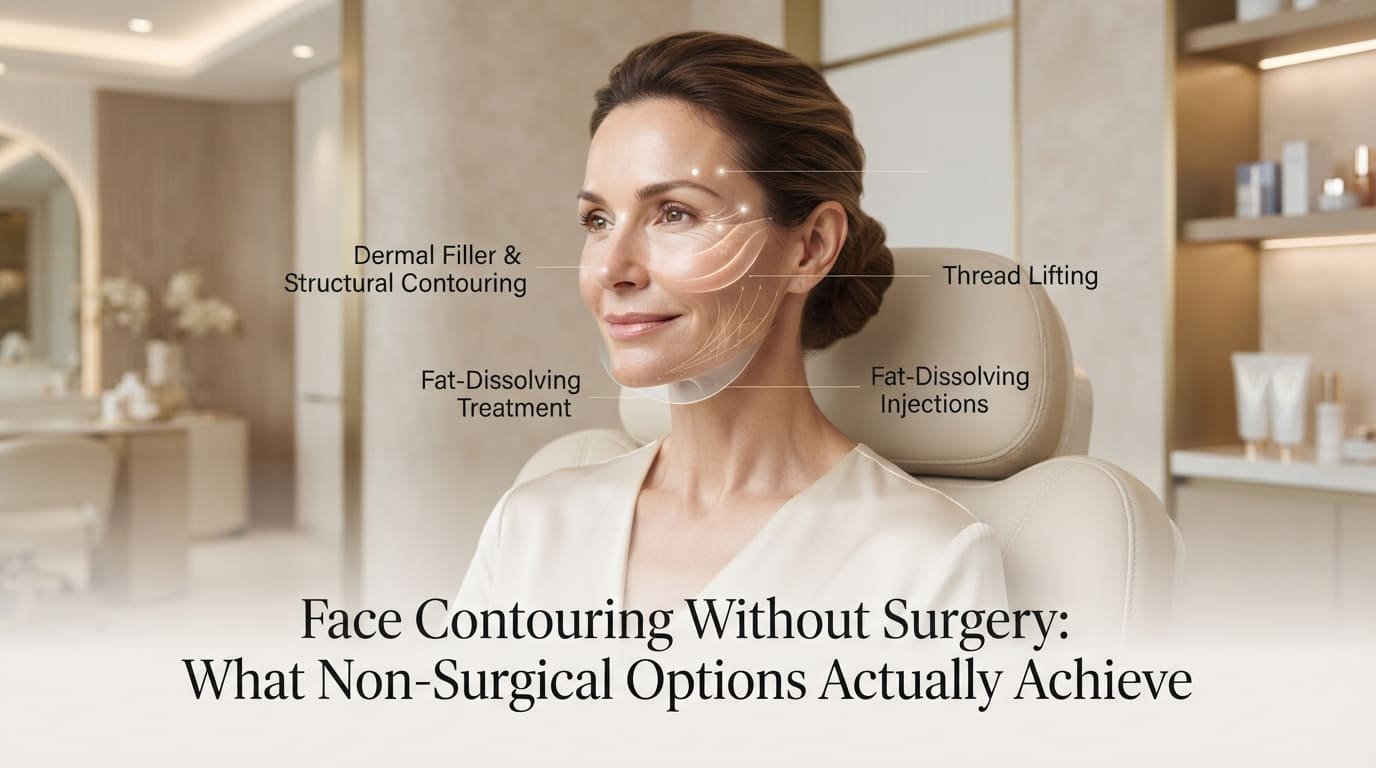
Dermal filler takes a structural approach rather than a lifting one. Instead of repositioning tissue that has descended, filler works by restoring the framework that supports the lower face and jawline, which in turn makes jowls less visually prominent.
This happens in a couple of ways depending on the assessment. Volume placed strategically in the cheeks can restore the midface lift that prevents tissue from descending in the first place. Volume placed along the jawline itself creates a defined structural edge that makes the lower face look more contoured. By building out the jaw slightly, filler can essentially camouflage jowling by making the jaw margin more prominent than the descended tissue sitting just below it.
Used well, jawline filler is genuinely effective for early-stage jowling where the descent is mild and the main issue is loss of jawline definition rather than significant tissue displacement. It is a faster appointment with very visible results and minimal downtime compared to threads.
The longevity of jawline filler varies depending on the product used and the individual patient, but typically falls in the range of 12 to 18 months. Thicker, more structured filler products used along the jawline tend to hold longer than softer products used in more mobile areas.
The limitation of filler for jowls is important to understand. Filler does not lift tissue that has descended. It builds structure around descended tissue to make the jawline look more defined. For patients with mild jowling, this distinction barely matters in practice. For patients with more significant soft tissue descent, filler alone will not achieve what threads can, and attempting to correct significant jowling with filler alone often requires more product than is clinically appropriate.
Which One Lasts Longer
On duration alone, both treatments fall in a comparable range. Threads typically provide visible improvement for 12 to 18 months. Jawline filler also typically lasts 12 to 18 months depending on the product and individual metabolism. Neither has a dramatically longer track record than the other when you compare realistic clinical outcomes.
What matters more than duration is the quality and appropriateness of the result across that time. A thread lift that correctly addresses genuine tissue descent will look more natural and more significantly improved throughout its lifespan than filler used to compensate for the same amount of descent. Conversely, early-stage jowling treated with precisely placed jawline filler may give an equally good result with a simpler procedure and recovery.
The question is not really which lasts longer in abstract. It is which produces a better and more appropriate result for your specific presentation, and therefore delivers better value across the lifespan of the treatment.
The Case for Combining Both
Some patients benefit from both treatments used together, which is increasingly common in clinical practice and worth understanding as an option.
The typical combination approach places filler in the midface and along the jawline to restore structural support and definition, while threads lift and reposition soft tissue that has descended below the jaw margin. The two effects are complementary rather than overlapping. Structural support from filler reduces the load on the threads. Lift from threads means less filler is needed to achieve the same result.
Combining both is generally more appropriate for patients with moderate to significant jowling where neither treatment alone would fully address all elements of the concern. It requires a practitioner experienced with both treatments and confident in planning a cohesive outcome rather than treating each element in isolation.
What a Good Consultation Should Assess
The reason so many patients feel uncertain between these options is that online comparisons, including this one, can only go so far. The choice ultimately depends on what is actually happening in your face.
A thorough consultation looks at where volume has been lost and where it has not. It assesses the degree of soft tissue descent versus the degree of structural loss. It considers your age, skin quality, how much descent is present, and what result is realistic given your starting point. It should also discuss whether either treatment is appropriate as a standalone or whether a combination makes more clinical sense.
A practitioner who recommends the same treatment to every patient presenting with jowls is not doing a thorough consultation. The presentation varies enormously between patients in their early forties and patients in their late fifties, and the treatment plan should reflect that.
Frequently Asked Questions
Is a thread lift painful?
A thread lift is performed under local anaesthetic so the procedure itself is manageable for most patients. Some tenderness and tightness in the days following treatment is normal and settles within a week to ten days.
Can I have threads if I already have filler in my jawline?
In many cases, yes, but this needs to be assessed at consultation. Your practitioner needs to know your full treatment history before placing threads to plan placement appropriately.
Will threads make my face look pulled or unnatural?
A well-placed thread lift should look like a natural improvement in contour, not a stretched or pulled appearance. Overcorrection is the most common cause of an unnatural result and is largely a product of technique and clinical judgement.
How long is the recovery after a thread lift?
Most patients experience some swelling and bruising for five to ten days after treatment. Many people return to normal daily activities within a few days, though visible bruising may last slightly longer depending on the individual.
At what point do jowls become better suited to surgical intervention?
This is very individual and something a practitioner will advise on honestly at consultation. Significant soft tissue descent that is causing meaningful structural change to the lower face may be better served by a surgical facelift than any injectable treatment. A good practitioner will tell you this rather than offer a non-surgical alternative that cannot realistically match the result you need.
What is the best age to treat jowls non-surgically?
Earlier intervention generally gives better results with non-surgical treatments because the degree of change is less significant. That said, the right time is when it is bothering you enough to address it, whatever your age.
Concerned about jowling and not sure which treatment is appropriate for where your face is right now? Book a consultation at our Littlehampton or Hove clinic. We will assess your face properly and give you an honest recommendation rather than a default treatment plan.
Book a Consultation in Littlehampton or Book a Consultation in Hove